In the annals of literature, authors have long explored the concept of circular time—the idea that events are destined to repeat themselves in an infinite loop of tragedy and farce. Jorge Luis Borges, the master of labyrinths and mirrors, might have found a chilling subject in the current state of Piura, Peru. Here, a perverse reality persists where natural disasters are not merely hazards but predictable, recurring chapters in a book that refuses to end. Despite clear warnings, decades of scientific data, and the availability of vast resources, the region remains trapped in a cycle of devastation that defies rational explanation.
This is not a work of fiction. It is a grim, documented reality where the governance of disaster prevention has become a casualty of its own inertia. As we confront the looming threats of another climate season, the question remains: why does a country capable of modern economic growth remain so profoundly incapable of protecting its own citizens from the predictable wrath of nature?
The Anatomy of a Man-Made Disaster: The Piura Case Study
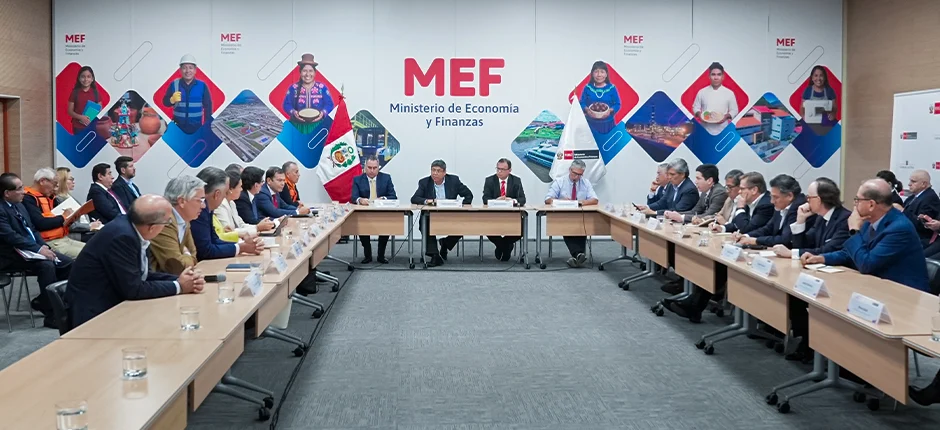
During a recent visit to Piura, a delegation of business guilds sought to bridge the gap between technical requirements and political execution. The objective was clear: to engage with local and regional authorities, congressmen, and central government representatives to discuss urgent mitigation strategies. The reality of the reception, however, was as telling as the absence of progress on the ground.
While we sat with representatives of the Chamber of Commerce, academics, and journalists, the halls remained conspicuously empty of any high-level official from the regional government or municipal leadership. The absence was not merely a matter of scheduling; it was a symbolic resignation from duty. Since the last El Niño phenomenon (FEN), these authorities have had ample time—years of clear skies and political stability—to execute critical infrastructure works. Yet, the landscape remains largely unchanged. River basins remain clogged, drainage systems are non-existent, and the vulnerability of urban centers is higher than ever.
A Chronology of Bureaucratic Stasis
The incompetence is not a recent development; it is the product of a decade-long administrative paralysis. A primary example of this stagnation is the performance of the National Infrastructure Authority (ANIN). For nearly ten years, the agency struggled to achieve technical viability for projects as fundamental as urban storm drainage and the reinforcement of riverbanks.
- 2016–2024: A period marked by recurring warnings from meteorologists and hydrologists regarding the vulnerability of the Piura River basin.
- 2025 (Early): Continued delays in project approvals, characterized by shifting responsibility between local municipalities and the central government.
- June–July 2026: The eventual, long-overdue approval of technical viability for drainage and protection works.
The delay of nearly a decade to reach a basic "go" signal is, in any other sector, a fireable offense. In the context of public safety, it is a dereliction of duty. While the bureaucratic machinery finally creaked into motion in mid-2026, the question is whether these interventions—approved only after years of "study"—can still serve their purpose before the next deluge arrives.
Supporting Data: The Illusion of "Budget Constraints"
A common defense mounted by public officials when confronted with a lack of infrastructure is the alleged "lack of budget." This narrative, however, collapses under the slightest fiscal scrutiny.
Between 2016 and 2025, the Piura region accumulated nearly S/4,000 million (approximately $1 billion USD) through a combination of canon, over-canon, and mining royalties. These are funds specifically earmarked for regional development and infrastructure. Furthermore, the region has access to a robust "Works for Taxes" (Obras por Impuestos) framework, which provides a secondary stream of funding that remains largely underutilized.
The failure to invest this capital is not a problem of liquidity; it is a problem of institutional capacity and political prioritization. When a region is sitting on billions of soles while its streets turn into rivers during every heavy rainfall, the failure is clearly rooted in the management of public resources rather than the scarcity of funds.
The Human and Economic Toll
The cost of this paralysis is measured in two units: the irreplaceable and the quantifiable.
The Invaluable: Human Lives
First and foremost are the lives of the citizens of Piura. Each time a town is flooded or a house is swept away by a huaico (mudslide), the social fabric of the region is torn. Families lose their homes, their health, and their security. These losses are not merely statistics; they are the result of conscious inaction by those who swore an oath to protect the public interest.
The Quantifiable: Economic Devastation
Beyond the humanitarian crisis lies the destruction of the regional productive apparatus. Piura is an engine of Peruvian agriculture and industry. When infrastructure fails, the entire supply chain of the north is severed. The loss of crops, the destruction of transport networks, and the paralysis of local businesses create a secondary wave of economic damage that keeps the region in a state of perpetual underdevelopment. The cost of preventing these disasters is, by any economic metric, significantly lower than the cost of reconstruction after every major flood.
Official Responses and the Need for Urgent Action
The response from the government has historically been a mix of reactive promises and finger-pointing. However, with only three months remaining before the peak of the next potential climate event, there is no longer time for grand, multi-year projects. The strategy must shift to emergency mitigation.
The Three-Month Window
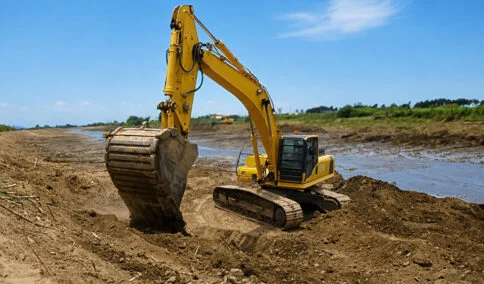
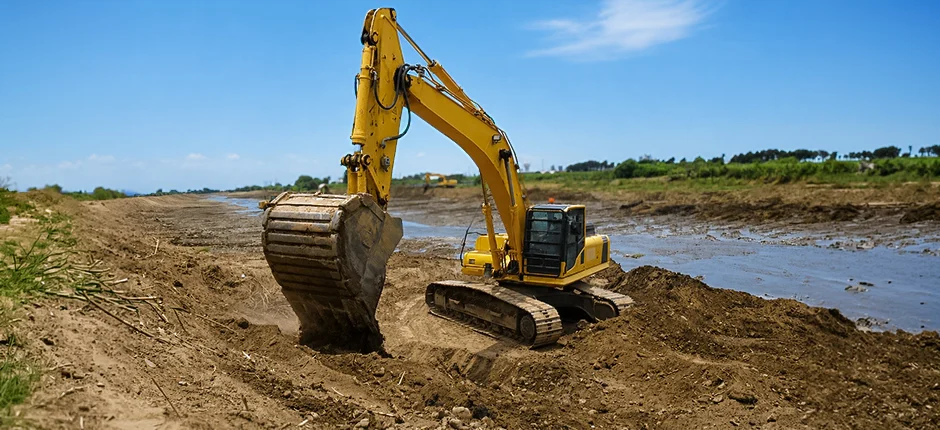
- River Desilting: Immediate and aggressive clearing of the Piura River’s cauce (riverbed) is essential to increase water-carrying capacity.
- Infrastructure Deepening: Deepening the river channel and clearing sediment that has accumulated over the last decade.
- Desfogue Expansion: Expanding the relief channels for the Piura River to prevent overflow into urban zones.
These are not architectural marvels; they are basic civil engineering tasks that require only political will and administrative agility.
The Private Sector: An Untapped Resource
The private sector stands ready to assist. There is a proven capacity within the business community for rapid deployment of resources and technical expertise. However, this potential is currently stifled by the rigid and often sluggish public procurement processes.
It is imperative that the Executive branch acts now to approve an emergency decree that expands the use of the "Works for Taxes" mechanism. By allowing private entities to execute these urgent prevention works with tax credits, the government can bypass the traditional, slow-moving bureaucratic procurement cycles. This is the only way to ensure that interventions are completed in time to mitigate the impact of the coming rainy season.
Conclusion: Breaking the Cycle
The story of Piura should not be a cautionary tale told to future generations about the absurdity of human governance. It should be a chapter that we close immediately.
If we continue on the current path, the "myth of eternal return" will remain our reality—a cycle where we wait for the sky to darken, watch the rivers swell, and lament the losses, only to repeat the same errors the following year. It is time for the government to move past the rhetoric of "unforeseeable natural disasters" and accept responsibility for the man-made failures of the present.
We must demand that the bureaucratic inertia be replaced by a culture of urgency. We must ensure that the tools of the state—the budget, the private sector partnerships, and the technical agencies—are aligned toward a single goal: the protection of human life. Let us make this legend a relic of the past, so that in the future, the only place we find such tales of circular neglect is within the pages of a work of fiction.