Executive Summary: A Pillar of Economic Resilience
The Peruvian mining sector, the undisputed engine of the nation’s economy, continues to demonstrate robust resilience and growth as of mid-2026. According to the latest data released by the Ministry of Energy and Mines (Minem), the sector is navigating global market fluctuations with steady production gains across key metallic commodities.
The Boletín Estadístico Minero (BEM) for June 2026 highlights a landscape where strategic planning and operational consistency are yielding tangible results. With significant production spikes in iron, tin, and molybdenum, the Peruvian mining industry reaffirms its role as the primary driver of national GDP, private investment, and regional development. As the global demand for energy transition metals intensifies, Peru’s ability to sustain and increase its extraction output positions the country as a critical player in the international supply chain.
Main Facts: June 2026 Performance Highlights
The latest statistical report from the General Directorate of Mining Promotion and Sustainability (DGPSM) underscores a positive trend for the first half of the year. While the global mining landscape faces challenges related to logistics and geopolitical uncertainty, Peru’s output metrics remain largely bullish.
Key Production Milestones:
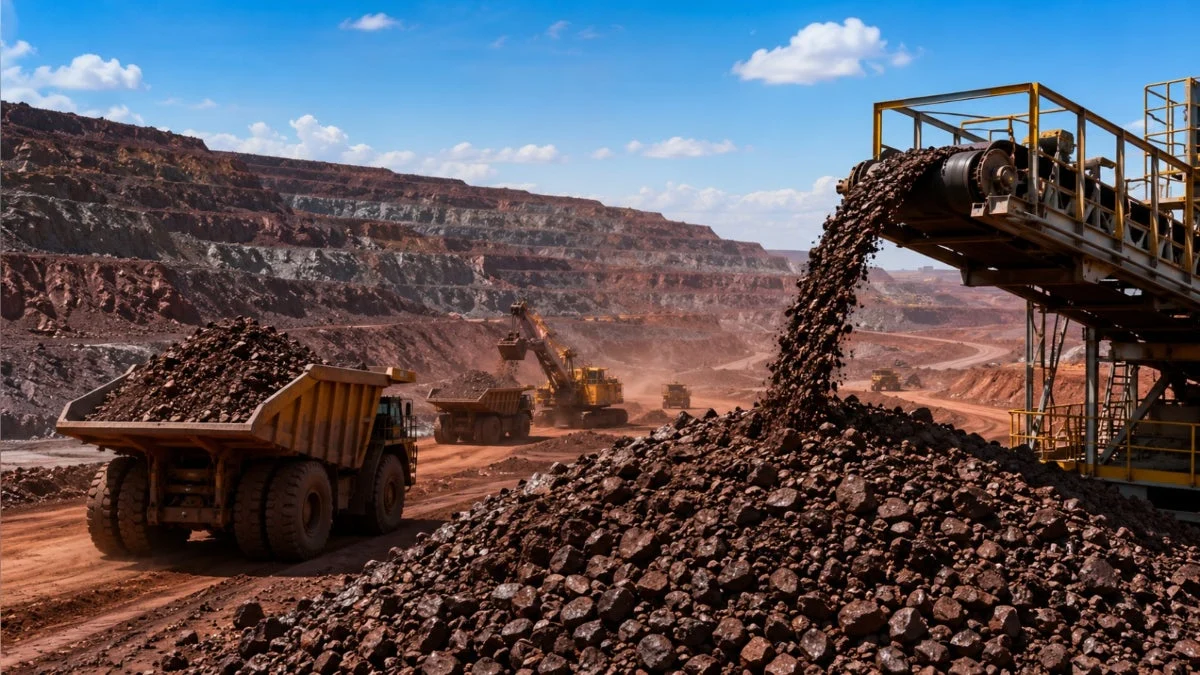
- Iron Ore Dominance: The standout performer for the first half of 2026 is iron ore. Cumulative production from January to June 2026 surged by an impressive 41.1% compared to the same period in 2025. This massive uptick signals a high operational capacity and a successful scaling of extraction projects.
- Tin and Molybdenum Gains: In June 2026 alone, tin production saw a significant boost of 12.9%, while molybdenum recorded a 5.4% increase compared to the previous year. Furthermore, molybdenum production showed a month-over-month growth of 6.5%, highlighting the efficiency of the southern mining corridor.
- Copper’s Steady Contribution: As the flagship metal of the Peruvian economy, copper maintained a steady trajectory with a cumulative production increase of 1.9% for the January-to-June period compared to the previous year. While seemingly modest, this growth is significant given the massive scale of existing operations.
Chronological Overview: Tracking the 2026 Trajectory
To understand the current state of the mining sector, one must analyze the progression throughout the first two quarters of 2026.
Q1 2026: Setting the Foundation
The year began with a cautious yet optimistic outlook. Mining operators focused on operational optimization and infrastructure maintenance during the summer months. Despite seasonal climatic challenges, production levels remained consistent with 2025 forecasts, providing a stable baseline for the subsequent months.
April-May 2026: Scaling Operations
During the transition to the second quarter, the sector began to witness the dividends of private investments made in late 2025. The expansion of capacity in major molybdenum projects in the Arequipa, Moquegua, and Tacna regions began to reflect in the monthly statistics, setting the stage for the growth observed in June.
June 2026: The Surge
June served as a high-water mark for the first half of the year. The report confirms that the administrative and technical adjustments implemented by the DGPSM, coupled with favorable international price indices for iron and molybdenum, allowed companies to maximize throughput. This period proved that the strategic roadmap outlined by the Minem is effectively facilitating increased activity across the board.
Supporting Data: Regional and Sub-sectoral Breakdown
The success of the Peruvian mining sector is not uniform; it is geographically concentrated and specialized. The BEM report provides a granular look at where this growth is originating.
The Southern Mining Corridor: A Hub of Activity
The regions of Arequipa, Moquegua, and Tacna have solidified their status as the heart of Peru’s molybdenum production. Combined, these three regions account for a staggering 79.9% of the national total. This concentration of production highlights the importance of regional infrastructure—including energy grids and logistics corridors—in maintaining national output.
Comparative Growth Metrics
| Commodity | Period | Growth (%) |
|---|---|---|
| Iron | Jan-Jun (Cumulative) | +41.1% |
| Tin | June (Inter-annual) | +12.9% |
| Molybdenum | June (Inter-annual) | +5.4% |
| Copper | Jan-Jun (Cumulative) | +1.9% |
These figures suggest that while copper remains the volume leader, the diversification into secondary metallic minerals is providing a necessary buffer against market volatility, ensuring that the mining sector as a whole remains profitable and productive.
Official Responses: Minem’s Strategic Vision
The Ministry of Energy and Mines has framed these results not just as financial statistics, but as proof of concept for the government’s mining policy.
Strengthening Economic Foundations
A spokesperson for the Minem stated that the positive performance of the mining sector reaffirms its "strategic importance to the Peruvian economy." The Ministry emphasizes that the growth is not merely about tonnage; it is about the "multiplier effect" that mining has on the broader Peruvian economy. This includes:
- Employment: Direct and indirect job creation, which sustains millions of households.
- Export Revenue: The primary source of foreign currency for the Peruvian state.
- Tax Contributions: The essential funding mechanism for regional and local development projects, which are heavily dependent on mining canon transfers.
Commitments to Sustainability
The DGPSM reiterated its commitment to "Mining with a Purpose." The Ministry highlighted that the current growth must be coupled with rigorous environmental and social standards. The government is actively working to streamline permit processes without compromising the environmental oversight that is essential for the industry’s social license to operate.
Implications: The Future of Peruvian Mining
The data from the first half of 2026 suggests that Peru is well-positioned for the remainder of the year. However, the path forward involves navigating several critical variables.
Global Energy Transition
As the world accelerates its transition to renewable energy and electric vehicles (EVs), the demand for copper, molybdenum, and tin—key components in batteries, wiring, and high-tech manufacturing—will continue to rise. Peru’s ability to maintain its current production growth is a vital asset in the global race for energy transition metals.
Domestic Challenges and Opportunities
To maintain this momentum, the government and private sector must address several ongoing challenges:
- Investment Certainty: Sustained growth requires a stable regulatory environment. The government’s continued efforts to provide transparency in the permitting process are critical to attracting the next wave of foreign direct investment.
- Social License: The prosperity generated by the mining sector must be felt at the local level. The Minem’s emphasis on "territorial development" is a recognition that the long-term success of the sector depends on the support of the communities hosting these operations.
- Infrastructure Upgrades: To sustain the double-digit growth seen in iron and tin, continued investment in logistics, port capacity, and reliable electricity supply is paramount.
Final Outlook
The findings from the June 2026 Boletín Estadístico Minero paint a picture of a sector that is not only surviving but thriving. By leveraging its vast mineral wealth and capitalizing on global demand, Peru is securing its position as a global mining powerhouse.
The Minem’s concluding remarks reflect a sentiment of cautious confidence: the extraction and utilization of metallic minerals represent a "fundamental pillar for the growth of the subsector" and the nation at large. As long as the current trajectory of increased production and strategic investment continues, the mining sector will remain the cornerstone of Peru’s economic development for years to come.
In summary, the first six months of 2026 have served as a testament to the resilience of the Peruvian mining model. With key minerals showing growth rates that exceed market expectations, the stage is set for a strong finish to the year, provided that the current balance between production efficiency, social responsibility, and regulatory stability is maintained.