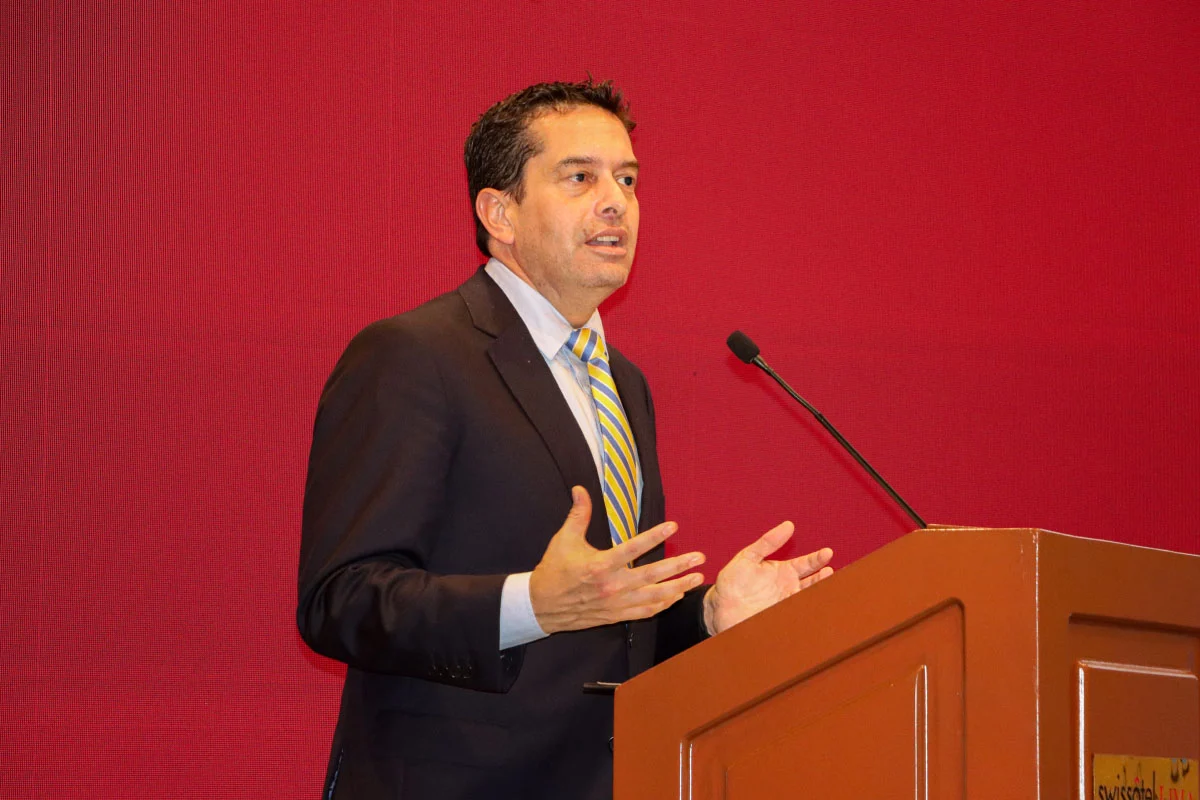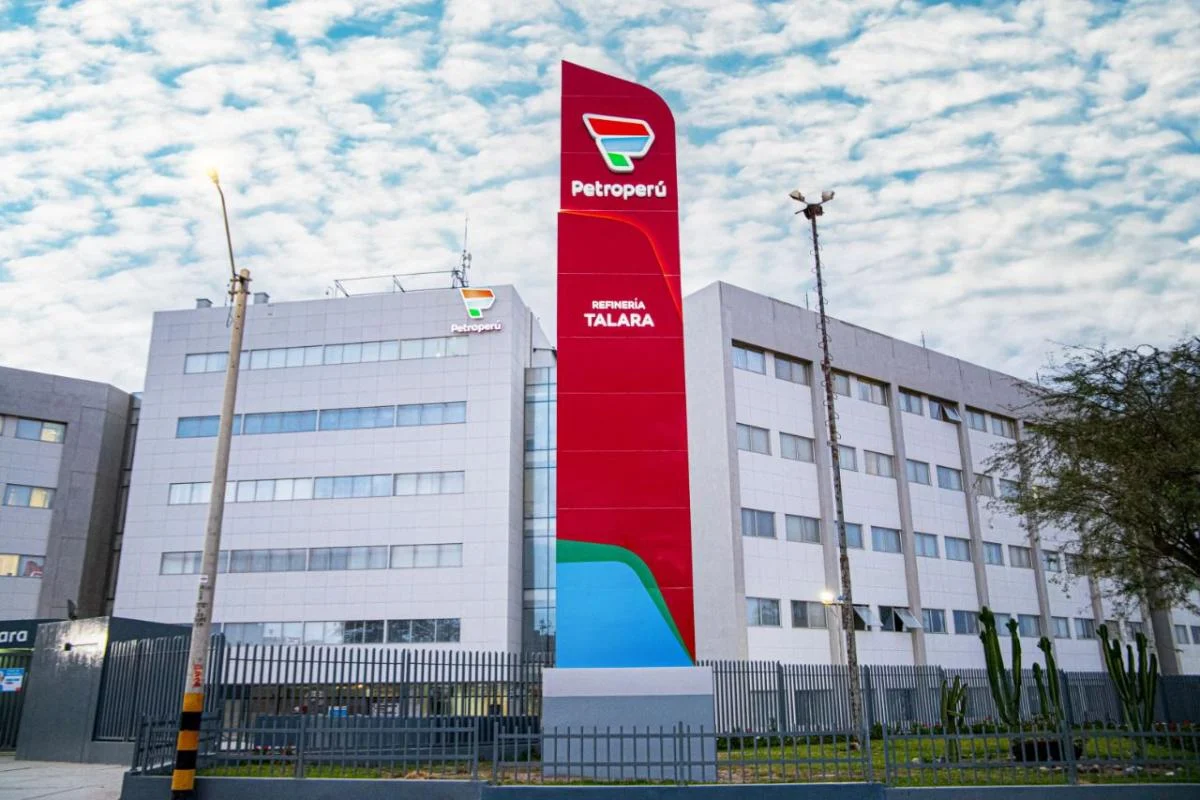
In a long-awaited development for Peru’s energy sector, the Chairman of ProInversión, Luis Del Carpio, confirmed this Thursday that the disbursement of a $475 million bridge loan for the state-owned oil company, Petroperú, is imminent. This announcement serves as the definitive conclusion to a three-month period of extreme market volatility and corporate uncertainty, following the government’s initial pledge in May—under the administration of José María Balcázar—to provide a financial rescue package totaling up to $2 billion.
The news has been met with a mix of relief and skepticism by financial analysts, who point out that while this injection provides a necessary "oxygen tank" for the struggling entity, it highlights the systemic challenges the company has faced in its attempt to stabilize operations.
The Chronology of a Financial Standoff
The path to this bridge loan has been fraught with bureaucratic hurdles and fiscal scrutiny. The saga began in May 2026, when the executive branch announced a sweeping plan to bail out the debt-ridden Petroperú. The proposal was ambitious: a $2 billion liquidity support package intended to modernize the company’s capital structure and settle mounting operational debts.
However, the transition from political promise to financial reality proved difficult. While the initial roadmap suggested a first tranche of $500 million, negotiations with financial institutions and internal audits adjusted that figure to $475 million. For three months, the lack of concrete progress regarding this disbursement fueled rumors of a deeper insolvency crisis, impacting the company’s credit rating and its ability to negotiate with international fuel suppliers.
According to Del Carpio, the final hurdles have been cleared. “All documents have been signed. The Board of Directors of Petroperú has communicated the status through the stock market. The disbursement should take place in the coming days, within this month of September,” Del Carpio stated in an interview with RPP.
A Systemic Crisis: Behind the Operational Paralysis
The urgency of this funding cannot be overstated. Petroperú has been grappling with a severe liquidity crisis that has effectively paralyzed key operational segments of the business. The situation reached a breaking point when the Comptroller General of the Republic (Contraloría General de la República) launched a scathing investigation into the logistical bottlenecks at Peruvian ports.
Contrary to the company’s earlier suggestions that delays in fuel imports were due to unpredictable climate anomalies or port congestion, the Comptroller’s report identified the root cause as a "severe lack of financial liquidity." The findings paint a picture of a company so cash-strapped that it was unable to fulfill the most basic contractual obligations to its suppliers.
The "Overstay" Crisis and Financial Penalties
One of the most alarming revelations from the Comptroller’s audit is the staggering financial cost of these operational inefficiencies. Between January and August 2026 alone, Petroperú accumulated an estimated $39,159,898 in penalties related to maritime overstay (demurrage).
The audit identified three critical factors driving these costs:
- Failure of Prepayment Conditions: Petroperú was unable to meet the mandatory upfront payments required by international fuel providers, forcing the company to shift to a high-risk, "pay-as-you-go" model based on daily cash availability.
- Fractionated Discharge Operations: Because payments were often delayed or insufficient, international suppliers frequently suspended pumping operations, forcing the company to accept cargo in smaller, inefficient batches.
- Laytime Saturation: The contractual "free time" allotted for unloading tankers was consistently exceeded due to these constant logistical interruptions, leading to the massive accumulation of demurrage charges.
The Comptroller warned that this cycle of logistical and financial paralysis is not a one-off event, but rather a "recurring situation that has been manifesting for several years," suggesting deep-seated structural issues within the company’s procurement and financial management offices.
Official Responses and Administrative Maneuvers
The responsibility for managing this infusion of capital rests with Petroperú Invest, a subsidiary specifically created to ring-fence these resources and ensure they are utilized for critical liquidity needs rather than being absorbed into the company’s general operating debt.
On August 26, the Board of Directors of Petroperú formally appointed Carlos Adrián Linares Peñaloza as the company’s legal representative to execute the "Bridge Credit Agreement." This move was designed to provide international lenders with the legal certainty required to release the funds.
Industry experts interpret this move as a strategic attempt by the government to isolate the new funds from the company’s historical liabilities, creating a "clean slate" for the immediate procurement of crude oil and refined products. However, the government faces pressure to prove that this capital will be used for sustainable operational recovery rather than mere "survival" spending.
Implications for the Future: A Bridge to Where?
While the $475 million acts as a critical lifeline, it is essentially a stopgap measure. The broader $2 billion financial package remains the ultimate goal, and this bridge loan is designed to be fully absorbed and canceled once the larger, long-term financing operation is finalized.
Market Implications
The immediate effect of this disbursement is expected to be a stabilization of fuel prices and availability in the domestic market. For months, the specter of fuel shortages caused by Petroperú’s inability to pay suppliers has loomed over the logistics and transportation sectors. The arrival of these funds is expected to restore confidence among international suppliers, potentially reducing the risk premiums currently applied to Petroperú’s cargo.
Political and Economic Risks
The political cost of this bailout remains high. Critics argue that pouring capital into a company with a documented history of "recurring" operational failures is an inefficient use of public funds. Economists have suggested that without a fundamental restructuring of Petroperú’s corporate governance—specifically regarding its procurement policies and independent oversight—the $2 billion rescue package may simply delay, rather than solve, the company’s insolvency.
Furthermore, the Comptroller’s office has emphasized that the "recurring" nature of the logistical failures warrants a full-scale administrative overhaul. Whether the current administration under the legacy of the Balcázar government has the political capital to implement such changes remains the central question for stakeholders.
Conclusion
The release of the $475 million bridge loan is a necessary, albeit late, intervention. It provides Petroperú with the breathing room to continue its operations, prevent fuel shortages, and avoid further astronomical demurrage penalties. However, this is merely the first phase of a complex financial rescue.
As the company moves forward, it faces a two-fold challenge: satisfying the stringent requirements of its creditors to unlock the remaining $1.5 billion+ of the rescue package, and implementing the internal reforms necessary to stop the hemorrhaging of funds identified by the Comptroller. For the Peruvian energy sector, the next few months will be critical in determining whether Petroperú can evolve into a sustainable, modern energy company or if it will remain a permanent ward of the state, reliant on continuous, costly interventions to survive.
For now, the focus shifts to the upcoming days, where the physical transfer of funds will officially turn the page on this chapter of uncertainty, setting the stage for the broader restructuring that the nation’s energy security so desperately requires.