Executive Summary
In a decisive move to fortify national emergency response capabilities, the Peruvian government, led by President Keiko Fujimori, has announced the strategic deployment of five major naval vessels from the Marina de Guerra del Perú (MGP). These units are specifically tasked with mitigating the potentially devastating impacts of the El Niño phenomenon. As meteorological forecasts point toward an intensification of climate-related risks, these ships will serve as the backbone of the country’s maritime logistical support, focusing on personnel transport, emergency cargo distribution, and critical humanitarian assistance to vulnerable coastal regions.
The Operational Strategy: A Proactive Maritime Defense
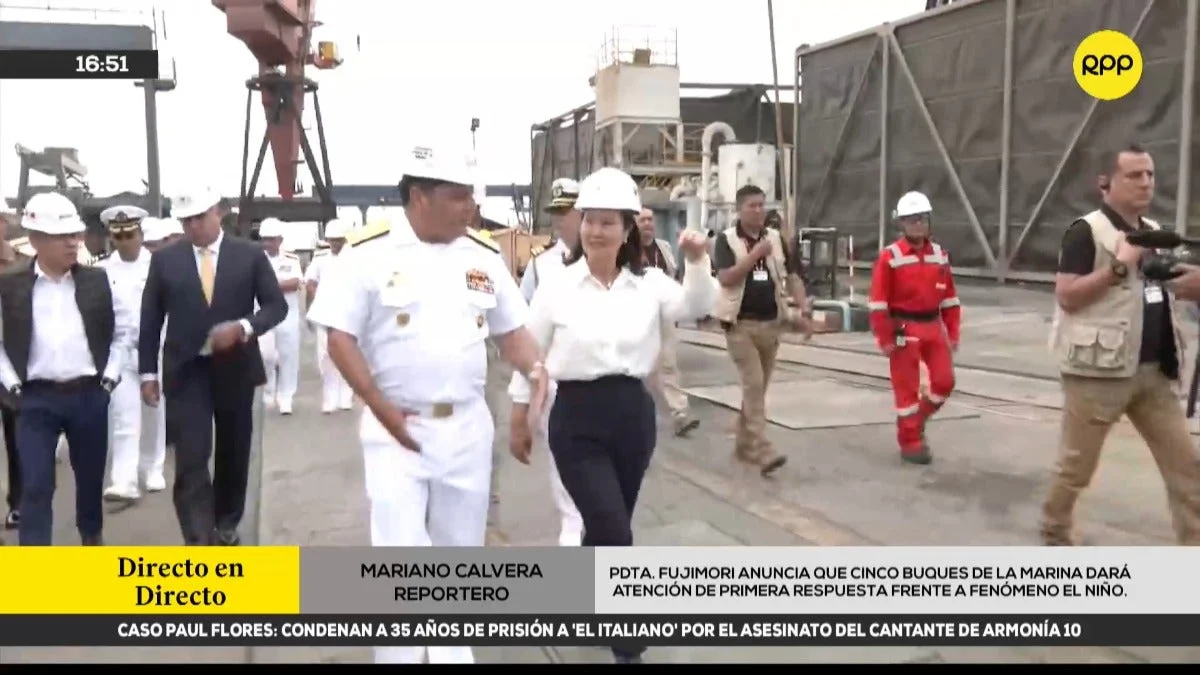
During an official visit to the Base Naval del Callao, President Fujimori inspected the BAP Paita, one of the key vessels slated for the upcoming mission. The deployment represents a shift from reactive emergency management to a proactive posture. By positioning these vessels strategically along the Peruvian coastline, the government aims to bridge the gap between affected communities and essential resources that may become unreachable by land due to flooding, bridge collapses, or road closures caused by torrential rains.
The logistics involved in this deployment are extensive. The vessels are equipped to handle high-capacity cargo, ensuring that food supplies, medical equipment, and construction materials for infrastructure repair can be delivered rapidly. Furthermore, the ability to mobilize personnel—including specialized rescue teams and medical staff—directly to the point of impact marks a significant upgrade in the nation’s disaster response architecture.
Chronology: From Planning to Deployment
The mobilization of the naval fleet is the result of months of inter-agency coordination. The timeline for this operation has been meticulously calculated to align with the anticipated peak of the climatic event:
- Initial Planning Phase: Following the creation of the Comisión Nacional de Gestión del Riesgo del Fenómeno El Niño (Comisión FEN), headed by Minister of Agrarian Development and Irrigation Marco Vinelli, the government began assessing the vulnerability of coastal infrastructure.
- Assessment and Inspection: Throughout October, military and civil authorities conducted technical evaluations of the naval fleet to ensure operational readiness for harsh weather conditions.
- The November Deadline: President Fujimori confirmed that the fleet will be fully operational by the second half of November. This date was chosen based on data provided by naval command, identifying mid-November as the start of the high-risk window for intense precipitation.
- Execution and Maintenance: Ongoing efforts are currently focused on finalizing the logistical protocols and supply chains that will support these ships while they are stationed along the coast.
Supporting Data: Why the Navy is Critical
The geography of Peru presents a unique challenge during El Niño events. When mountainous regions receive excessive rainfall, the runoff often destroys primary transport arteries—the Pan-American Highway and secondary connecting roads. Historically, this has led to the isolation of northern coastal cities.
Strategic Advantages of Naval Intervention:
- Logistical Autonomy: Naval vessels operate independently of terrestrial infrastructure. Even if highways are washed away, the sea remains a viable corridor for logistics.
- Medical Support: Many of the MGP vessels are equipped with rudimentary infirmaries, allowing them to provide first aid and stabilizing care to victims before they can be transported to larger regional hospitals.
- Command and Control: The BAP Paita and its counterparts serve as floating command centers, allowing regional authorities to coordinate emergency efforts even if local telecommunications and power grids are compromised.
- Scalability: By using five distinct vessels, the MGP can cover various geographic sectors simultaneously, ensuring that help is not concentrated in a single zone but is distributed according to the severity of the impact.
Official Responses and Governance
The operation is overseen by a high-level ministerial task force. President Fujimori, accompanied by the President of the Council of Ministers, Luis Galarreta, and Minister of Defense Rafael Belaunde, underscored that this is a "whole-of-government" approach.
The Role of Comisión FEN
Minister Marco Vinelli, as head of the Comisión FEN, holds the primary responsibility for the integration of civilian and military efforts. His commission is currently tasked with streamlining the communication between the Ministry of Economy and Finance (MEF), the Ministry of Housing, and the Ministry of Defense. The goal is to ensure that the bureaucratic obstacles that often hinder emergency funding are removed, allowing for the rapid deployment of resources as soon as the signal is given.
"The almirantes have been clear about the meteorological risks," President Fujimori stated during the press conference at the Callao naval base. "Our duty is to be ready before the first major rains arrive. We are not just preparing for the event; we are preparing to save lives through the most efficient tools available to the Peruvian state."
Implications for National Security and Public Policy
The deployment of these five vessels has implications that extend beyond immediate disaster relief. It signals a shift in the perceived role of the Peruvian Navy in the 21st century.
1. Strengthening the Social Contract
By utilizing military assets for humanitarian aid, the government reinforces the role of the armed forces as a pillar of support for the civilian population. This strengthens the public perception of the state’s ability to protect its citizens during periods of extreme uncertainty.
2. Economic Continuity
El Niño is not just a humanitarian crisis; it is an economic one. The destruction of crops and the disruption of trade routes cost the Peruvian economy billions of dollars annually. By maintaining maritime logistics, the government hopes to keep supply chains open for essential goods, thereby curbing inflation and preventing the scarcity of food and fuel in remote regions.
3. Future-Proofing Infrastructure
The involvement of the Ministry of Housing and the Ministry of Defense indicates that this deployment is also a data-gathering mission. The lessons learned during the upcoming months will likely dictate future investments in coastal defenses, drainage systems, and maritime port infrastructure. The government is essentially using this emergency as a stress test for the country’s national resilience.
Challenges Ahead
Despite the optimism surrounding the naval deployment, challenges remain. The logistics of sustaining a multi-ship operation at sea for an extended duration are complex. Fuel consumption, crew fatigue, and the need for constant maintenance in corrosive saltwater environments will test the limits of the MGP’s capacity.
Furthermore, the integration of civilian aid (from the Ministry of Agrarian Development) with military operations (the Navy) requires seamless communication. Any failure in the digital or logistical synchronization between these entities could lead to delays at a time when every hour counts.
Conclusion
The government of Peru is taking an assertive step toward managing the inevitable challenges posed by the El Niño phenomenon. By deploying five of the Marina de Guerra del Perú’s finest vessels, the administration is prioritizing the safety of its citizens through a combination of military precision and humanitarian intent.
As the calendar turns toward mid-November, all eyes will be on the coast. The success of this initiative will not only be measured by the amount of cargo transported or the speed of the response but by the resilience of the Peruvian people when faced with the power of nature. With the full backing of the Presidency and a clear mandate for the Comisión FEN, the MGP stands ready to navigate the coming storm, serving as a beacon of stability for a nation determined to withstand the pressures of a changing climate.