Executive Summary: A Standoff in the Halls of Power
In a political climate defined by fragility and institutional tension, Peru’s Ombudsman, Josué Gutiérrez, has found himself at the center of a burgeoning constitutional crisis. Following a series of remarks concerning the potential popularity of a presidential decision to dissolve the national legislature, Gutiérrez is now facing a formal constitutional complaint filed by Congresswoman Analí Márquez of the Juntos por el Perú (Together for Peru) party.
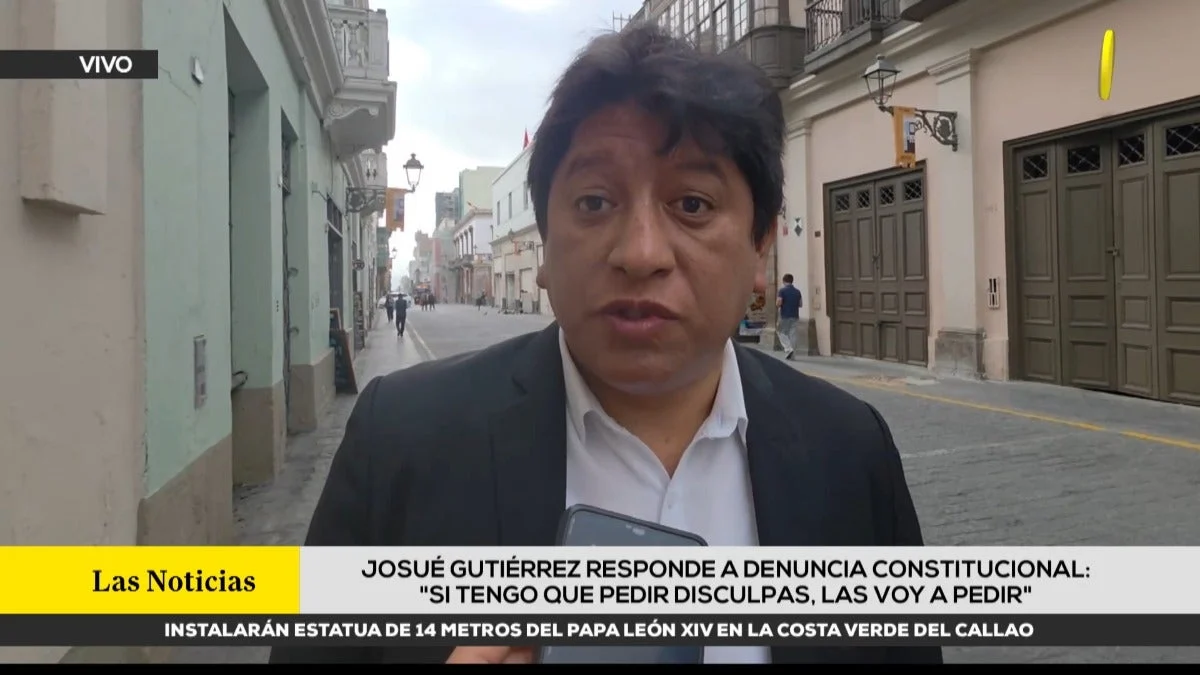
The Ombudsman, an office historically tasked with defending the fundamental rights of citizens and monitoring the performance of the state, now faces the threat of removal and a ten-year ban from public service. In an exclusive interview with RPP, Gutiérrez signaled a willingness to face the legislative branch, offering to provide explanations and, if necessary, issue formal apologies to assuage the concerns of those who believe his rhetoric crossed the line into undermining democratic stability.
Chronology of the Controversy
The events leading to the current legislative standoff unfolded rapidly over the past several weeks, drawing sharp criticism from legal experts, civil society organizations, and political rivals.
- The Initial Remarks: The controversy ignited when Gutiérrez suggested that the President of the Republic could potentially see an increase in her approval ratings if she were to initiate a dissolution of the Congress. The statement was interpreted by many as a dangerous flirtation with authoritarianism and a breach of the institutional neutrality expected of the Ombudsman.
- The Backlash: Immediately following the broadcast of these comments, political actors across the spectrum expressed alarm. Critics argued that such language from a constitutional officer—whose mandate is to uphold the rule of law—could be perceived as an endorsement of extra-constitutional power grabs.
- The Filing of the Complaint: Congresswoman Analí Márquez formally submitted a constitutional complaint, arguing that Gutiérrez had overstepped his authority and violated the separation of powers. The document alleges that the Ombudsman failed to uphold the dignity and constitutional mandate of his office.
- The Institutional Denial: In the days following the public outcry, the Office of the Ombudsman issued several clarifications, insisting that Gutiérrez never intended to support or promote the dissolution of the legislative branch, nor the destabilization of the constitutional order.
- The Current Stance: As of this week, Gutiérrez has confirmed his availability to appear before the Subcommittee on Constitutional Accusations, marking a pivotal moment in his tenure.
Supporting Data: The Allegations of Constitutional Infraction
The constitutional complaint filed by Analí Márquez is comprehensive, alleging that Gutiérrez has breached at least five distinct articles of the Peruvian Constitution. These articles serve as the bedrock of the country’s institutional stability.
The Alleged Violations
The complaint rests on the premise that the Ombudsman, by his own words, compromised the impartiality of his office. According to the document, the specific grievances include:
- Vulnerability of Democratic Order: The claim that the Ombudsman’s rhetoric could be interpreted as encouraging a breach of the constitutional order.
- Separation of Powers: An assertion that the Ombudsman, as a constitutional actor, should remain neutral regarding the internal mechanisms of legislative survival.
- Abuse of Authority: The argument that the Ombudsman utilized the platform of his office to provide political commentary that is beyond the scope of his duties.
The Requested Sanctions
The gravity of the complaint is underscored by the severity of the proposed penalties. The document explicitly requests:
- Immediate Removal: The permanent separation of Josué Gutiérrez from his post as Ombudsman.
- Inhabilitation: A ban on exercising any public function for a duration of up to ten years, which would effectively end his political career and disqualify him from future governmental appointments.
Official Responses: The Ombudsman’s Defense
In his recent communication with the press, Josué Gutiérrez sought to reframe the narrative, positioning himself as a defender of democratic values rather than an adversary to them.
"If I must offer apologies, I will do so, and I have already expressed the corresponding excuses," Gutiérrez stated. "I have never promoted, nor will I ever promote, a state that attempts to break the constitutional order."
Gutiérrez’s strategy appears to be one of conciliation and clarification. He argues that his previous comments were mischaracterized and that he holds the institution of the Congress in high regard. By signaling his willingness to appear before the legislative body, he is attempting to show respect for the very institution he was accused of undermining.
Furthermore, the Ombudsman indicated that he views this potential trial as an "opportunity"—a chance to demonstrate his commitment to democratic principles and to clarify the intent behind his words. Whether this approach will satisfy the members of the Subcommittee on Constitutional Accusations remains a subject of intense speculation in the corridors of the Peruvian government.
Implications for the Peruvian Political Landscape
The potential removal of an Ombudsman is a rare and destabilizing event in any democracy. The outcome of this case will have profound implications for the future of Peru’s governance.
Institutional Trust and the Ombudsman’s Office
The Office of the Ombudsman is intended to be the "voice of the citizen." When that voice becomes embroiled in political scandal, the public’s trust in the institution is inevitably eroded. If Gutiérrez is removed, it will create a vacuum of leadership in a vital watchdog agency, potentially leaving the country without a strong arbiter during a time of significant social unrest.
The Weaponization of Constitutional Complaints
Legal scholars have noted a worrying trend in Peruvian politics: the use of "constitutional complaints" as a political tool. When such mechanisms—designed for serious breaches of law—are used to settle political scores or punish rhetorical missteps, the constitutional system itself can become weakened. The upcoming proceedings against Gutiérrez will be closely watched to see if they follow a rigorous legal standard or if they devolve into partisan retribution.
The Fragility of the Executive-Legislative Balance
The root of this issue lies in the ongoing friction between the President and the Congress. The fact that the Ombudsman’s comment on the popularity of a presidential "close-down" of Congress triggered such a violent reaction highlights just how thin the ice is in Lima. Both branches of government remain highly sensitive to any rhetoric that suggests the dissolution of the other, a trauma stemming from historical precedents in the country.
Concluding Remarks
As the legislative process begins, the nation looks toward the Congress to see how it will adjudicate the conduct of its Ombudsman. Will the legislature opt for the harsh path of removal, or will they accept the apologies of an official who claims his words were taken out of context?
Josué Gutiérrez’s future hinges on his ability to convince his peers—and the public—that his allegiance lies with the democratic constitution, not with the political maneuvering that currently grips the Peruvian capital. As he prepares to potentially stand before his accusers, the primary question remains: can an official survive such a public erosion of their institutional legitimacy?
For now, the country waits. The outcome of this case will not only determine the fate of one man but will also signal the current resilience of the Peruvian democratic project in the face of internal division.