Introduction: A New Era of Kinetic Intelligence
In a striking demonstration of progress, the recent technological showcases in Beijing have transcended the gimmicks of the past, offering a sophisticated glimpse into the dual nature of modern robotics. While audiences were captivated by the sight of humanoid machines executing precise breakdance routines, the true significance of the event lay hidden within the mundane. Beyond the rhythmic gyrations and coordinated choreography, these machines demonstrated a burgeoning aptitude for industrial labor, precision manufacturing, and logistical support. This dual-track evolution—balancing the "show-off" capabilities of human-like movement with the rigorous demands of the factory floor—marks a pivotal moment in the trajectory of artificial intelligence and mechanical engineering.
Main Facts: The Convergence of Art and Industry
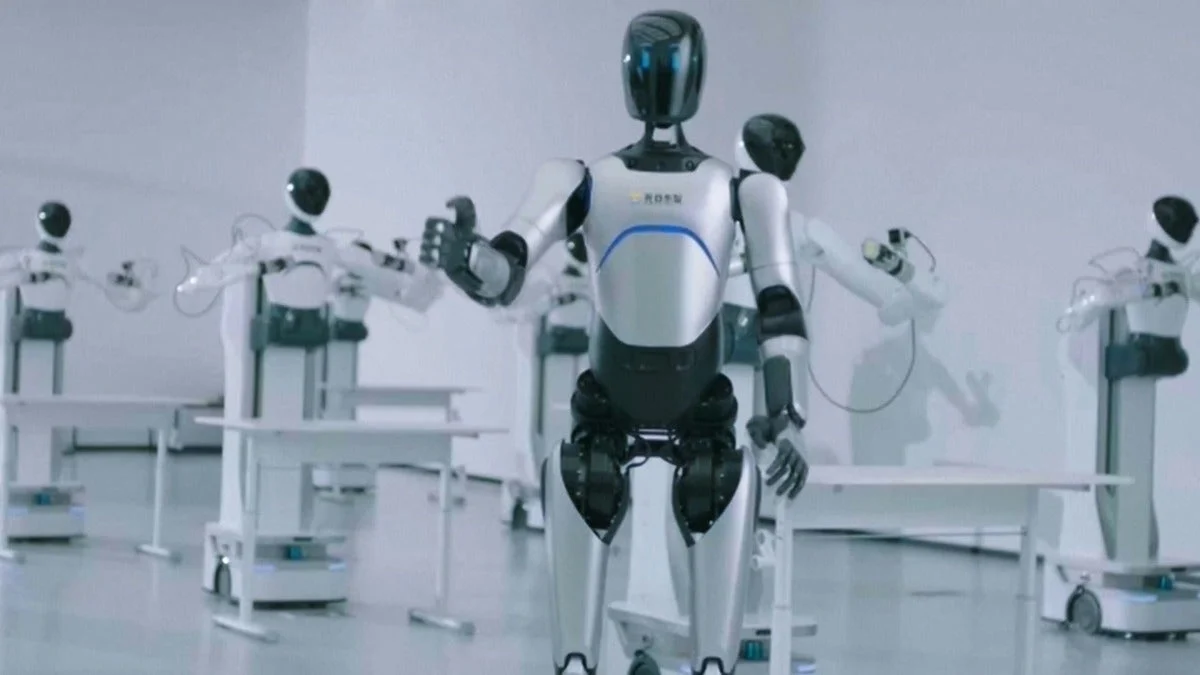
The recent exhibition in Beijing served as a microcosm for the current state of robotics. At the heart of the display were humanoid platforms designed to mimic human biomechanics with unprecedented fluidity.
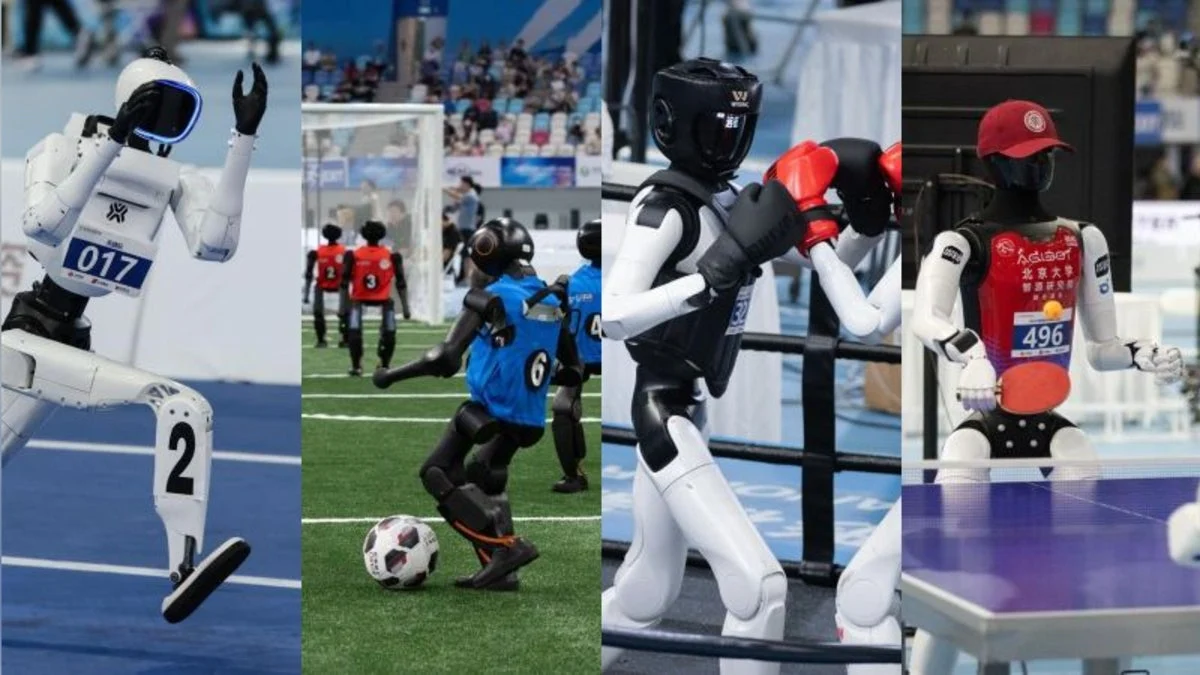
The primary narrative presented was one of versatility. On one hand, the "entertainer" robots showcased high-degree-of-freedom (DoF) movement, utilizing advanced sensors and feedback loops to perform complex artistic maneuvers. On the other, the "worker" units demonstrated the ability to manipulate delicate objects, navigate uneven terrains, and interact with standardized industrial tools.
Key takeaways from the event include:
- Adaptive Kinematics: The transition from rigid, pre-programmed motion to real-time adaptive movement.
- Industrial Integration: The shift toward robots that can operate in human-centric workspaces without requiring specialized, robot-only environments.
- The "Uncanny" Utility: The realization that the same hardware used for entertainment—such as sophisticated hydraulic or electric actuators—is the exact technology required to perform high-stakes industrial assembly.
Chronology: The Road to Beijing
To understand the significance of this moment, one must trace the development of humanoid robotics over the last two decades.
The Early Era (2000–2010): The Age of Stability
In the early 2000s, humanoid robotics was defined by the quest for balance. Projects like Honda’s ASIMO were heralded as breakthroughs because they could walk without falling. However, these machines were slow, heavy, and lacked the "finesse" required for anything other than basic navigation.
The Rise of Dynamic Movement (2010–2018)
The mid-2010s saw a massive shift toward dynamic control. Engineers moved away from static balancing—where the robot shifts weight cautiously—toward dynamic balancing, where the robot uses momentum to maintain its position. This period introduced the "parkour" era of robotics, where machines began to jump, flip, and climb.
The Era of Commercialization (2019–Present)
The Beijing demonstration represents the current phase: the transition from laboratory curiosities to commercial commodities. The focus has shifted from "Can we make it move?" to "Can we make it pay for itself?" This involves integrating large language models (LLMs) for cognitive processing and advanced tactile sensing for manual labor.
Supporting Data: The Economic and Technical Landscape
The shift from the dance floor to the factory floor is backed by compelling data regarding the global robotics market. According to recent industrial forecasts, the humanoid robotics sector is expected to grow at a Compound Annual Growth Rate (CAGR) of over 25% through 2030.
Technical Metrics
- Actuator Density: Modern humanoid units now feature up to 50 active joints, allowing for a range of motion that rivals the human musculoskeletal system.
- Latency Reduction: Through 5G integration, command-to-actuation latency has dropped below 10 milliseconds, enabling the instantaneous reactions necessary for factory safety.
- Cost Efficiency: While early prototypes cost tens of millions, the current manufacturing push aims to bring unit costs under $100,000, making them viable for large-scale logistics deployments.
Market Drivers
The primary driver for this transition is the global labor shortage. As aging populations in major economies create a vacuum in manufacturing and elderly care, the demand for "general-purpose" robots has reached a fever pitch. Unlike specialized automation (which can only perform one task), the humanoid form factor is inherently flexible, allowing it to swap tasks by simply downloading new software.
Official Responses: Navigating the Ethical and Strategic Landscape
Industry leaders and regulatory bodies have responded to the Beijing demonstrations with a mix of cautious optimism and strategic urgency.
The Engineering Perspective
Lead developers at the Beijing showcase emphasized that the "dancing" is not merely for show—it is a rigorous stress test. "If a robot can perform a complex breakdance routine, it proves that its control systems can handle the chaotic, multi-vector forces of a real-world environment," noted one lead engineer. "It is a performance test for our dynamic stabilizers."
The Regulatory View
Government officials have signaled a desire to lead in the establishment of international standards for human-robot interaction. Concerns regarding safety, data privacy, and the displacement of human workers remain at the forefront of policy discussions. There is a strong push to ensure that as these robots move into the workforce, they adhere to "human-in-the-loop" protocols, ensuring that human oversight remains the final arbiter of machine action.
Implications: The Future of Labor and Society
The migration of humanoid robotics from the controlled environment of an exhibition hall to the unpredictable reality of the factory floor carries profound implications for the global economy.
Redefining the Factory Floor
Historically, factories were designed around the limitations of robots—heavy cages, specialized lighting, and fixed positions. The new generation of humanoids, capable of navigating human workspaces, suggests a move toward "cobotics," or collaborative robotics. This will allow for modular manufacturing, where production lines can be reconfigured in hours rather than months.
The "General-Purpose" Revolution
The most significant implication is the advent of the general-purpose robot. Once a machine has the dexterity to dance, it has the dexterity to assemble a circuit board, pick fruit, or manage a warehouse inventory. This represents a fundamental shift in the economics of automation; the cost of software becomes the primary barrier to entry, rather than the cost of hardware redesign.
Societal Shifts and Workforce Transitions
The rise of these robots necessitates a reimagining of the human workforce. As robots take over the "dull, dirty, and dangerous" tasks, the role of the human employee will evolve toward management, maintenance, and high-level strategy. This transition, while promising increased productivity and economic growth, will require significant investment in retraining programs and education.
Conclusion: A Delicate Balance
The Beijing exhibition serves as a poignant reminder that we are entering an age where the distinction between machine and laborer is becoming increasingly blurred. The grace of a dancing robot is, in fact, the blueprint for the industrial worker of the next decade. As we move forward, the challenge will not be technical, but societal. We must ensure that the rapid advancement of humanoid capabilities serves to augment human potential rather than merely displacing it. By balancing the spectacle of innovation with the steady, reliable progress of industrial integration, we are witnessing the birth of a new technological ecosystem—one where the robot is no longer a guest on the stage, but an active participant in the machinery of modern life.