The recent kidnapping of businessman Jens Lara Tantaquilla in Trujillo, La Libertad, has evolved from a local criminal case into a national political controversy. Following the victim’s sudden release, questions surrounding the efficacy of the Peruvian National Police (PNP) and the transparency of government communications have reached a boiling point. Karina Beteta, a prominent legislator from the Fuerza Popular party, has demanded a full investigation to clarify the circumstances behind the release, casting doubt on the official narrative of the Ministry of Interior.
Main Facts: A Complex Security Breach
The abduction of the 31-year-old mining entrepreneur occurred under chilling circumstances. During the early hours of Sunday, Lara Tantaquilla was seized by a group of armed individuals posing as law enforcement officers. The use of a "false police operation" to facilitate a high-profile kidnapping has rattled the business community in La Libertad, a region already struggling with rising levels of extortion and organized crime.
The crisis culminated on Monday when the victim was released by his captors. However, the circumstances of this liberation have become the center of a heated debate. While the government initially faced pressure to account for the security failure, the Minister of the Interior, César Astudillo, confirmed a startling detail: no police unit directly participated in the physical rescue of the businessman. This admission contradicted earlier optimism and has forced a re-evaluation of how the state handles kidnapping negotiations and police intelligence operations.
Chronology of Events
- Sunday, Early Morning: Jens Lara Tantaquilla is intercepted in Trujillo by unidentified individuals masquerading as police officers. He is forcefully abducted, sparking immediate concern among local authorities.
- Sunday/Monday: A massive police deployment is initiated in the La Libertad region. The city of Trujillo is placed under a security cordon as part of a wider strategy to trap the perpetrators.
- Monday: The businessman is released by his captors. Initial reports suggest a "rescue," but official sources quickly walk back this terminology.
- Monday Evening: Minister of the Interior César Astudillo confirms that the PNP did not execute a direct tactical rescue, marking a shift in the official account.
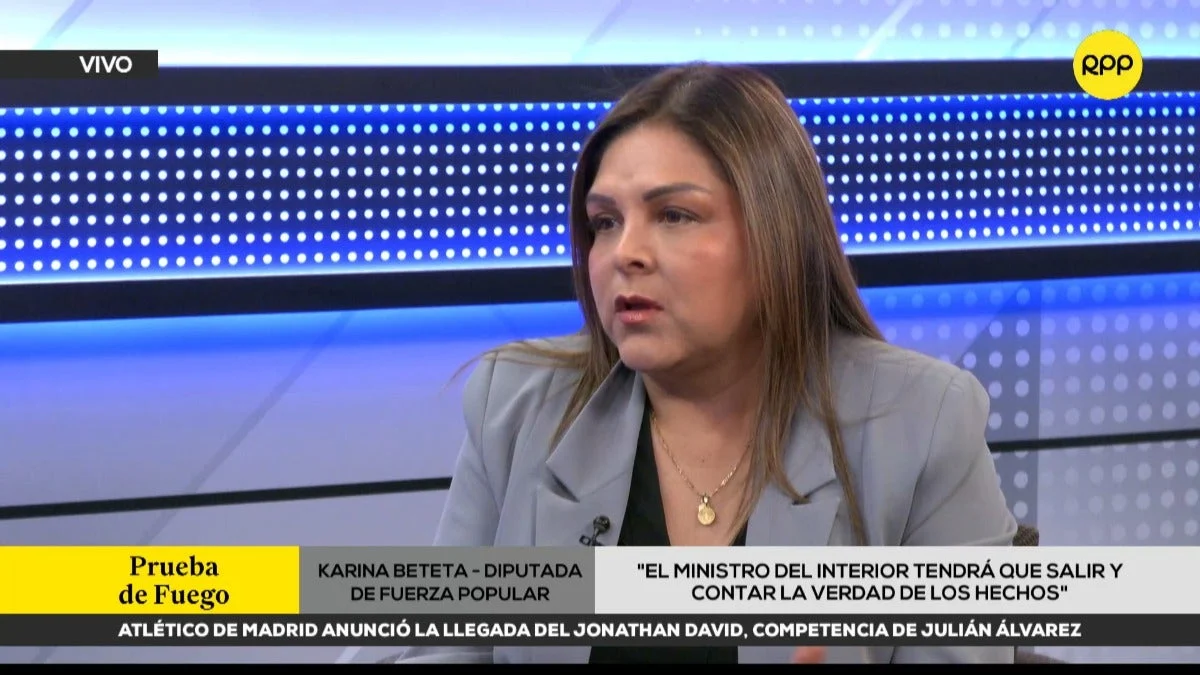
- Tuesday: Fuerza Popular legislator Karina Beteta addresses the situation during an interview on RPP’s Prueba de Fuego, calling for transparency and questioning the quality of information reaching government leadership.
The Political Tug-of-War: Official Responses
The discrepancy between the initial perception of a "police triumph" and the reality of a negotiation or voluntary release has placed the Ministry of the Interior under intense scrutiny. Karina Beteta, representing the opposition, has walked a fine line, defending the necessity of intelligence work while demanding accountability.
"It is a matter currently under investigation," Beteta stated during her interview. "I believe the Minister of the Interior will, in due time, have to come forward and tell us the truth about these events."
Beteta argued that the public must acknowledge the nuances of law enforcement. "We must understand that there are actions that are not necessarily reported to the media—not because the authorities want to withhold information, but because they are sensitive intelligence measures." She suggested that the extensive police cordon around Trujillo created a "pressure cooker" environment that likely forced the criminals to abandon their hostage to avoid capture.
However, this interpretation faces skepticism. Critics point to the fact that the victim’s family has explicitly denied paying a ransom, leaving a vacuum of information regarding why the kidnappers would release their target without a payout and without being intercepted by police.
The Question of Executive Transparency
A significant point of contention is the statement issued by Keiko Fujimori, who had initially praised the police for their "rapid and firm" action following the news of the release. When asked whether the party leadership—and specifically the former presidential candidate—might have been misled by inaccurate government briefings, Beteta expressed hope that this was not the case.
"We hope that is not the situation," Beteta remarked, highlighting the broader context of the national crisis. "The country is facing [the advancement of crime] every single day, not only in Trujillo, but in Lima and all other regions." The implication is clear: if the government’s intelligence apparatus is providing flawed information to political figures, it suggests a systemic failure in the state’s ability to manage public perception and security crises.
Implications for Public Security in Peru
The case of Jens Lara Tantaquilla serves as a microcosm of the challenges facing the Peruvian state. Several critical implications have emerged:
1. The Proliferation of "False Police" Tactics
The fact that criminals were able to coordinate a kidnapping under the guise of a police operation suggests that the perpetrators possess significant logistical capabilities and perhaps internal knowledge of police uniforms and procedures. This undermines public trust in the uniform, making it harder for citizens to distinguish between legitimate law enforcement and criminals.
2. The Limits of Police Intelligence
The Ministry of the Interior’s admission that no direct intervention occurred highlights the limitations of the current police strategy. If the state cannot prevent kidnappings through preventative intelligence, and cannot execute rescues through tactical intervention, it risks appearing reactive rather than proactive.
3. Institutional Credibility
The push-and-pull between political parties over the "success" or "failure" of the rescue reflects a broader polarization. When the definition of a "police success" is debated in the media, the public loses confidence in the institutions designed to protect them. The call for a full investigation, as championed by Beteta, is essential not just for the case of Mr. Lara, but to restore the credibility of the Ministry of the Interior.
Conclusion: A Demand for the Truth
As the investigation continues, the residents of La Libertad and the rest of Peru remain in a state of unease. The kidnapping of a businessman in the heart of a major city is not merely a crime; it is an assault on the social order.
The political class, led by voices like Karina Beteta, is signaling that the era of vague explanations is over. Whether the release was the result of a calculated, silent intelligence maneuver or a breakdown in the kidnappers’ own plans, the public demands clarity. The government’s ability to provide a transparent account of the events will be a litmus test for its effectiveness in the ongoing, nationwide battle against organized crime. Until the truth is fully disclosed, the case of Jens Lara Tantaquilla will remain a haunting reminder of the fragility of security in modern Peru.