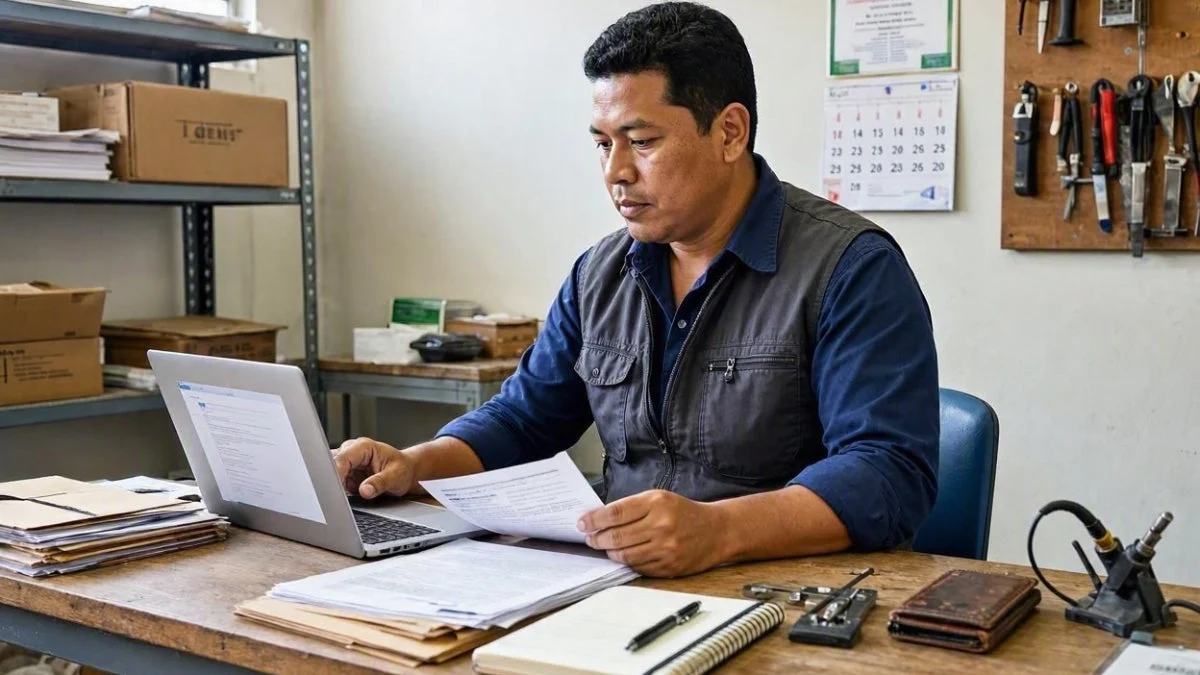
In a decisive move to revitalize the nation’s economic engine, the Peruvian Executive branch has formally requested legislative powers from Congress for a period of 120 days. The objective is as bold as it is necessary: to dismantle the bureaucratic and technological barriers currently stifling the Micro and Small Enterprise (MYPE) sector. With informal employment and business operations still accounting for the vast majority of the landscape, the government aims to pivot from a model of mere administrative compliance to one of value-added inclusion.
Main Facts: A Paradigm Shift for Small Business
The core of the proposal lies in the amendment of Law No. 32353, the existing framework governing the formalization and competitiveness of MYPES. The Executive recognizes that while these enterprises represent 99.1% of all businesses in Peru and account for nearly 90% of private sector employment, they remain trapped in a cycle of informality and stagnation.
To break this cycle, the government is proposing a comprehensive strategy centered on three pillars:
- The "Zero Cost" Initiative: Promoting the total elimination of administrative fees for services directly linked to business formalization.
- Digital Simplification: Modernizing the process of business constitution, making it a frictionless, purely digital experience.
- Technological Inclusion: Eliminating the mandatory requirement for "digital signatures" as the sole gatekeeper for legal operations, replacing them with alternative, accessible authentication methods.
By treating formalization not as a tax-burdened obligation but as a gateway to credit, public procurement, and global markets, the Executive hopes to finally incentivize the millions of informal businesses operating in the shadows of the economy.
Chronology of the MYPE Dilemma
The urgency of this proposal is rooted in a decade of underwhelming results.
- 2021: The government launched the Sociedad por Acciones Cerrada Simplificada (SACS) regime via the Sunarp Digital Intermediation System (SID). It was touted as a breakthrough, offering business constitution for just S/18.70 with no notary required.
- 2021–2024: Despite the low cost, the SACS model failed to gain traction. In three years, only 5,298 companies were formed under this regime—a meager 1% of the 770,000 businesses registered through other channels.
- Late 2024: Data confirmed that the informal sector had grown to encompass 86.8% of MYPES, with 3.14 million businesses operating without a Tax ID (RUC).
- Current Status: The Executive has now submitted the request for 120 days of legislative powers to the Congress, aiming to rectify the structural failures that rendered previous attempts at formalization largely ineffective.
Supporting Data: The Anatomy of Stagnation
The Executive’s diagnostic report reveals a sobering reality regarding business mobility. Between 2015 and 2024, a staggering 95.7% of micro-enterprises remained in the "micro" category. Furthermore, 40.8% of small businesses actually regressed back to the micro-level, indicating a lack of productive scaling.
The labor market statistics provide further justification for the urgent legislative intervention:
- Informal Employment: 82.3% of all jobs generated by MYPES in 2024 were informal.
- The Micro-Divide: In micro-enterprises, the informality rate for employment reached 89.7%, compared to 48.1% in small enterprises.
- Factoring Power: The importance of formalization is highlighted by the success of factoring. In 2025 alone, over 2.07 million invoices were negotiated for a total value of S/52.057 billion, with MYPES representing 84.9% of the users. This proves that once a business is formal, it can successfully leverage financial tools to survive and grow.
Official Responses and Strategic Rationale
The government’s rationale is clear: "Reduced costs are not enough if structural barriers remain." The Ministry of Economy and the Executive branch have identified three primary reasons why the previous digital initiatives failed to achieve mass adoption:
- Functional Limitations: While the initial constitution was digital, subsequent corporate acts—such as changing directors or amending statutes—still required traditional, cumbersome, and expensive processes.
- The "Digital Signature" Wall: The reliance on the electronic DNI (DNI-e) for digital signatures became a technological bottleneck for the vast majority of the population.
- Institutional Opacity: A lack of awareness—even among bank employees regarding the SACS model—prevented entrepreneurs from successfully opening the necessary bank accounts to complete their formalization.
To address these, the Executive proposes an overhaul of the 1997 General Law of Societies. This includes allowing virtual shareholder meetings, enabling non-presential board sessions via telematic means, and authorizing electronic publishing of corporate notices.
Implications: A New Era for Small Business
If approved, the legislative package will have profound implications for the Peruvian economy.
Expanding the Factoring Ecosystem
A standout component of the proposal is the authorization for the Banco de la Nación to engage in international factoring for MYPE exporters. By allowing these companies to finance their receivables from international buyers, the government provides a critical lifeline for SMEs looking to scale beyond domestic borders. This is a strategic move to turn local producers into global players without requiring additional treasury funding, as the bank is expected to self-sustain the operation through risk management and operational efficiency.
Digitalizing the Corporate Lifecycle
The vision is to move from "digital birth" to "digital life." The proposal seeks to allow core corporate acts—such as capital increases, dissolution, and liquidations—to be performed via the SID-Sunarp portal. This reduces the dependency on notaries, cutting both time and legal expenses significantly.
Bridging the Gap to Formalization
The proposed reforms suggest that for micro-enterprises with a capital of less than 4 UIT (Tax Units), the barriers to entry will be virtually eliminated. By providing access to public procurement, digital assistance, and innovation grants, the government intends to shift the incentive structure. The goal is to make the "cost of informality"—which includes lack of credit, legal instability, and exclusion from public contracts—higher than the "cost of compliance."
Conclusion: The Path Ahead
The success of this 120-day legislative window depends entirely on the political will of the Congress. The Executive has presented a technically sound, data-driven argument that recognizes the failure of past, purely cost-based formalization policies.
By addressing the technological, legal, and operational friction that entrepreneurs face daily, the government aims to create a more resilient, productive, and inclusive business environment. If the requested powers are granted and the subsequent decrees are implemented with agility, Peru could see a significant migration of its 3.14 million informal enterprises toward the formal sector. However, the true test will be the effective execution—ensuring that the digital platforms are not just available, but intuitive, and that the benefits of formality reach the furthest corners of the national territory.
As the country faces persistent economic headwinds, the modernization of its business framework is not just a regulatory update; it is an existential imperative for the millions of Peruvians whose hard work sustains the nation’s economy. The proposed reforms offer a path to transform these small enterprises from survivalist units into the engines of future growth.