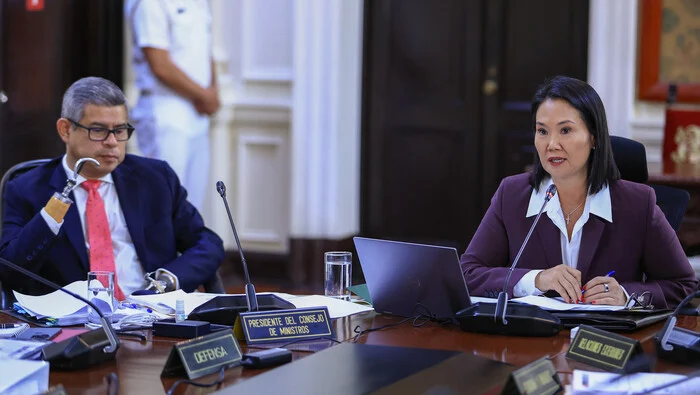
In a decisive move to address the multifaceted crises gripping the nation, the Peruvian Council of Ministers has officially approved a comprehensive legislative bill. This proposal, now slated for submission to the Congress of the Republic, seeks to grant the Executive Branch extraordinary powers to legislate by decree over a period of 120 calendar days. The scope of this request is broad, encompassing critical areas such as citizen security, the strengthening of micro and small enterprises (MSEs), employment promotion, tax reform, and administrative simplification.
The legislative package, characterized by government officials as an "urgent structural reform," aims to break the legislative gridlock that has hindered policy implementation. With eight core pillars of reform, the administration hopes to regain control of public safety, bolster the national economy, and fortify the state’s capacity to respond to environmental disasters.
The Pillars of the Legislative Proposal
The proposed bill is not merely a request for procedural changes; it is a fundamental shift in the government’s operational philosophy. The Executive Branch has categorized its requested powers into eight primary sectors, each designed to address specific vulnerabilities in the current state framework.
1. Hardline Security and Counter-Terrorism
At the forefront of the proposal is a radical restructuring of the state’s approach to organized crime. The government is seeking the authority to legally classify criminal organizations as "terrorist entities." This reclassification would provide law enforcement and judicial authorities with broader powers to prosecute members, dismantle criminal networks, and seize assets with greater speed and efficiency.
Furthermore, the bill proposes a contentious but highly anticipated measure: the deployment of the Armed Forces to support the National Police in maintaining internal order. Specifically, the military would be tasked with the external security of the country’s prison system—a move designed to curb the influence of incarcerated criminal leaders who continue to orchestrate illegal activities from behind bars.
2. Prison Reform and Telecommunications Control
The initiative seeks to neutralize the "prison-to-street" crime pipeline. Central to this is the modernization of telecommunications regulations. The government aims to mandate the real-time tracking, geolocation, and immediate blocking of mobile devices used illicitly within correctional facilities. Crucially, the bill includes provisions for severe sanctions against telecommunications operators who fail to prevent illegal signals originating from within penitentiaries and juvenile detention centers. Additionally, a new "post-penitentiary surveillance registry" will be established to monitor high-risk offenders upon their release, ensuring a closer watch on those most likely to reoffend.
3. Disaster Risk Management and Infrastructure
Recognizing the devastating impact of climate-related phenomena, the proposal seeks to empower the National Institute of Civil Defense (INDECI) with the authority to deliver humanitarian aid directly and autonomously during the first 15 days of a state of emergency. This bypasses bureaucratic bottlenecks that have previously delayed aid to vulnerable populations.
The bill also intends to expand Law No. 29230—the "Works for Taxes" mechanism—to facilitate the direct financing of civil defense infrastructure and rural housing reconstruction. By simplifying the procedures for "IOARR" (Investments for Optimization, Marginal Expansion, Rehabilitation, and Replacement), the government aims to ensure that emergency repairs to critical infrastructure are completed in a fraction of the time currently required.
4. Economic Revitalization and Administrative Simplification
Economic stability remains a cornerstone of the proposal. The Executive is requesting powers to overhaul the tax code and simplify administrative hurdles that currently stifle small businesses. The objective is to foster a more competitive environment where MSEs can access credit, formalize their operations, and participate more effectively in the national economy.
Chronology: A Path to Legislative Reform
The move toward this request has been a gradual process of internal deliberation and public pressure:

- Early July 2026: Preliminary discussions within the Council of Ministers identify a lack of legislative speed as a major impediment to curbing rising crime rates and economic stagnation.
- August 15, 2026: The Ministry of Economy and the Ministry of Interior finalize the technical documents for the 66 distinct measures included in the package.
- August 27, 2026: The Council of Ministers formally approves the bill, signaling the end of the drafting phase and the beginning of the political negotiation phase.
- August 28, 2026 (Scheduled): The formal submission of the legislative proposal to the Congress of the Republic.
Supporting Data and Rationale
The government’s decision to request these powers is backed by recent statistical trends. Internal reports from the Ministry of the Interior indicate that 70% of high-impact crimes in the capital are coordinated via illicit mobile communication from within prisons. Meanwhile, the Ministry of Economy has noted that administrative delays in the execution of emergency infrastructure projects cost the country an estimated 1.5% of GDP annually during disaster-heavy cycles.
By granting the Executive the power to decree, the government argues it can bypass the lengthy committee debates that often stall time-sensitive legislation. The 120-day window is described as a "surgical intervention" intended to provide the state with the tools necessary to stabilize the country before the end of the year.
Official Responses and Political Implications
The announcement was made public by the head of the Cabinet, Luis Galarreta, following the session of the Council of Ministers. Galarreta emphasized the necessity of the measure, describing the current legislative pace as incompatible with the gravity of the nation’s security challenges.
"The 66 requests from various sectors are based on logical and reasonable needs," Galarreta stated during a press briefing. "They are fundamentally focused on restoring order—not just in our streets, but within the state apparatus itself."
Galarreta’s comments reflect a clear strategy: framing the delegation of powers as a moral and civic duty rather than a political power grab. He extended an olive branch to the legislative body, stating, "Our ministers are fully prepared to engage in open dialogue with members of Congress to ensure these measures are understood and approved with the urgency they demand."
However, the proposal is expected to face rigorous scrutiny. Critics within the opposition have historically expressed concern regarding the concentration of power within the Executive, particularly regarding the use of the Armed Forces in internal security roles. The debate is likely to center on the limits of these "exceptional" powers and whether 120 days is sufficient to implement such deep-seated reforms without compromising institutional checks and balances.
Broader Implications for the Nation
The outcome of this legislative push will likely define the remainder of the current administration’s tenure. If approved, the government will possess the legal machinery to fundamentally change the landscape of citizen security and disaster response.
The potential for success hinges on three variables: the speed of legislative approval, the efficiency of the ministries in drafting the specific decrees, and the public’s perception of whether these measures actually translate into tangible improvements in safety and economic growth.
As the bill reaches the halls of Congress on August 28, the country stands at a crossroads. The proposal represents a clear departure from the status quo, signaling a government that is increasingly willing to employ aggressive, centralized tactics to combat long-standing systemic failures. Whether this move will be viewed as a necessary act of governance or an overreach of authority remains the central question for the weeks ahead.
The administration’s call for "order" is a rallying cry that resonates with a public tired of instability, but the implementation of such wide-reaching powers will require a delicate balance of decisive action and democratic transparency. As it stands, the Executive has set the stage for one of the most significant legislative battles of the year, one that will determine the resilience of the state in the face of both criminal threats and environmental instability.