Executive Summary: A Unified Front Against Climate Volatility
In a decisive move to bolster national resilience, the Peruvian Ministry of Economy and Finance (MEF) has entered into a formal strategic partnership with the nation’s leading business associations. This collaboration aims to synchronize efforts, share logistical resources, and streamline regulatory frameworks in anticipation of the climatic disruptions expected from the El Niño phenomenon.
As scientific models continue to forecast potentially severe weather patterns—ranging from heavy precipitation in the north to acute droughts in the southern highlands—the Peruvian government is shifting from reactive disaster management to a proactive, integrated operational strategy. By leveraging the logistical efficiency of the private sector, the state seeks to mitigate economic fallout and protect critical infrastructure, ensuring that the country remains prepared for the challenges ahead.
Chronology of Coordination: From Initial Concern to Strategic Alignment
The Escalation of Risks
The impetus for this high-level summit stems from the increasing reliability of climate forecasting models provided by ENFEN (the National Study of the El Niño Phenomenon). Over the past six months, the government and the private sector have held a series of closed-door consultations. While early discussions focused on identifying geographic vulnerabilities, the focus has recently shifted toward the "operationalization" of the response.
The Recent Summit
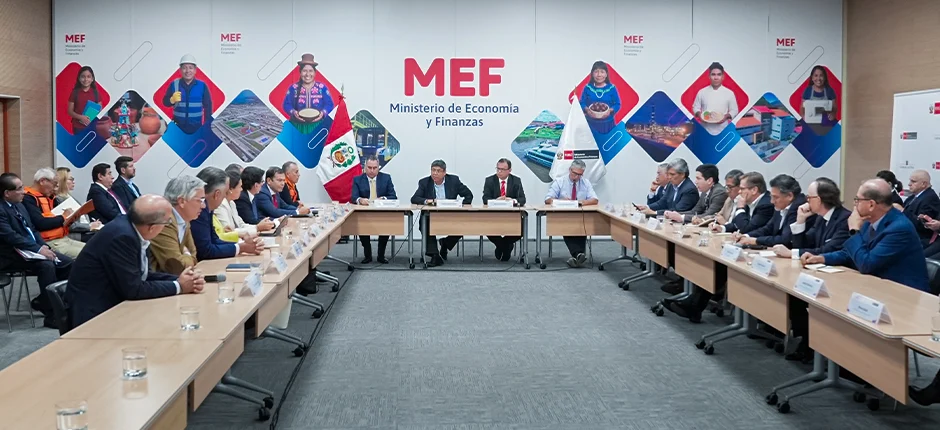
The most significant development occurred during the latest meeting of the National Commission for FEN Risk Management. Here, the private sector, represented by the Confederation of Private Business Organizations (CONFIEP), transitioned from advisory roles to active operational partners. Jorge Zapata Ríos, President of CONFIEP, explicitly placed the collective assets of the business community at the disposal of the Executive branch, marking a turning point in public-private cooperation in Peru.
Supporting Data: The Private Sector’s Arsenal
The strength of this partnership lies in the tangible assets offered by the private sector. Unlike bureaucratic state processes, which often face procurement bottlenecks, the private sector is providing an "instant response" inventory that can be deployed to high-risk zones immediately.
Logistical and Operational Contributions
The inventory pledged by the collective business associations includes:
- Heavy Machinery: Earth-moving equipment, excavators, and bulldozers essential for clearing mudslides and repairing damaged road arteries.
- Hydraulic Infrastructure: A massive deployment of high-capacity motobombs to prevent urban flooding in low-lying coastal areas.
- Storage Facilities: Secure, strategically located warehouses to house essential supplies, food, and medical kits, ensuring supply chain continuity.
- Technical Expertise: Engineering teams and risk assessment specialists who will work alongside government agencies to monitor infrastructure integrity in real-time.
The Role of "Hombro a Hombro"
Central to this operation is Hombro a Hombro (Shoulder to Shoulder), a specialized organization with deep experience in disaster response. Carlos Neuhaus, the President of the Association of Malls and Entertainment Centers (ACCEP), has been tapped to lead the articulation of these efforts. His role is to ensure that the private sector’s capabilities are not just offered in principle, but effectively integrated into the state’s regional response plans.
Regulatory Reform: Simplifying the Path to Intervention
One of the most critical outcomes of the dialogue between the MEF and the business sector is the push for "regulatory agility." Currently, bureaucratic hurdles often delay emergency maintenance or the clearing of water channels.
The Proposal for Streamlining
Business leaders have proposed a temporary suspension of certain administrative permits for interventions that are strictly focused on El Niño prevention. The logic is simple: in the event of an impending flood or landslide, the time required to process a multi-stage permit could lead to the destruction of vital infrastructure.
The Ministry of Economy and Finance has responded with a call for data-driven advocacy. They have requested that the private sector provide a detailed roadmap for these proposals, including:
- Scope of Work: Clearly defined geographical zones and specific interventions.
- Timeline: Expected duration of works to ensure they do not exceed the emergency window.
- Resource Allocation: Documentation on the machinery and manpower assigned to each project.
By requiring this level of detail, the MEF aims to maintain transparency while ensuring that the "fast-track" mechanism is used only for essential disaster-mitigation tasks.
Official Responses and Stakeholder Engagement
The breadth of the meeting highlights the gravity of the situation. It was not merely a meeting of one industry, but a cross-sectoral mobilization.
The Participating Entities
The meeting featured a "who’s who" of the Peruvian economic engine, including:
- Infrastructure and Construction: CAPECO (Construction) and AFIN (Infrastructure) are focused on the structural integrity of the country’s road and utility networks.
- Finance: ASBANC (Banking) is working on mechanisms to ensure financial liquidity remains stable even in disaster-stricken regions.
- Primary Industries: The SNP (Fisheries) and SNMPE (Mining, Petroleum, and Energy) are implementing internal risk management protocols to prevent environmental disasters at their extraction and processing sites.
- Agriculture and Commerce: AGAP (Agricultural Producers) and ComexPerú are prioritizing the protection of the food supply chain and export logistics, which are historically the most vulnerable to climate-induced disruptions.
The presence of the heads of these institutions indicates that the private sector is treating El Niño as a top-tier existential risk to their operations, rather than a secondary concern.
Implications: Building a Resilient Future
The alignment between the MEF and the business sector carries long-term implications for how Peru manages climate risk.
1. Shift Toward Preventive Investment
Historically, the state has focused on post-disaster reconstruction—a process that is often more expensive and less effective than prevention. This partnership signals a shift toward investing in "preventive maintenance." By clearing riverbeds and reinforcing drainage systems now, the cost of future reconstruction could be reduced by a significant margin.
2. A New Model for Public-Private Synergy
If successful, this model could become the standard for future public-private cooperation in Peru. By clearly defining the "how" and "when" of resource sharing, the government is moving away from purely transactional relationships toward a functional partnership where both sides share the burden of public safety.
3. Economic Stability
The primary goal remains the prevention of a total economic slowdown. By protecting the agricultural sector and ensuring that mining and logistics operations can continue despite weather challenges, the partnership aims to keep the national GDP growth on track. The banking sector’s involvement suggests that there is a proactive effort to provide credit lines or payment flexibility for small businesses in the northern regions that may be disproportionately affected by the rains.
Conclusion: The Path Ahead
The coordination between the Ministry of Economy and Finance and the nation’s leading business associations represents a mature response to an inevitable environmental challenge. While the intensity of El Niño remains a subject of ongoing meteorological analysis, the mobilization of private sector assets, coupled with the commitment to regulatory reform, provides a robust shield for the country.
The success of this initiative will ultimately depend on the follow-through. As Carlos Neuhaus and his team at Hombro a Hombro begin the task of synchronizing equipment and human capital with the government’s emergency protocols, the nation watches with the hope that this unified approach will prevent the devastation that has characterized past El Niño cycles.
In the coming weeks, the MEF is expected to review the specific project proposals submitted by the private sector. Should these be approved, it will mark the beginning of one of the most comprehensive public-private disaster-prevention campaigns in modern Peruvian history—a testament to what can be achieved when the engine of the economy works in lockstep with the state to protect the well-being of its citizens.