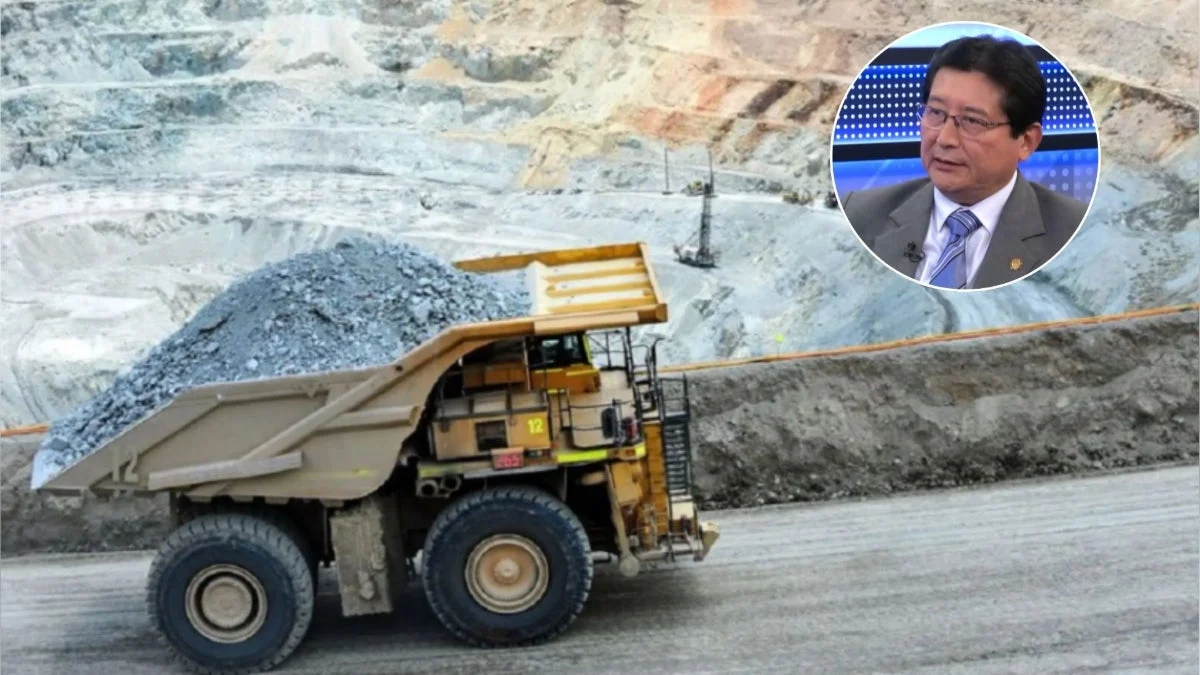
The Peruvian government, through the Ministry of Energy and Mines (MINEM), has signaled a significant shift in its approach to managing the nation’s mineral wealth. Facing long-standing issues with "idle" mining concessions and ongoing friction between large-scale titleholders and artisanal miners, Minister Guillermo Shinno has unveiled a strategy designed to prioritize productive investment over speculative hoarding.
Under the proposed framework, the state intends to move away from blunt regulatory tools—such as blanket reductions in concession lifespans—in favor of a more surgical, performance-based model. By requiring financial bonds and concrete work plans, the administration aims to distinguish between serious developers and those who hold land rights without the intention of extraction.
Main Facts: A Shift Toward Performance-Based Accountability
The core of the government’s proposal lies in the introduction of a financial guarantee system. Moving forward, any entity or individual seeking a new mining concession would be required to present a binding work plan alongside a financial bond equivalent to the total committed investment for the project.
Minister Shinno, speaking to the program Economía para Todos, clarified the mechanism: "If you want a mining concession, that’s fine, but you must provide a work plan and a bond equivalent to the investment you commit to making. If you fail to meet your goals, the state will execute the bond. If you fail to provide the bond, you lose the concession."
This policy shift is intended to create a natural filter for the mining sector. By placing a significant financial stake on the table, the government hopes to deter speculators—entities that acquire mining rights solely to resell them later at a profit without conducting exploration or construction activities. The proposal essentially forces the hand of the titleholder: invest in the land or forfeit the right to it.
Chronology: The Evolution of the "Idle Concession" Debate
To understand the current policy trajectory, one must look at the recent history of mining legislation in Peru:
- Mid-2023: Growing public and political concern regarding the proliferation of "idle" concessions—rights held for decades without any exploration or production—leads to mounting pressure on the executive branch.
- Early 2024: The Peruvian Congress moves to debate a bill that would slash the expiration period for concessions from 30 years to 15 years in cases of non-production. The mining industry expresses alarm, warning that such measures could incentivize land invasions and threaten the security of long-term legal tenure.
- Late 2024: The Ministry of Energy and Mines (MINEM) formally distances itself from the Congressional approach. Minister Shinno argues that a blanket reduction in years is technically unsound, as major mining projects often require over a decade just to clear environmental and technical hurdles.
- Present Day: The government presents its alternative: a "performance-bond" system that focuses on the individual behavior of the concession holder rather than a universal timeline, while simultaneously addressing the formalization of artisanal miners.
Supporting Data: The Reality of Mining Timelines
The government’s decision to reject the legislative proposal to shorten all concession terms is rooted in the technical realities of the industry. According to data and expert analysis within the Ministry, the path from a greenfield exploration site to an operational mine is fraught with complexity.
The Lifecycle of a Mining Project
A standard large-scale mining project in the Andean region typically follows a cycle that exceeds a decade:
- Exploration (3–5 years): Identifying geological anomalies, conducting drilling campaigns, and proving reserves.
- Feasibility & Environmental Studies (2–4 years): Developing rigorous technical reports and the Environmental Impact Assessment (EIA), which must pass multiple government agency reviews.
- Permitting (1–3 years): Securing social licenses, water usage rights, and municipal approvals.
- Construction (2–4 years): Building the physical infrastructure required for extraction and processing.
Minister Shinno emphasized that arbitrary reductions in concession timeframes would not solve the problem of inactivity if the government’s own permitting process remains bottlenecked. He argued that if the state takes five years to approve a permit, it is inherently unfair to penalize a developer for not moving forward during that time. Thus, the focus has shifted from "time-based" expiration to "effort-based" accountability.
Official Responses and Ministerial Strategy
The government’s stance is a delicate balancing act. Minister Shinno has been clear that the administration does not intend to infringe upon existing legal rights, characterizing a blanket revocation of concessions as a form of expropriation, which the government is determined to avoid.
The Distinction Between "Good" and "Bad" Concessionaires
The Ministry is developing criteria to evaluate whether a titleholder is acting in good faith. Indicators include:
- Active Exploration: Submission of detailed exploration plans and documented field campaigns.
- Investment Benchmarks: Clear financial records of expenditures related to the development of the claim.
- Cooperation with Local Communities: Efforts to reach social agreements for project development.
"We need to distinguish between the concessionaire who is investing millions in professional exploration and the one who is merely holding a title for speculative purposes," Shinno stated. For the latter, the government is prepared to be aggressive, utilizing the proposed bond system to force either activity or exit.
Implications: The Intersection of Formalization and Conflict
One of the most complex aspects of the new policy is its potential impact on the artisanal mining sector. Peru has faced ongoing tension between large-scale concession holders and artisanal miners who often operate within or adjacent to existing claims.
The Rise of Exploitation Agreements
Minister Shinno suggested that, in cases where a concession holder is not developing their project, the government might encourage "exploitation agreements" between the titleholder and artisanal miners. This would allow for the formalization of artisanal activities within the existing legal framework of the concession, rather than treating these miners as encroachers.
However, the Minister was firm on the legal hierarchy:
- Respect for Property Rights: The government will not strip existing, compliant titleholders of their rights.
- Productivity Requirements: For non-compliant or speculative holders, the government will use the threat of bond forfeiture or loss of rights to encourage them to reach voluntary agreements with artisanal miners.
- Legal Differentiation: The government is working on legislation to formally separate "responsible" concessionaires from those impeding the formalization of smaller players.
Economic and Social Impact
The implications for the mining industry are profound. If implemented, the bond system would:
- Increase Entry Barriers for Speculators: Smaller, less-capitalized entities would be unable to secure the required financial bonds, effectively cleaning the registry of speculative claims.
- Accelerate Project Development: Serious developers would be incentivized to meet their milestones to recover their bond capacity.
- Reduce Conflict: By providing a clear, government-sanctioned pathway for artisanal miners to work within dormant concessions, the administration hopes to mitigate the social unrest that frequently occurs when large concessions lie stagnant while local populations struggle for employment.
Conclusion: A New Era of Mining Oversight
The Peruvian government is attempting to modernize its regulatory framework to suit the demands of a 21st-century economy. By moving away from rigid, time-based mandates and toward a flexible, financially-backed performance model, the Ministry of Energy and Mines hopes to foster a more transparent and productive mining landscape.
While the proposal faces scrutiny from various stakeholders—including industrial mining lobbies concerned about over-regulation and artisanal unions seeking clearer pathways to legality—it represents a decisive step toward resolving one of the most persistent bottlenecks in Peru’s economic development. As the government continues to refine these proposals, the focus will remain on whether these measures can truly catalyze investment while ensuring that the nation’s mineral resources are managed for the benefit of all, rather than the few who simply hold the paper.