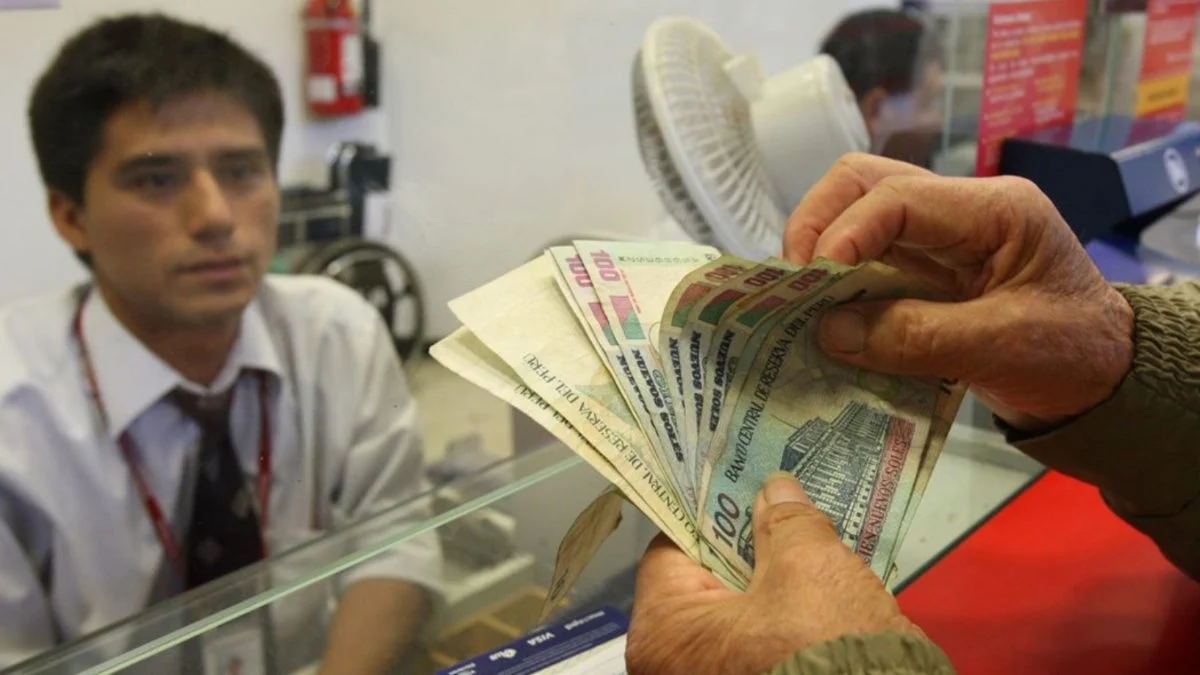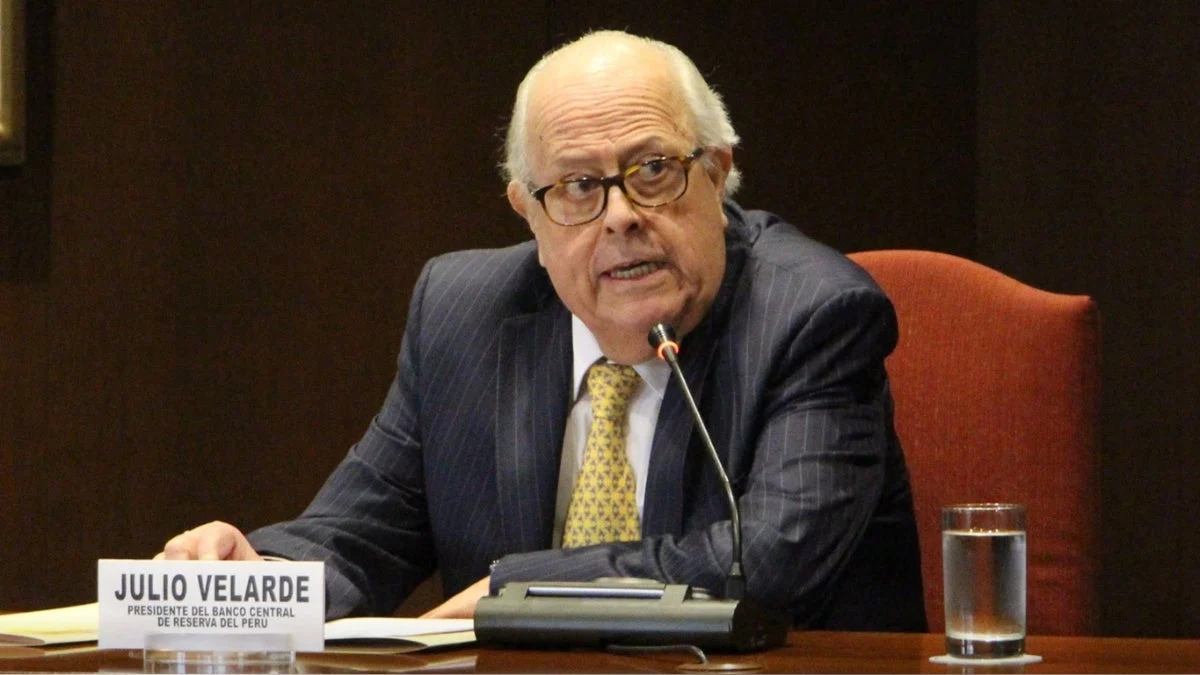
In a move widely interpreted by financial markets and political analysts as a signal of institutional continuity, the administration of President Keiko Fujimori has officially ratified the appointment of Julio Velarde as the President of the Central Reserve Bank of Peru (BCRP). The decision, formalized through Supreme Resolution No. 258-2026-PCM, secures Velarde’s leadership of the country’s monetary authority for another five-year term, extending his tenure until 2031.
This official confirmation comes following a transition-period dialogue between President Fujimori and the economist, a meeting that underscored the administration’s commitment to maintaining the independence of the BCRP—a pillar of Peru’s macroeconomic resilience over the past two decades.
The Weight of Continuity: A Multi-Administration Legacy
Julio Velarde’s tenure at the BCRP is one of the most remarkable instances of institutional longevity in Latin American economic history. First appointed in September 2006 during the second administration of Alan García, Velarde has successfully navigated the country through a variety of political landscapes, ranging from the center-left policies of Ollanta Humala to the market-oriented approach of Pedro Pablo Kuczynski, the subsequent political volatility under Pedro Castillo, and now the administration of Keiko Fujimori.
His reappointment is not merely a bureaucratic formality; it is a profound testament to his perceived role as the "guardian" of the Peruvian Sol. Velarde’s stewardship has been characterized by a steadfast commitment to inflation targeting, exchange rate stability, and the preservation of the bank’s constitutional autonomy. By securing his services for another term, the Fujimori government aims to anchor investor confidence at a time when global economic headwinds and local structural challenges demand a steady hand at the monetary controls.
Chronology: Two Decades of Monetary Stewardship
To understand the significance of this appointment, one must review the historical arc of Velarde’s influence on the Peruvian economy:
- 2006: Appointed by President Alan García, beginning a tenure that would soon face the global financial crisis of 2008.
- 2011: Ratified by President Ollanta Humala, signaling to international markets that political transitions would not disrupt monetary policy.
- 2016: Reconfirmed by President Pedro Pablo Kuczynski, a move that helped maintain stability during a period of rising political polarization.
- 2021: Retained by President Pedro Castillo, a decision that served as a critical safeguard for the Peruvian economy amidst significant uncertainty and market jitters.
- 2026: Formally ratified by President Keiko Fujimori, extending his service to a quarter-century of influence.
Throughout these years, the BCRP has evolved from a regional institution into a globally respected entity, frequently cited by international financial institutions like the IMF and the World Bank for its technical rigor and lack of political bias.
Official Responses and the Transition Process
The process leading to this confirmation was marked by transparency. During the transition phase following the 2026 presidential election, President-elect Keiko Fujimori reached out to Velarde directly, requesting his continued leadership.
In a statement delivered to the press shortly after that meeting in July, a visibly appreciative Velarde remarked: "I want to thank her for coming to the BCRP personally; I am honored by the request she has made. If in other circumstances I might not have accepted, I would like to do so with great pleasure, and I intend to dedicate myself as quickly as possible to fulfilling the task she is entrusting to me. Thank you very much, Keiko, for the assignment; you are very kind."
The formalization of this request is backed by Article 86 of the Political Constitution of Peru, which grants the Executive the power to appoint four members of the BCRP Board, including the President. The resolution bears the signatures of President Keiko Fujimori, Prime Minister Luis Galarreta, and Minister of Economy and Finance Elmer Cuba. However, the appointment now moves to the next phase: ratification by the Congress of the Republic, a process expected to be a formality given the broad cross-party support for Velarde’s proven track record.
The BCRP’s Philosophy: Meritocracy and Independence
During a recent ceremony at the Catholic University of Santa María in Arequipa, where he was awarded an honorary doctorate, Velarde took the opportunity to reflect on the nature of Peru’s economic journey. He contrasted the current stability—often taken for granted by younger generations—with the hyperinflationary crises of the 1970s and 1980s.
Velarde’s vision for the future of the Peruvian economy is intrinsically linked to the concept of a professional, meritocratic public administration. During his address, he issued a stern warning: for Peru to return to the high growth rates of the early 2000s, the state must move away from clientelism.
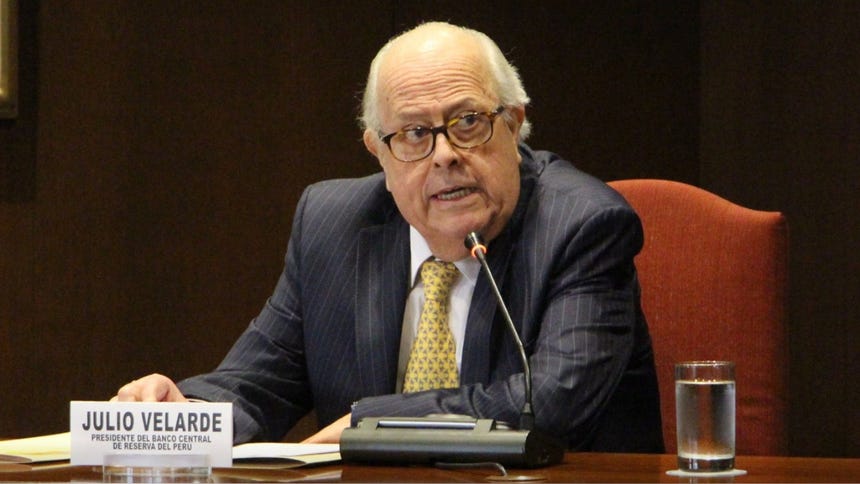
"We need a public administration that is more professional, less clientelistic, and more meritocratic," Velarde stated. He emphasized that the BCRP’s success is not just a matter of technical policy, but a result of a culture of excellence that must be replicated in other branches of the state to foster sustainable development.
Implications for the Peruvian Economy
The retention of Velarde carries several major implications for the country’s trajectory:
1. Market Stability and Exchange Rate Confidence
Investors prioritize predictability. By keeping a central banker with global credibility at the helm, the Fujimori administration has effectively signaled that it will not engage in populist monetary experiments. This serves as a "safety net" for the national currency, the Sol, which has historically been one of the most stable currencies in emerging markets.
2. Inflation Management
In an era where many global economies are grappling with post-pandemic inflationary pressures, the BCRP’s established policy of inflation targeting is essential. Velarde’s team has demonstrated a keen ability to use interest rate adjustments as a precise instrument to cool the economy without triggering a recession, a balancing act that will remain critical in the coming years.
3. A Model for Public Institutions
Velarde’s leadership has turned the BCRP into an "island of excellence" within the Peruvian state. His continued presence acts as a standard-bearer for how other institutions—such as the tax authority (SUNAT) or the ministry of economy—should ideally function: with technical independence and protection from short-term political cycles.
Challenges Ahead: Growth and Structural Reform
Despite the optimism surrounding the ratification, Velarde himself has been the first to admit that monetary stability is not a panacea for all of Peru’s woes. He has frequently noted that while the BCRP can provide a stable floor, the engine of growth must be driven by fiscal responsibility, legal security for investments, and a robust labor market.
The challenge for the next five years will be the interplay between the BCRP’s conservative monetary stance and the government’s fiscal agenda. As the country seeks to modernize its infrastructure and close the gaps in public services, the central bank will likely continue to advocate for fiscal discipline, potentially creating a healthy tension between the need for social investment and the necessity of keeping public debt under control.
Conclusion: A Cornerstone of the State
The reappointment of Julio Velarde is a significant milestone in Peru’s contemporary history. It reflects a national consensus that transcends ideological divides: that certain institutions are too critical to be subject to the whims of political flux.
As Peru faces the challenges of the late 2020s—including the integration of new technologies into the financial sector, the transition to green energy, and the constant need to attract foreign direct investment—the continuity provided by Velarde’s presence will be a central pillar of the nation’s strategy. While no single individual can guarantee economic success, the decision to keep Velarde at the helm is a clear indication that the current administration prioritizes experience, integrity, and stability above all else.
For the international community, the message is clear: Peru remains committed to the principles of a market economy, sound money, and the institutional independence that has protected the country from the worst of the volatility that has plagued its neighbors. As Velarde enters this new chapter, the eyes of the financial world will remain fixed on Lima, watching to see how the veteran economist continues to steer the ship through the unpredictable waters of the global economy.