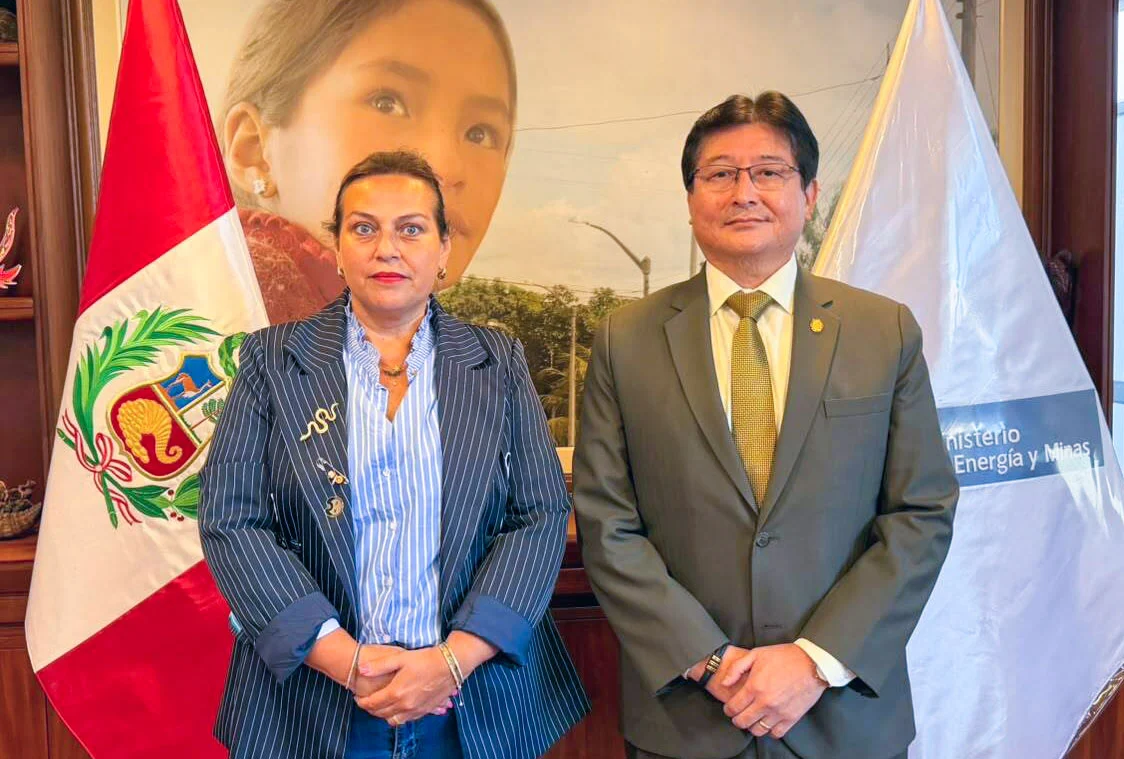
In a pivotal move toward digital governance and data-driven public administration, the Executive President of the Organismo de Focalización e Información Social (OFIS), Tabata Vivanco, recently convened a high-level strategic meeting with the Minister of Energy and Mines, Guillermo Shinno. The primary objective of this summit was to establish a framework for inter-institutional cooperation, focusing on the sophisticated exchange of data to bridge the persistent gaps in social service delivery across Peru.
This collaboration marks a significant shift in how the state manages its resources. By aligning the socioeconomic data held by OFIS—an entity under the Ministry of Development and Social Inclusion (MIDIS)—with the energy and infrastructure data managed by the Ministry of Energy and Mines (MINEM), the government aims to create a more granular understanding of household vulnerability.
The Strategic Importance of Inter-Institutional Alignment
At the core of the discussion between Vivanco and Shinno was the recognition that siloed information is the primary enemy of efficient governance. For years, government agencies have operated with fragmented databases, leading to redundant efforts and, more critically, missed opportunities to reach the most vulnerable segments of the population.
Bridging the Data Gap
The integration of information systems is not merely a technical endeavor; it is a moral imperative in the context of social development. By cross-referencing MINEM’s data on energy access—such as electrification coverage in rural areas—with OFIS’s data on socioeconomic profiles, the state can identify "pockets of need" that were previously invisible.
"The goal is to move beyond static reporting toward a dynamic, real-time understanding of our citizens’ needs," stated sources close to the meeting. By identifying which households lack access to essential energy services and overlaying this with poverty metrics, the state can deploy targeted interventions that are both timely and effective.
Chronology of the Initiative
The push for this inter-institutional synergy did not happen in a vacuum. It is the culmination of a broader administrative drive toward modernization within the current Peruvian government.
- Q1 2026: Strategic Review: OFIS initiated a comprehensive audit of its internal data management systems, identifying the need for external partnerships to enrich its social mapping capabilities.
- Q2 2026: Preliminary Consultations: Technical teams from MIDIS and MINEM began exploratory talks regarding the technical feasibility of data interoperability.
- August 2026: High-Level Meeting: Tabata Vivanco and Minister Guillermo Shinno met officially to formalize the commitment, establishing a roadmap for data integration and setting the stage for future policy implementation.
- Post-August 2026 (Forward-looking): The establishment of a joint technical working group to oversee the secure and compliant exchange of information, ensuring adherence to data privacy laws while maximizing utility.
Supporting Data: Why Integration Matters
To understand the necessity of this partnership, one must look at the prevailing challenges in Peruvian public policy. According to recent developmental reports, the "focalización" or targeting of subsidies often suffers from two main errors: "exclusion errors" (where those in need are missed) and "inclusion errors" (where those who do not need support receive it).

Enhancing Precision in Targeting
By leveraging the combined intelligence of OFIS and MINEM, the state expects to:
- Reduce Inclusion Errors: By verifying energy consumption patterns against income and social welfare data, the state can ensure that energy subsidies reach those who are truly economically vulnerable.
- Expedite Rural Electrification: Using OFIS’s data to prioritize regions where households face the highest multidimensional poverty, MINEM can optimize its infrastructure investment plans to maximize social impact.
- Dynamic Monitoring: The ability to observe changes in a household’s situation over time—such as a shift in income levels or a change in energy consumption—allows for a more proactive social safety net that adjusts as life circumstances change.
Official Responses and Administrative Vision
The meeting between Vivanco and Shinno underscores a broader commitment to "Smart Governance."
The Perspective of OFIS
Under the leadership of Tabata Vivanco, OFIS has prioritized the modernization of its digital infrastructure. Vivanco has consistently emphasized that data is the "currency of modern social policy." Her administration has sought to position OFIS not just as a database manager, but as a strategic partner for all ministries that provide direct services to the public. The focus is on creating a "360-degree view" of the beneficiary, moving away from fragmented service delivery to a cohesive, citizen-centric approach.
The Perspective of MINEM
For Minister Guillermo Shinno, the partnership with OFIS represents a shift in the philosophy of energy development. Energy is no longer viewed solely through the lens of industrial production and extraction, but as a fundamental tool for social inclusion. Providing electricity to a remote village is not just an infrastructure project; it is an intervention that dictates educational, economic, and health outcomes. By utilizing OFIS data, MINEM can ensure that its projects generate the highest possible social return on investment.
Implications for Public Policy and the Citizen
The implications of this collaboration are far-reaching and touch upon several critical areas of state function.
1. Enhanced Efficiency in Public Spending
In a period of global economic volatility, the efficient allocation of fiscal resources is paramount. By ensuring that subsidies and aid programs are based on accurate, verified, and cross-referenced data, the government can significantly reduce waste and redirect funds toward the areas where they will have the most significant impact.
2. Improving the "Last Mile" of Service Delivery
The "last mile" is often the most difficult in public administration—reaching the most isolated households. Through the synergy between OFIS and MINEM, the state can identify where these households are located, understand their specific energy needs, and coordinate the delivery of services more effectively.

3. Strengthening Inter-Institutional Trust
A common critique of public administration in many developing nations is the "silo effect," where ministries compete for resources and guard their data. By fostering a culture of transparency and interoperability, Vivanco and Shinno are setting a precedent for other ministries to follow. This promotes a "whole-of-government" approach, where the success of one ministry is tied to the collaboration of another.
Challenges and Future Outlook
While the potential benefits are immense, the implementation of such a comprehensive data-sharing initiative is not without its hurdles.
Data Privacy and Security
The integration of sensitive information requires robust cybersecurity protocols. Both OFIS and MINEM will need to invest heavily in data protection, ensuring that the privacy of Peruvian citizens is safeguarded against unauthorized access or misuse. The development of a secure, encrypted interoperability platform is the next logical step in this partnership.
Technical Interoperability
Different ministries often use different software architectures and data formats. Harmonizing these systems will require a significant technical effort, likely involving the adoption of standardized APIs (Application Programming Interfaces) that allow for seamless communication between databases.
The Future of Social Targeting
Looking ahead, the success of this initiative will be measured by its ability to translate data into action. If the collaboration succeeds, it will likely serve as a blueprint for future partnerships involving other sectors, such as health, education, and water services. The ultimate goal is a digital ecosystem where the state knows exactly who is in need and exactly what is required to lift them out of poverty, creating a more equitable and efficient society.
Conclusion
The meeting between OFIS Executive President Tabata Vivanco and Minister of Energy and Mines Guillermo Shinno marks a watershed moment in the modernization of Peru’s social policy infrastructure. By breaking down the barriers between socioeconomic data and energy sector planning, the government is taking a definitive step toward a more responsive, efficient, and compassionate state.
As the technical teams begin the work of building these bridges, the true impact will be felt by the citizens—those in the most vulnerable households who will, hopefully, find themselves better supported, better connected, and better served by a state that is finally using the full extent of its intelligence to help them thrive. This alliance is not just about data; it is about the future of social equity in the nation.