The geographical reality of Peru, a nation straddling the volatile "Ring of Fire," presents a perpetual, high-stakes gamble. As tectonic plates grind beneath the surface and climatic patterns like El Niño intensify, the country remains in a state of chronic exposure to seismic events and extreme weather. Yet, beneath the looming threat of a "Big One," lies a structural vulnerability that transcends concrete and steel: a systemic failure in financial protection.
According to recent warnings from the Peruvian Association of Insurance Companies (APESEG), the nation’s public infrastructure is alarmingly underinsured. Should a high-magnitude disaster strike, the economic fallout would not be mitigated by insurance payouts, but rather by an overwhelming burden on the state’s fiscal coffers—a scenario that could paralyze the national economy and delay recovery efforts by years.
The State of Vulnerability: Key Facts
The data presented by APESEG paints a stark picture of a nation unprepared for the financial shock of a catastrophe. Despite the country’s high seismic risk profile, public assets—the very structures essential for recovery—remain largely unprotected.
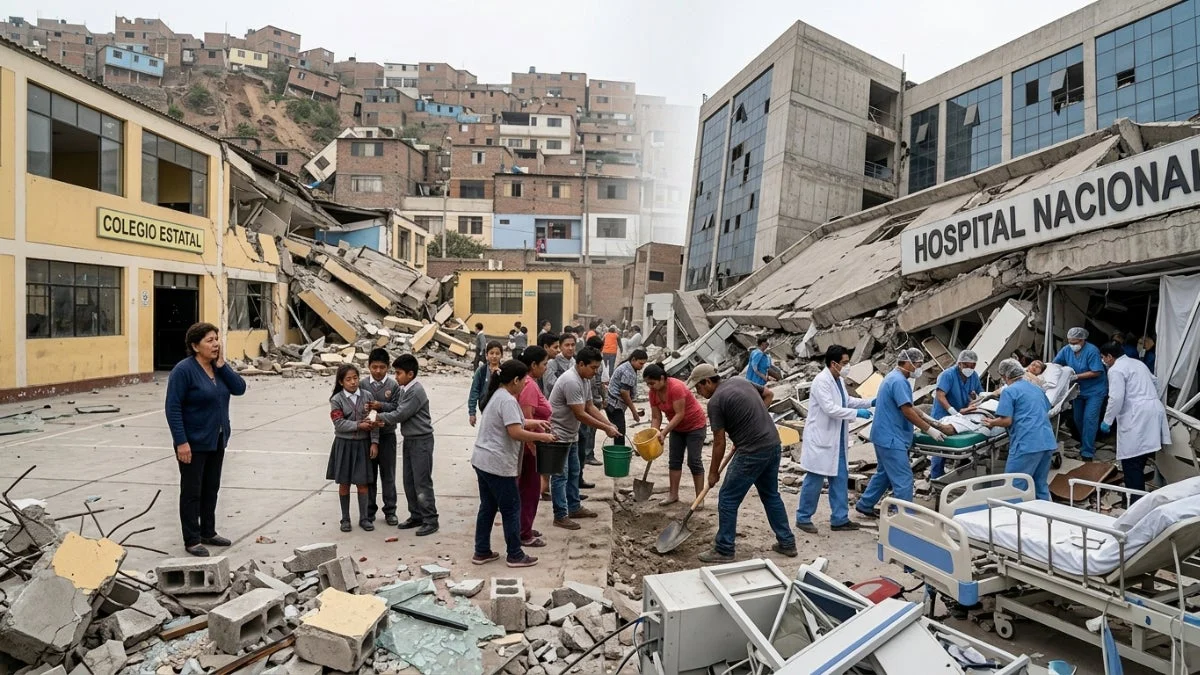
- Public Health Infrastructure: Of approximately 9,000 public health facilities across the country, a mere 490 possess insurance against catastrophic risks. This represents a coverage rate of only 5.3%.
- Educational Infrastructure: The situation in the education sector is even more dire. Out of 50,000 public schools, only 187 are insured, amounting to a coverage rate of just 0.4%.
- Fiscal Exposure: APESEG estimates that in the event of a major disaster, 95% of the resulting economic losses would have to be absorbed directly by the state or financed through emergency debt. This percentage is significantly higher than the Latin American regional average of 81%, highlighting Peru’s unique vulnerability to "fiscal shock."
These statistics are not merely bureaucratic numbers; they represent the potential for the total collapse of essential services. Without pre-arranged financial mechanisms, the rebuilding process becomes a reactive, slow, and politically fraught endeavor.
A Chronology of Risk: From Recurring Threats to Structural Neglect
Peru’s history is a timeline of seismic and climatic disruptions that have repeatedly exposed the inadequacy of its response mechanisms.
- Pre-2000s: Disaster management was largely centered on immediate humanitarian aid, with little to no focus on long-term financial risk transfer or parametric insurance for public assets.
- The 2007 Pisco Earthquake: A watershed moment that exposed the massive gaps in the state’s ability to rebuild schools and hospitals. Recovery efforts in the region dragged on for nearly a decade, hampered by bureaucratic hurdles and funding shortages.
- 2017 Coastal El Niño: Severe flooding caused by climate anomalies crippled infrastructure across northern Peru. The event served as a wake-up call regarding the lack of liquidity for rapid reconstruction.
- 2020–2024: The current period has been marked by sporadic, localized initiatives and a shift in rhetoric by the Ministry of Economy and Finance (MEF). The government has begun to acknowledge that relying on annual budget adjustments is no longer a viable strategy, yet implementation remains in its infancy.
Official Responses and the Search for Solutions
Eduardo Morón, president of APESEG, has been the most vocal critic of the current status quo. He argues that the primary objective of any national insurance strategy must be the "continuity of service."
"If there are no resources to rebuild in a timely manner, that infrastructure remains inoperative for years," Morón stated. "The impact is not just the physical damage to the building. It is the long-term interruption of medical care, the loss of years of schooling, and the total isolation of communities."
In response to these systemic risks, the MEF has reportedly initiated a data-gathering effort. The goal is to build a comprehensive database of public infrastructure across all sectors to define a clear, tiered strategy for insurance. APESEG is advocating for a Comprehensive Risk Management Plan, which would include:
- Parametric Insurance: Policies that pay out immediately upon the occurrence of a predefined event (e.g., an earthquake of a certain magnitude) without the need for lengthy loss-adjustment processes.
- Contingent Credit Lines: Pre-approved loans that can be tapped into the moment a state of emergency is declared.
- Catastrophe Bonds: Financial instruments that transfer peak risks to capital markets.
The Human Element: Identification and Social Response
While financial liquidity is crucial for reconstruction, it is useless without an efficient mechanism to reach the most vulnerable citizens. Carolina Trivelli, former Minister of Development and Social Inclusion (MIDIS), emphasizes that "money is only half the battle."
The Peruvian government has made strides in creating a legal framework for emergency cash transfers. These are designed to provide immediate relief to those affected by disasters. However, Trivelli points out a critical bottleneck: the Organization for Social Targeting and Information (OFIS).
The Failure of the Social Registry
The OFIS was envisioned as the central nervous system for social aid, yet it remains underutilized and structurally incomplete.
- Administrative Gaps: The agency lacks a full complement of directors and a functional, nationwide network of municipal offices capable of maintaining up-to-date registries.
- Lack of Inter-Agency Coordination: There is currently no seamless exchange of information between the central government and local municipalities. When a disaster strikes, the state often struggles to pinpoint exactly which families have been affected and where they are located.
"We have the legal tools to react quickly, but we haven’t trained our institutions to use them," Trivelli noted. "We need to test these mechanisms during ‘peace time.’ We cannot afford to learn how to operate these systems in the middle of a catastrophe."
Implications for the Future: A Paradigm Shift
The implications of the current situation are profound. If the 95% burden on the state remains unchanged, a "Great Earthquake" could force the government to slash public investment in other sectors—such as infrastructure maintenance, R&D, or social programs—just to service the debt required for reconstruction.
The Economic Ripple Effect
- Public Debt Sustainability: A massive emergency debt issuance could downgrade the country’s credit rating, increasing the cost of borrowing for all future government projects.
- Social Instability: The prolonged closure of schools and clinics during the reconstruction phase contributes to a "lost generation" in affected provinces and deepens the trust gap between citizens and the central state.
- The Private Sector Role: The insurance industry is positioning itself as a partner to the state, arguing that by transferring risk to the private market, the government can transform unpredictable, catastrophic expenditures into predictable, annual insurance premiums.
Moving Forward
The path forward requires a shift from a "reconstruction culture" to a "prevention and resilience culture." This involves three pillars:
- Data Integrity: Completing the OFIS registry and the MEF’s public asset database.
- Financial Innovation: Moving away from reliance on emergency debt towards a diversified portfolio of catastrophe bonds and insurance products.
- Institutional Readiness: Conducting regular, large-scale simulations that involve not just the military and police, but also the financial and social agencies that handle the "soft" side of recovery.
As Peru faces an uncertain geological and climatic future, the cost of inaction is no longer just a budgetary concern—it is a matter of national security. The gap between the country’s current financial exposure and its required resilience is a chasm that only a sophisticated, integrated, and well-funded public policy can bridge. The question for policymakers is no longer if a disaster will occur, but whether the nation will be financially capable of surviving it when it does.