By Editorial Staff, ProActivo
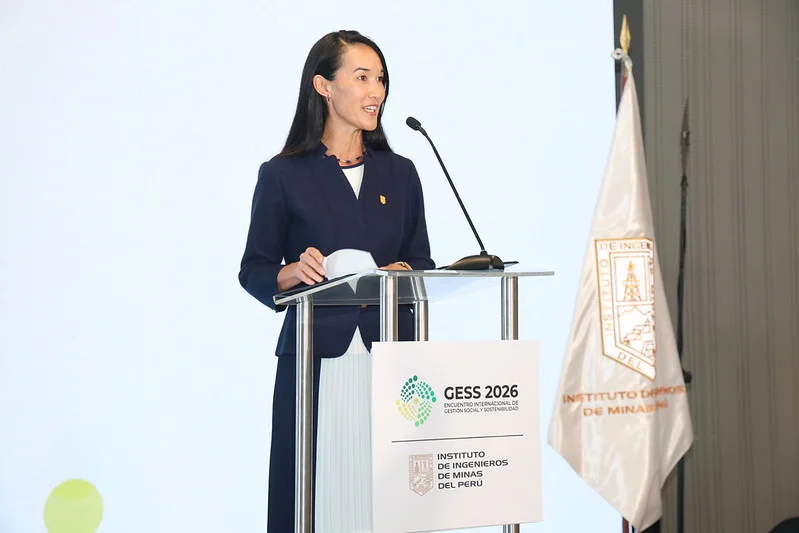
Peru stands at a historic crossroads. As the global economy accelerates its transition toward decarbonization, the Andean nation finds itself in possession of a geological treasure chest that is indispensable to the survival of modern, green technology. According to Tamiko Hasegawa, President of the International Meeting on Social Management and Sustainability (GESS 2026), Peru is uniquely positioned to supply more than half of the critical minerals required for the global energy transition. However, this geological windfall comes with a heavy mandate: the transformation of how the mining industry integrates social responsibility, youth leadership, and technological innovation.
The Global Energy Transition and Peru’s Strategic Role
The shift toward a low-carbon economy is not merely a policy goal; it is a technological revolution that relies heavily on raw materials. Technologies such as high-capacity batteries for electric vehicles (EVs), renewable energy infrastructure (wind turbines and solar arrays), and advanced grid transmission systems depend entirely on a steady supply of minerals such as copper, lithium, and rare earth elements.
During her keynote presentation at GESS 2026, Tamiko Hasegawa emphasized that the global demand for these minerals has transformed the geopolitical and economic landscape. "The energy transition has propelled minerals like copper and lithium to the forefront of the global agenda. They are the building blocks of a low-carbon future," Hasegawa stated.
Data from the Institute of Mining Engineers of Peru (IIMP) reinforces this assertion, indicating that Peru produces over 50% of the critical minerals necessary for the global energy transition. This statistic elevates Peru from a mere commodity exporter to a foundational pillar of global climate mitigation strategies. For Peru, this is both an immense economic opportunity and a responsibility that requires a sophisticated, sustainable, and inclusive management framework.
A Chronology of Progress: From Extraction to Social Integration
The evolution of the Peruvian mining sector has not happened overnight. To understand the current focus on sustainability, one must look at the progression of the industry:
- The Early 2000s (Growth Phase): The industry focused heavily on scaling production to meet rising demand from emerging economies, particularly in Asia. The narrative was centered on GDP growth and infrastructure development.
- The 2010s (Regulatory Refinement): As social tensions grew, the sector began implementing stricter Environmental and Social Impact Assessments (ESIA). Companies started shifting from "Corporate Social Responsibility" (CSR) as a PR tool to "Social License to Operate" as a business necessity.
- 2020-2024 (The Digital Pivot): With the arrival of Industry 4.0, operations like Quellaveco demonstrated that technology could solve long-standing human resource issues. The integration of autonomous machinery became the new standard for efficiency and safety.
- 2026 and Beyond (The Era of Inclusion): As evidenced by the GESS 2026 discussions, the current era is defined by the intentional integration of human capital. The focus is no longer just on what is extracted, but who is doing the extracting and how that impacts the social fabric of the regions surrounding the mines.
Supporting Data: The Case of Quellaveco as a Benchmark
Hasegawa pointed to the Quellaveco operation in Moquegua as the gold standard for this modern approach. By leveraging digitalization and automation, the mine has significantly altered the traditional demographic makeup of the mining workforce.

One of the most compelling examples of this transformation is the inclusion of women in heavy operation roles. Historically, heavy machinery operation in mining was a male-dominated field. Through a targeted training program, Quellaveco successfully bridged the gender gap, allowing women to operate autonomous trucks with high efficiency.
"The results were transformative," Hasegawa explained. "Participants didn’t just meet the requirements; they excelled, leading to many of them advancing into highly technical roles that were previously inaccessible to them." This shift demonstrates that technology, when paired with inclusive social policies, can dismantle institutional barriers and broaden the talent pool—a necessity in a sector facing a global skills shortage.
The Human Element: Empowering the Next Generation
A central theme of the GESS 2026 summit was the role of youth. Hasegawa was explicit in her address to the young professionals in attendance: "You are not the future; you are the present."
The traditional mining industry has often been viewed by younger generations as outdated or environmentally insensitive. To combat this, the IIMP and other stakeholders have launched initiatives that engage over 1,000 young professionals in innovation and leadership development. These programs are designed to break the "silo" mentality, bringing together students and professionals from across the country—from the coast, the Andes, and the Amazon.
The Need for Multidisciplinary Expertise
Modern mining is no longer the sole domain of geologists and mining engineers. The complexity of modern operations requires a diverse array of professionals:
- Environmental Scientists: To manage the delicate balance between resource extraction and biodiversity conservation.
- Economists: To ensure that mineral wealth translates into sustainable regional development.
- Legal Experts: To navigate the intricate web of land rights, international trade law, and local community agreements.
- Sociologists: To bridge the gap between corporate operations and the cultural expectations of local populations.
Hasegawa emphasized that the industry’s ability to attract this diverse talent will be the primary determinant of its long-term viability. By integrating the perspectives of youth from all regions, the sector can foster a more holistic approach to problem-solving.
Official Perspectives and Strategic Implications
The implications of the GESS 2026 discussions are clear: Peru’s reputation on the global stage is intrinsically linked to its ability to manage its mineral wealth sustainably.

Economic Implications
If managed correctly, the critical mineral boom can serve as a catalyst for a national economic renaissance. The transition to green energy provides a long-term, stable market for copper and other minerals, shielding the economy from the volatility of traditional commodity cycles. However, this requires significant investment in infrastructure and value-added processing, rather than relying solely on the export of raw concentrates.
Social Implications
The "social license to operate" remains the most fragile component of the industry. Hasegawa’s insistence on "social innovation" suggests that companies must move beyond traditional philanthropic efforts. True social innovation involves creating shared value—investing in education, local entrepreneurship, and digital literacy in mining regions to ensure that the wealth generated is distributed throughout the social fabric of the country.
Global Environmental Implications
As the world demands "green" minerals, the provenance of those minerals matters. International consumers are increasingly sensitive to the environmental and ethical footprint of their supply chains. By adopting high standards of sustainability and transparency, Peru can position its minerals as "premium" products in the global market, fetching better prices and securing long-term contracts with major global manufacturers who are committed to ESG (Environmental, Social, and Governance) standards.
Conclusion: A Call to Action
The discourse presented by Tamiko Hasegawa at GESS 2026 serves as a definitive roadmap for the Peruvian mining industry. The path forward is not found in more intensive extraction, but in more intelligent, inclusive, and sustainable management.
As Peru looks toward the future, the integration of technology, the empowerment of women in technical roles, and the elevation of youth into decision-making spaces will be the factors that distinguish successful mining nations from those that falter. The country has the minerals the world needs, but it is the people—their expertise, their diversity, and their commitment to social responsibility—that will ensure these resources serve as a foundation for a prosperous, modern, and sustainable Peru.
The challenge is significant, but as the proceedings of GESS 2026 have shown, the momentum for change is already firmly established. The industry is evolving, and with the right leadership, it has the potential to redefine what responsible mining looks like on the global stage.