CARABAYLLO, LIMA – In a significant move toward enhancing urban connectivity and public safety, the Municipality of Carabayllo has officially commenced the construction of a new pedestrian bridge in the El Estanque urbanization. This infrastructure project, spearheaded by the local government, is designed not merely as a transit passage, but as an inclusive architectural solution aimed at bridging the gap for the district’s most vulnerable populations.
As part of a broader municipal initiative to modernize urban spaces, the project underscores a commitment to integrating safety and accessibility into the daily lives of residents. By focusing on high-traffic areas within El Estanque, the administration seeks to resolve long-standing logistical challenges that have hindered efficient pedestrian flow in this rapidly growing sector of North Lima.
The Core Project: Engineering for Inclusion
At the heart of the project is a focus on universal design. The new pedestrian bridge will feature a state-of-the-art accessibility ramp, specifically engineered to accommodate the needs of individuals who have historically faced mobility barriers. Unlike traditional stair-only footbridges, this structure incorporates gradients compliant with modern safety standards, ensuring seamless transit for wheelchair users, individuals with strollers, and those with temporary or permanent mobility impairments.
Furthermore, the integration of robust, high-visibility safety railings serves as a primary defense mechanism against accidents. By providing clear boundaries and structural support, these safety features are expected to significantly reduce the risk of pedestrian incidents in the vicinity of the urban corridor.
Technical Oversight and Execution
The execution of this project has been entrusted to the technical personnel of the Subgerencia de Parques, Jardines y Ornato. While often associated with the aesthetic maintenance of green spaces, this department has demonstrated its capacity for civil engineering and structural development. By utilizing internal municipal expertise, the local government aims to ensure that the project is not only cost-effective but also adheres strictly to the specific urban planning requirements of the district.

Chronology of the Initiative
The development of the El Estanque pedestrian bridge follows a systematic planning and implementation phase that highlights the municipal government’s long-term urban strategy:
- Phase I: Needs Assessment and Feasibility (Early 2026): Municipal planners conducted a site analysis in the El Estanque sector, identifying a high volume of pedestrian crossings in areas lacking adequate infrastructure. Reports indicated that elderly residents and school-aged children were at constant risk due to the lack of dedicated, safe crossing zones.
- Phase II: Budgetary Allocation and Design Approval (Mid-2026): After securing the necessary funding, the municipal administration finalized the architectural blueprints. The focus shifted from a simple functional crossing to a modern, inclusive structure that aligns with the district’s "Urban Connectivity and Safety" master plan.
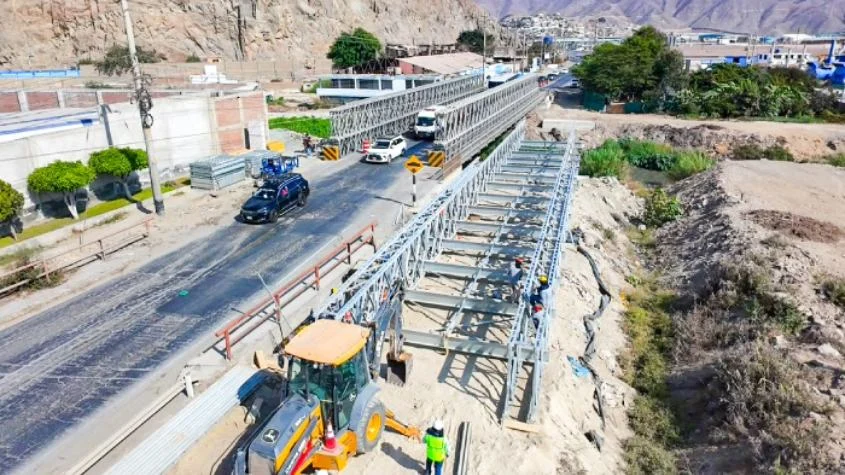
- Phase III: Mobilization and Groundbreaking (August 2026): Specialized teams from the Subgerencia de Parques, Jardines y Ornato were deployed to the site. The initial stages involved clearing the area, verifying ground structural integrity, and preparing the foundation for the modular components.
- Phase IV: Construction and Assembly (Current Status): Workers are currently installing the structural supports and preparing the assembly of the bridge’s ramps and safety guardrails. Progress is being monitored by municipal supervisors to ensure compliance with quality control standards.
Supporting Data: Why Pedestrian Infrastructure Matters
The necessity of this project can be contextualized through broader urban statistics regarding Lima’s peripheral districts. In rapidly expanding areas like Carabayllo, urban sprawl often outpaces the development of formal pedestrian infrastructure.
The Impact on Vulnerable Populations
Data from urban planning studies suggests that for every 10,000 residents in districts like Carabayllo, a significant percentage identify as having limited mobility. In El Estanque, the demographics indicate a high concentration of elderly residents who frequently utilize local services, such as health clinics and community centers. Without inclusive infrastructure, these individuals are often forced to traverse dangerous intersections or opt for longer, more strenuous routes.
The inclusion of a ramp system is not merely an amenity; it is a fundamental requirement for social equity. By reducing the physical effort required to traverse obstacles, the municipality is actively promoting "active aging," allowing older adults to maintain their independence and community participation.
Economic and Safety Implications
From an economic perspective, investments in pedestrian bridges correlate with increased commercial activity in the immediate vicinity. When people feel safe moving on foot, they are more likely to visit local businesses. Furthermore, the long-term cost-benefit analysis of such projects is favorable, as the municipal government anticipates a decrease in medical expenditures associated with pedestrian-vehicle accidents and a reduction in emergency response calls to the district.

Official Responses and Municipal Strategy
Municipal authorities have emphasized that the bridge is just one component of a much larger strategy to transform Carabayllo into a more navigable city.
In a recent briefing, representatives from the Municipality noted: "Our priority is to ensure that no neighbor is left behind due to physical barriers. The bridge at El Estanque represents a fundamental shift in how we approach urban development—moving away from reactive repairs to proactive, inclusive planning. We are creating a district where a student, a parent with a stroller, and an elderly resident can all transit safely and with dignity."
The decision to utilize the Subgerencia de Parques, Jardines y Ornato for this project reflects a "multi-purpose" management style. By training municipal staff in structural maintenance and installation, the district is building a self-sustaining workforce capable of responding to the infrastructure needs of the community without constant reliance on external contractors, thereby keeping capital within the municipal budget.
Implications for the Future of Carabayllo
The construction of the El Estanque bridge sends a strong message to the residents of Carabayllo: the municipality is listening to their demands for improved safety. As the district continues to grow, the pressure on existing infrastructure will only increase. Projects like this serve as a pilot model for future urban interventions.
Sustainability and Maintenance
The durability of the materials chosen for this project is a critical factor. By selecting modular components that are resistant to the coastal climate of Lima, the municipality aims to minimize long-term maintenance costs. The integration of safety railings and non-slip surfaces for the ramps ensures that the structure will remain functional throughout all seasons, including the humid winter months that often make infrastructure slippery and hazardous.

A Model for Neighboring Districts
Other districts in the North Lima area are watching the developments in Carabayllo with interest. If the El Estanque project proves successful, it is expected that the model of decentralized, specialized municipal work crews will be adopted by other local governments looking to optimize their own public works programs.
Conclusion: Bridging the Gap
The new pedestrian bridge in El Estanque is more than just steel and concrete. It is a tangible manifestation of a social contract between the local government and its citizens. By prioritizing accessibility, the Municipality of Carabayllo is acknowledging that true progress is measured by the inclusivity of our infrastructure.
As construction continues through the coming weeks, the focus will remain on timely delivery and strict adherence to safety protocols. For the residents of El Estanque, the completion of this bridge will mark the end of a long wait for a safe, dignified way to cross their neighborhood, and the beginning of a new chapter in the district’s ongoing effort to build a modern, accessible, and safe urban environment for everyone.