By Editorial Staff
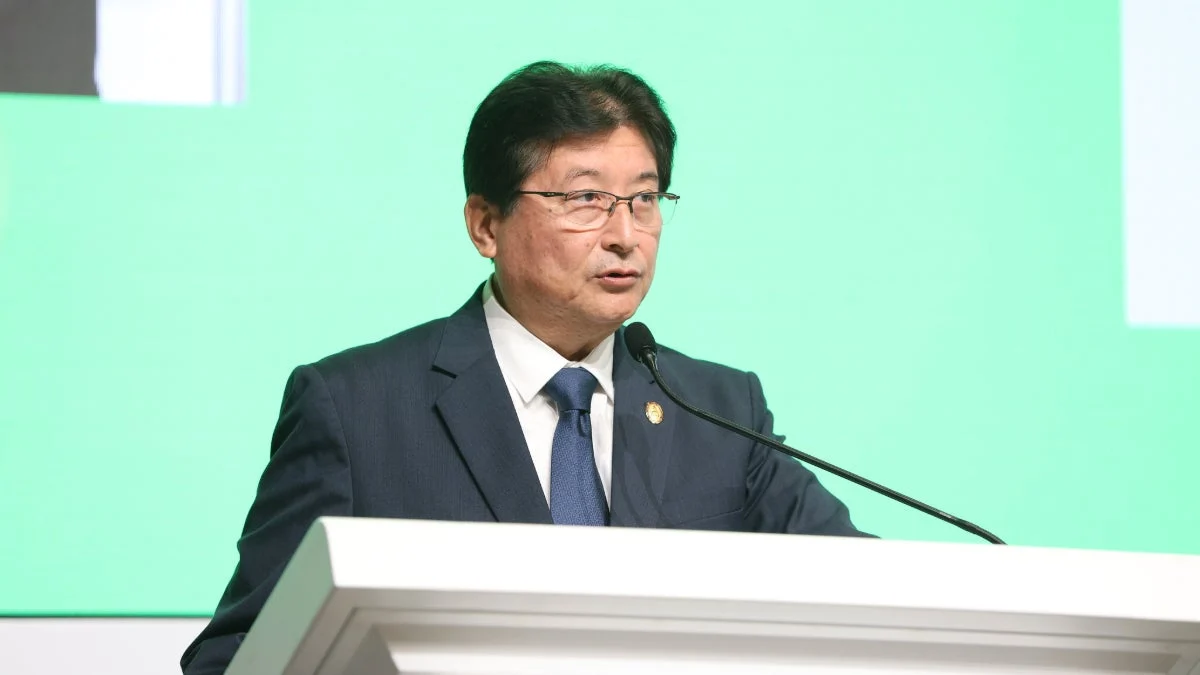
In a significant shift in national policy, the Peruvian government has announced plans for a structural overhaul of the mining canon—the mechanism by which mining tax revenues are redistributed to regional and local governments. Guillermo Shinno, the Minister of Energy and Mines (MINEM), unveiled the proposal during the International Meeting on Social Management and Sustainability (GESS 2026), signaling a move toward a more localized, transparent, and impact-driven distribution model.
The proposed reform aims to address a long-standing grievance in Peru’s mining sector: the disconnect between the wealth generated by extractive industries and the living standards of the communities located in the immediate vicinity of these operations.
The Core Proposal: Redefining Direct Benefit
For years, the mining canon has functioned as a primary engine of regional development in Peru. However, critics, including the current administration, argue that the system is plagued by inefficiencies, institutional bottlenecks, and, in many instances, outright corruption. Currently, funds are transferred to regional and provincial governments, which often prioritize large-scale urban infrastructure projects in provincial capitals, frequently neglecting the rural communities that reside directly atop or adjacent to the mining concessions.
Minister Shinno’s proposal seeks to mandate a specific portion of these funds to be earmarked directly for the development of communities surrounding mining projects. "From the sector, we are going to push for structural modifications to redirect the canon," Shinno stated during his address. "Today, the money goes to the regions and is often invested in the capitals of provinces or districts; we have seen it used for projects that serve no real purpose, or, in other cases, it is lost to corruption."
The goal, according to the Ministry, is to ensure that these communities see an immediate improvement in basic infrastructure—such as potable water, electrification, and connectivity—which they have historically been denied despite the industrial activity occurring on their ancestral lands.
Chronology of a Persistent Problem
The debate over the mining canon is not new. To understand the gravity of Minister Shinno’s proposal, one must look at the historical trajectory of the conflict:
- Early 2000s: The mining boom in Peru leads to record-high tax revenues. The canon is established as a key instrument to decentralize wealth, yet the legal framework provides little oversight on how local authorities spend these funds.
- 2010–2015: A period marked by significant social unrest. Major projects like Conga and Tía María are paralyzed due to community opposition. The recurring theme in these protests is the feeling that mining companies and the central government profit while the local population remains in poverty.
- 2018–2022: Efforts are made to streamline public investment, but the "execution gap"—the inability of local governments to spend their budgets—becomes a national scandal. Billions of soles in canon funds sit idle in bank accounts while communities remain without basic services.
- 2026 (Present): Minister Shinno takes office and identifies the canon distribution as the "Achilles’ heel" of the government’s mining strategy. The government announces a shift toward "territorial governance," moving away from reactive conflict resolution toward proactive, community-centric planning.
Supporting Data: The Magnitude of the Challenge
The urgency of this reform is underscored by the sheer scale of the mining sector’s contribution to the Peruvian economy. MINEM recently announced a strategic push to unlock US$40 billion in mining and energy projects over the next five years. However, this investment goal is contingent upon social license.
The Execution Gap
Data from the Ministry of Economy and Finance (MEF) consistently shows that local governments, particularly in mining regions like Cajamarca, Apurímac, and Moquegua, often fail to execute more than 60% of their annual investment budgets. This inefficiency creates a perverse cycle: communities see the mining output, see the tax revenues entering the local coffers, but see no improvement in their daily lives.
Revenue Redistribution
Under the current system, 50% of the Income Tax paid by mining companies is transferred to regional and local governments. While the intention is to create "poles of development," the lack of technical capacity in smaller municipalities has turned the canon into a source of regional inequality, where provincial capitals thrive while the periphery remains neglected.
Official Responses and Stakeholder Perspectives
The government’s proposal has received a mixed but largely cautious reception from the various stakeholders involved in the extractive ecosystem.
The Mining Industry
Major mining firms, represented by organizations like the National Society of Mining, Petroleum, and Energy (SNMPE), have long argued that they cannot be held responsible for the lack of government efficiency. However, many industry leaders support the reform, viewing it as a pragmatic step toward securing the "social license to operate." By ensuring that direct benefits reach the surrounding communities, companies hope to reduce the frequency and intensity of social blockades that disrupt supply chains and project timelines.
Local Governments
Predictably, the reaction from regional and provincial mayors has been more defensive. Many argue that the central government is attempting to undermine the decentralization process. They contend that the canon is intended for regional development, and that earmarking funds for small communities would fragment the budget, making it difficult to execute large-scale, transformative regional projects.
Social and Community Leaders
Community leaders have welcomed the rhetoric but remain skeptical of the implementation. Many have pointed out that "earmarking" funds is only the first step. Without a mechanism to bypass the notoriously corrupt local tendering processes, they fear the money will simply be redirected rather than effectively utilized.
Implications: A New Model of Territorial Governance
Minister Shinno’s vision goes beyond simple financial restructuring. He proposes a transition toward a model of "preventative territorial governance."
1. The End of Reactive Management
Historically, the Peruvian state has only engaged with communities when a conflict has already reached a boiling point. The Ministry’s new approach calls for permanent, tripartite planning—involving the State, private companies, and the local community—to define development priorities before a project even breaks ground.
2. Strengthening Institutional Capacity
Shinno admitted that changing the canon distribution is insufficient if the local governments tasked with executing these funds remain incapable. The Ministry plans to introduce technical assistance programs to train municipal officials in project management, procurement, and transparency. This is an admission that the problem is not just the lack of money, but the lack of administrative infrastructure to turn that money into schools, clinics, and roads.
3. Economic Stability and Risk Reduction
From a macro-economic perspective, the success of this reform is vital for Peru’s fiscal health. With the goal of unlocking US$40 billion in new projects, the government cannot afford the status quo. If the reform succeeds, it could serve as a model for other Latin American countries struggling with the "resource curse," where mineral wealth fails to translate into human development.
Conclusion: The Long Road Ahead
The proposal to modify the mining canon is a bold acknowledgment by the Ministry of Energy and Mines that the current social contract in the mining sector is broken. By attempting to bridge the gap between national tax revenue and local community needs, the government is attempting to move from a system of "wealth extraction" to one of "territorial development."
However, the path to legislative change will be fraught with difficulty. The reform will require not only a legal overhaul of the current canon laws but also a significant battle with the entrenched interests of regional bureaucracies and local political machines.
As Minister Shinno stated, "We have to ensure that part of that canon goes, yes or yes, to the surrounding communities, so they can finally see the basic infrastructure they have been demanding." Whether the government can transform this political will into tangible, on-the-ground results remains the central challenge of the next five years. If it succeeds, it could usher in a new era of stable, sustainable mining for Peru; if it fails, it risks further alienating the very populations whose trust is essential for the country’s economic future.
The eyes of the international mining community are now firmly fixed on Lima, waiting to see if these structural promises will materialize into a more equitable and efficient development model.