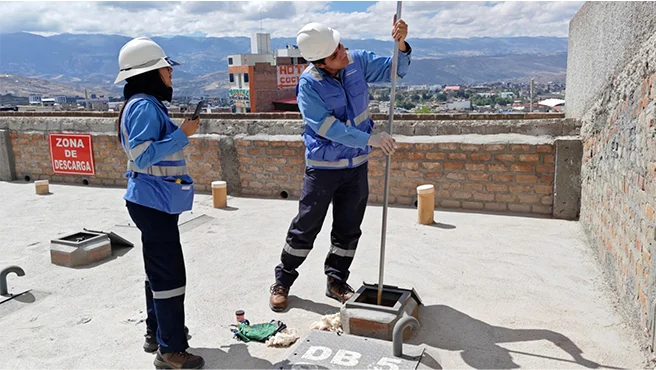
Lima, Peru – In a proactive move to safeguard national energy security and consumer interests, the Organismo Supervisor de la Inversión en Energía y Minería (Osinergmin) has significantly amplified its operational tempo, conducting widespread inspections of fuel stations (grifos) across Peru and bolstering monitoring efforts at fuel supply plants. This intensified oversight aims to guarantee the consistent availability of essential fuels nationwide and to ensure price transparency in the market.
Recent findings from Osinergmin’s extensive monitoring reveal a robust national fuel supply, with significant stock levels for critical fuel types. The agency reports an average of 13 days of supply for Diesel, an equivalent of 13 days for regular gasoline (gasohol regular), and a substantial 26 days of supply for premium gasoline (gasohol premium). These figures underscore a healthy inventory that is expected to meet immediate demand and provide a buffer against potential disruptions.
The scope of Osinergmin’s on-the-ground fiscalization has been considerable, encompassing 71 fuel stations spread across a diverse array of regions. These inspections have touched upon 22 of Peru’s departments, including Madre de Dios, Loreto, Ica, Áncash, Ucayali, Lambayeque, Piura, Cusco, Moquegua, Lima, Tacna, Amazonas, San Martín, Apurímac, Cajamarca, La Libertad, Pasco, Puno, Arequipa, Huánuco, and Junín. This broad geographical reach demonstrates Osinergmin’s commitment to ensuring equitable fuel availability across the entire national territory, from bustling urban centers to more remote Amazonian and Andean communities.
Beyond mere stock verification, Osinergmin’s operatives are meticulously scrutinizing price accuracy. A key aspect of these inspections is to ensure that the prices displayed at fuel stations precisely match the prices reported on Osinergmin’s widely used "Facilito" application. This digital tool is designed to empower consumers by providing real-time fuel price information. Any discrepancies detected during these audits trigger formal sanctioning processes, reinforcing Osinergmin’s dedication to fostering a transparent and competitive fuel market where consumers can make informed purchasing decisions.
The agency emphasizes that while fuel prices in Peru are primarily governed by the principles of a free market, Osinergmin plays a crucial role in facilitating consumer access to accurate and competitive pricing information. The "Facilito" application is presented as an indispensable resource for the public, enabling users to locate the nearest fuel stations, compare prices, and identify the most economical options available. Osinergmin urges consumers to leverage this platform and to actively report any price inconsistencies observed between the advertised price at a station and the information available on "Facilito." Such reports can be submitted directly through the application or via Osinergmin’s toll-free hotline, 1840.
Osinergmin has pledged to maintain this heightened level of vigilance, promising to continue its ongoing monitoring of fuel availability and to rigorously enforce the compliance obligations of all market participants. This commitment signals a sustained effort to ensure the stability and fairness of Peru’s fuel sector.
Intensified Operational Tempo: A Strategic Imperative
The recent surge in Osinergmin’s operational activities is not an isolated event but rather a strategic response to the dynamic nature of the energy market and the imperative to safeguard national interests. By deploying a more robust presence at both the distribution and retail levels, Osinergmin is proactively addressing potential vulnerabilities within the fuel supply chain. This approach allows for the rapid identification and mitigation of any emerging issues that could impact fuel availability or lead to price volatility.
The dual-pronged strategy of monitoring supply plants and inspecting retail outlets provides a comprehensive overview of the fuel market’s health. Plant-level monitoring offers insights into the upstream flow of fuel, ensuring that refineries and import terminals are functioning efficiently and that sufficient volumes are being dispatched. Simultaneously, inspections at fuel stations directly address the consumer-facing aspect of the market, guaranteeing that the fuel reaches its final destination without undue delays or diversions and that consumers are not subject to unfair pricing practices.
National Fuel Stock: A Picture of Stability
The data emerging from Osinergmin’s monitoring of fuel supply plants paints a reassuring picture of the nation’s fuel reserves. The reported stock levels for Diesel, regular gasoline, and premium gasoline indicate a healthy buffer that can sustain consumption for several weeks.
- Diesel: With an average stock of 13 days, Osinergmin’s data suggests that the supply of diesel, a critical fuel for transportation, logistics, and various industrial sectors, is adequately managed. This is particularly important given Peru’s extensive reliance on road transport for goods and services.
- Regular Gasoline (Gasohol Regular): A similar 13-day supply of regular gasoline ensures that the majority of passenger vehicles and smaller commercial fleets have consistent access to this essential fuel.
- Premium Gasoline (Gasohol Premium): The significantly higher stock of 26 days for premium gasoline indicates a strategic surplus, potentially catering to fluctuations in demand for higher-octane fuels or serving as an additional safeguard against supply chain disruptions for this specific product.
These figures are derived from the aggregated data of fuel supply plants across the country, representing a consolidated view of the national inventory. This quantitative assessment is a cornerstone of Osinergmin’s regulatory mandate, providing an objective basis for evaluating the security of the nation’s fuel supply.
Extensive Fiscalization: Reaching Every Corner of Peru
The geographical breadth of Osinergmin’s recent fiscalization efforts is a testament to its commitment to comprehensive oversight. By conducting inspections in 22 departments, the agency has demonstrably extended its reach to diverse regions with varying logistical challenges and consumer bases.

The inclusion of departments such as Madre de Dios and Loreto, which are characterized by their remote locations and reliance on fluvial and air transport for fuel delivery, highlights Osinergmin’s understanding of the unique complexities of fuel distribution in different parts of Peru. Similarly, inspections in high-altitude Andean regions and coastal areas underscore the agency’s dedication to ensuring that all Peruvian citizens, regardless of their geographical location, have access to reliable fuel supplies at fair prices.
The sheer number of fuel stations inspected, 71, provides a statistically significant sample size, allowing Osinergmin to draw robust conclusions about the general state of compliance and stock availability across the nation. This empirical evidence forms the bedrock of the agency’s public communications and its regulatory interventions.
Ensuring Price Transparency: The "Facilito" Advantage
A critical dimension of Osinergmin’s current operations is the rigorous enforcement of price transparency. The discrepancies between the prices displayed at fuel stations and those reported on the "Facilito" application have been a recurring concern for consumers. By actively cross-referencing these data points, Osinergmin is directly addressing this issue.
The "Facilito" application serves as a vital tool in this regard. Its user-friendly interface allows for easy access to real-time pricing information, empowering consumers to make informed decisions. The ability to locate the nearest fuel stations and compare prices empowers consumers to seek out the most competitive offers, thereby fostering a more dynamic and responsive market.
The reporting mechanism integrated within "Facilito," along with the dedicated hotline, provides a direct channel for consumer feedback. This participatory approach not only helps Osinergmin identify non-compliant establishments but also builds trust and encourages a culture of accountability within the fuel retail sector. The initiation of sanctioning processes for detected non-compliance sends a clear message that adherence to pricing regulations is paramount.
The Dynamics of a Free Market and Osinergmin’s Role
Peru’s energy market operates under the principles of a free market, where supply and demand dynamics largely dictate fuel prices. This framework is intended to promote efficiency and competition. However, the inherent complexities of this market, including global price fluctuations, logistical challenges, and potential for market manipulation, necessitate a robust regulatory oversight body.
Osinergmin’s role is not to set prices but to ensure the smooth functioning of the market by:
- Monitoring Supply: Guaranteeing that there is sufficient fuel available to meet national demand.
- Enforcing Regulations: Ensuring that all market participants adhere to established norms and laws.
- Promoting Transparency: Providing consumers with the information they need to make informed choices.
- Protecting Consumers: Safeguarding citizens from unfair practices and ensuring access to essential energy resources.
The agency’s proactive stance, as demonstrated by its intensified operations, is crucial in maintaining stability and consumer confidence within this free market environment. By acting as an impartial arbiter and information provider, Osinergmin helps to mitigate the inherent volatility of energy markets and to protect the economic well-being of Peruvian households and businesses.
Future Outlook and Continued Vigilance
Osinergmin has explicitly stated its commitment to sustaining its current level of oversight. This implies that the agency will continue to:
- Regularly monitor fuel stock levels at supply plants and distribution hubs.
- Conduct periodic and unannounced inspections of fuel stations across all regions.
- Actively update and promote the use of the "Facilito" application as a primary tool for price comparison and reporting.
- Enforce sanctions against any entities found to be in violation of regulations.
- Engage with stakeholders within the energy sector to address emerging challenges and to foster best practices.
This sustained vigilance is essential for long-term energy security and consumer protection. As global energy landscapes evolve and domestic market dynamics shift, Osinergmin’s adaptive and rigorous approach will be critical in ensuring that Peru’s fuel supply remains stable, accessible, and competitively priced for all its citizens. The agency’s ongoing efforts serve as a vital reassurance that the wheels of Peruvian commerce and daily life will continue to turn, powered by a secure and transparent energy supply.