Overview: A Confrontation of Powers
The political landscape in Peru has entered a period of heightened friction following the decision by the legislative bloc of Juntos por el Perú (JPP) to initiate an interpellation motion against the Minister of Defense, Rafael Belaúnde Llosa. This parliamentary maneuver, which seeks to hold the minister accountable for his management of the Ministry of Defense (Mindef) and his political history, has drawn sharp criticism from political analysts and former state officials.
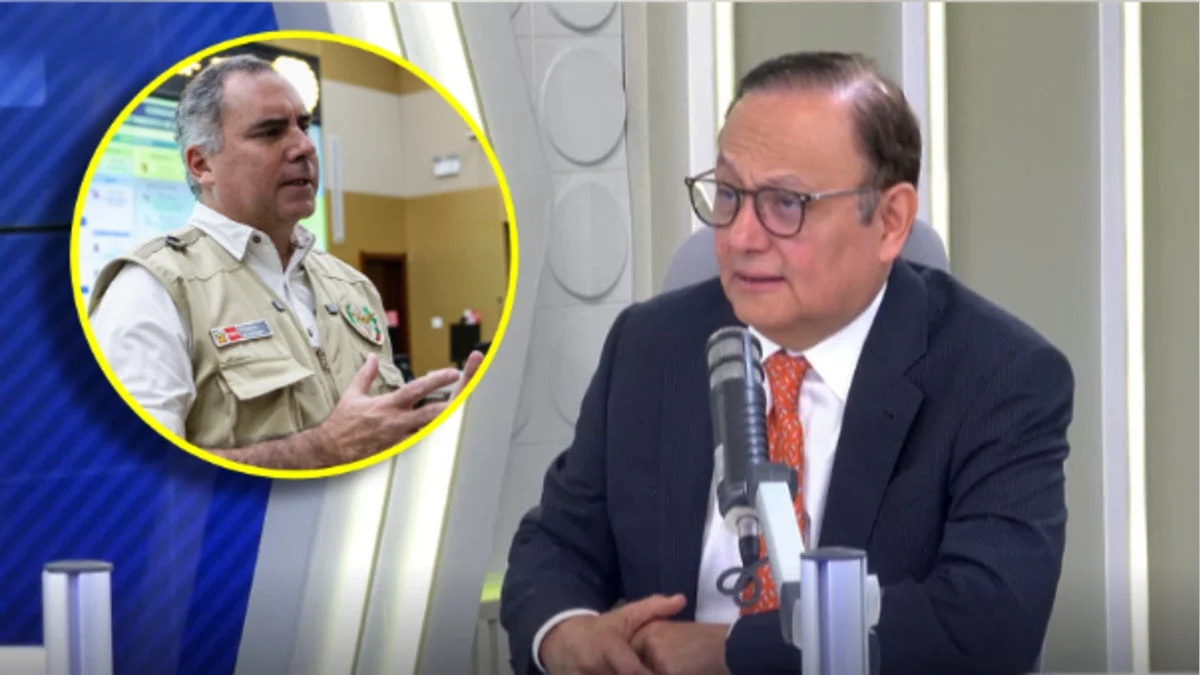
Walter Gutiérrez, the former Ombudsman of Peru, has characterized the move as an aggressive escalation, describing it as "almost a declaration of war" by the opposition against the administration of President Keiko Fujimori. As the country navigates the early stages of its return to a bicameral legislative system, the clash between the Chamber of Deputies and the Executive branch has sparked concerns regarding the stability of the current governance model and the adherence to constitutional "duties of collaboration."
Chronology of the Dispute
The sequence of events leading to this parliamentary showdown can be traced back to growing concerns regarding security in the Pataz region and allegations concerning the minister’s past electoral financing.
- Initial Allegations: Questions emerged regarding the relationship between Minister Belaúnde and Minera Poderosa, specifically concerning the funding of his previous presidential campaign under the Libertad Popular party.
- The Motion: On the final Friday of last week, the JPP bloc officially introduced a motion of order for the day, calling for the Minister of Defense to appear before the Chamber of Deputies.
- The Pliego: The motion includes a rigorous list of 43 questions that the minister is expected to answer, covering both his ministerial management and his past political activities.
- Public Response: Following the filing of the motion, Minister Belaúnde held a series of interviews over the weekend, categorically denying the accusations of illicit funding and clarifying the nature of the state of emergency in Pataz.
The Constitutional Debate: Gutiérrez’s Critique
Walter Gutiérrez, who previously served as Peru’s Ambassador to Spain, expressed deep apprehension regarding the speed and aggressive nature of the interpellation. He argued that the Chamber of Deputies, which had barely finalized the formation of its committees, is prematurely exercising its powers in a manner that threatens to destabilize the Executive.
The Limits of Legislative Power
Gutiérrez emphasized that while the legislature possesses the authority to interpellate, such power must be used within the boundaries of constitutional duty. He noted, "There is a constitutional way to exercise this competency, and there are two parameters: the end and the limit." According to the former Ombudsman, the purpose of a representative’s mandate is not to engage in political warfare but to facilitate the materialization of public rights and services.
"The citizenry did not put them there to start a political war, but to fulfill the duty of collaboration," Gutiérrez stated. He warned that if the legislature continues to use its oversight powers as a weapon of attrition, the country risks re-entering the cycle of political crises that defined the previous decade. By skipping the standard process of dialogue and moving directly to a confrontational interpellation, the opposition is arguably bypassing the "duty of collaboration" that is essential for a functional democracy.
Official Response: Minister Belaúnde’s Defense
In his defense, Minister Rafael Belaúnde Llosa has remained firm, refuting the claims that his campaign was funded by Minera Poderosa. Speaking on the program Ampliación de Noticias, the minister clarified that the contributions in question were personal donations to the Libertad Popular party, not corporate contributions from the mining firm.
Clarifying the Financial Records
Belaúnde addressed the involvement of Evangelina Arias, the president of the board of Minera Poderosa. He explained that Arias’s contributions were motivated by her personal political affinity with Mario Vargas Llosa, who had joined the Libertad Popular party, rather than any commercial interest involving the mining company.
"The financing is for the party, not for an individual," Belaúnde stated. "Minera Poderosa has not contributed to the party, because the contributions are from individual persons to the political organization. I have not received a cent from Mrs. Arias or Minera Poderosa." He further asserted that he has no past employment or commercial ties to the company, maintaining that his professional record is entirely independent of the mining industry.
The Pataz Security Mandate
Regarding the security situation in the Pataz region, the Minister of Defense categorically denied that the current state of emergency was declared to protect the private interests of Minera Poderosa.
"The state of emergency in Pataz is not—to put it in colloquial terms—to provide private security for Minera Poderosa," the minister stated. "The state of emergency is to combat criminal organizations that are utilizing illegal firearms." His statement serves as a clear rebuttal to claims that the armed forces are being misused to act as a private security detail for mining interests, a recurring theme in the criticisms levied by his opponents.
Implications for the Bicameral System
The interpellation of Minister Belaúnde carries significant weight as it marks the first time a cabinet member has faced such a process since Peru’s return to a bicameral system. This "inauguration" of the process is being closely watched by constitutional scholars and political actors alike.
A Test of Institutional Maturity
The transition to a bicameral system was intended to bring more stability and deliberation to the legislative process. However, the current situation suggests that the old habits of confrontation may persist. If the Chamber of Deputies uses the interpellation as a precursor to a motion of censorship, it could signal a return to the high-turnover cabinet environment that hampered previous administrations.
Minister Belaúnde has acknowledged the gravity of the situation, confirming that he will attend the session if the motion is approved. "It is a constitutional prerogative. I am effectively debuting this power; I am the first minister to be interpellated since the return to the bicameral system. If they summon me, I will go and answer the list of questions," he declared.
The Need for Inter-Institutional Dialogue
The concerns raised by figures like Walter Gutiérrez point to a fundamental issue in contemporary Peruvian politics: the breakdown of communication between the Executive and the Legislative branches. When oversight mechanisms are viewed as "declarations of war" rather than tools for transparency and collaboration, the efficacy of the entire government is diminished.
The upcoming interpellation session will serve as a critical litmus test. If the proceeding is conducted with a focus on genuine policy inquiry, it may solidify the utility of the new bicameral structure. Conversely, if it descends into political theater intended to erode the legitimacy of the Fujimori administration, it may further alienate a public that is already weary of political instability.
Conclusion
As the Chamber of Deputies prepares for the upcoming sessions, the focus remains on whether the legislative body will prioritize its oversight mandate or continue down the path of aggressive political confrontation. With the Minister of Defense prepared to defend his record and the opposition emboldened by their procedural authority, the coming weeks are likely to define the tenor of the current parliamentary term.
The broader challenge, as noted by observers, is to ensure that the "duty of collaboration" remains the cornerstone of state power. Without this, the return to a bicameral system risks becoming just another venue for the same cycle of crisis that has plagued the nation, rather than the stable, deliberative body the people of Peru were promised. The minister’s upcoming appearance in the chamber is not merely a defense of his own actions, but a pivotal moment in determining the trajectory of the relationship between the two branches of government in this new political era.