The Peruvian government has officially initiated a comprehensive restructuring of the Servicio de Agua Potable y Alcantarillado de Lima (Sedapal). This decisive move comes in the wake of prolonged, systemic failures in the sanitation infrastructure serving the districts of Lima South—a crisis that has plagued local residents for years.
President Keiko Fujimori, following high-level consultations with engineering experts and sanitation specialists, declared that the status quo at the state-run water utility is no longer tenable. The government’s intervention aims not only to address the immediate emergency of failing sewage matrices but also to overhaul the operational and organizational culture of the company to prevent future catastrophes.
Main Facts: The Crisis and the Intervention
The decision to intervene in Sedapal was spurred by a series of sewage collapses that have devastated neighborhoods in the southern part of the capital. Residents have reported recurring flooding, hygiene hazards, and structural damage to their homes for years, with little to no effective response from previous administrative cycles.
Key Components of the Restructuring:
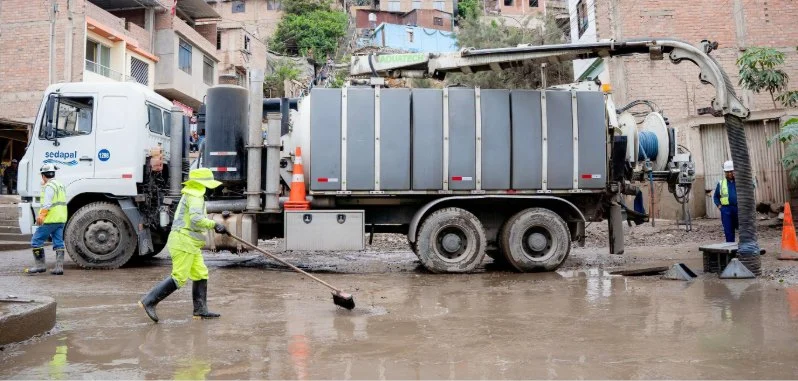
- Engineering Overhaul: The immediate priority is the correction of the primary sewage matrix. Sedapal engineers estimate that the required structural repairs will span approximately two months.
- Organizational Audit: The government has identified that the crisis is not merely a hardware failure—a crumbling pipe or a blocked drain—but a deep-seated organizational malfunction.
- Continuous Oversight: The Executive branch has pledged a permanent monitoring protocol, ensuring that the work is performed under strict technical standards and completed within the promised timeframe.
- Social Support: The National Institute of Civil Defense (Indeci) has been mobilized to conduct a thorough structural assessment of all affected homes to determine compensation and safety requirements.
Chronology of Neglect: A Long-Term Failure
The situation in Lima South is not a sudden accident, but rather the culmination of years of institutional neglect. While the recent collapse brought the issue to the forefront of national media, the timeline of the disaster is extensive.
The Path to Crisis:
- Early Warnings (Years 1-3): Initial reports from local neighborhood councils indicated minor leakages and odors. Maintenance requests filed with Sedapal were reportedly processed as low-priority or ignored entirely.
- Infrastructure Degradation (Years 4-6): The sewage matrix, failing to meet the demands of an expanding urban population, began showing signs of advanced corrosion. During this period, the frequency of reports increased, yet no long-term capital improvement projects were initiated.
- The Tipping Point (Current Phase): The cumulative pressure on the compromised infrastructure led to widespread failures, resulting in the flooding of residential areas and the loss of personal property for hundreds of families.
- Government Intervention (Immediate): Upon the President’s visit to the affected areas, the executive branch bypassed bureaucratic inertia, ordering the immediate deployment of technical teams to stabilize the zone.
Supporting Data and Technical Assessment
According to the engineering teams currently on the ground, the sewage matrix in Lima South is suffering from "structural exhaustion." The materials used in these pipelines have surpassed their useful life, and the lack of a preventative maintenance schedule has exacerbated the risk of total failure.
Technical Challenges:
- Sediment Accumulation: Years of inadequate cleaning have led to the buildup of solid waste, which restricts flow and increases hydrostatic pressure on the pipes.
- Urban Density: The rapid, often unplanned, growth of neighborhoods in the south has placed an unprecedented load on a system designed for a significantly smaller population.
- Organizational Bottlenecks: Internal audits suggest that budget allocations for maintenance were often redirected or delayed, leaving field engineers without the necessary materials to perform timely repairs.
The proposed two-month timeline for correction is an ambitious, high-intensity project that will involve the replacement of critical sections of the piping network and the reinforcement of the surrounding soil to prevent future subsidence.

Official Responses: A Call for Accountability
President Fujimori has been categorical regarding the failure of the institution. "There is a failure of the structure, and there is a failure of the teams and the organization," she stated during a press conference. "This has been happening for many years, and we should have taken action long ago to prevent this."
The Government’s Stance:
The President emphasized that the administration will not tolerate the administrative paralysis that led to this point. By initiating a restructuring, the government is signaling a move toward a more agile and transparent management model. The goal is to transform Sedapal from a reactive entity into a proactive utility company capable of anticipating the needs of a modern metropolis.
The Role of the Private Sector:
Recognizing the limitations of state resources in providing immediate relief, the President has extended a formal invitation to the private sector. Companies are encouraged to contribute to the recovery of the affected families, particularly those who have lost not only their homes but the tools and machinery required for their daily economic activities. This public-private collaboration is viewed as a vital step in restoring the livelihoods of the most vulnerable residents.
Implications: The Future of Sanitation in Lima
The restructuring of Sedapal serves as a litmus test for the government’s ability to manage public utilities and handle civil emergencies. The implications of this intervention are far-reaching:
1. Shift in Institutional Governance
If successful, this restructuring will serve as a template for other state-owned enterprises. It mandates a move away from bureaucratic stagnation toward data-driven, performance-based management. This includes the implementation of real-time monitoring systems for urban infrastructure.
2. Legal and Structural Evaluations
With Indeci tasked with evaluating the structural integrity of residential properties, the government is essentially setting a precedent for state liability in infrastructure failures. Families whose homes have been deemed unsafe or structurally compromised will likely be eligible for relocation or reconstruction aid, a process that will be heavily scrutinized by the public and legal bodies.

3. Urban Planning Reform
The crisis has reignited the debate regarding urban planning in Lima. The failure of the sewage matrix is a direct consequence of density outpacing infrastructure. Future developments will likely face stricter requirements for sanitation integration, forcing developers to contribute to the strengthening of existing public networks before new projects are approved.
4. Restoration of Public Trust
Perhaps the most significant implication is the attempt to rebuild the broken trust between the citizen and the service provider. For years, residents have felt abandoned by Sedapal; the success of this two-month repair project is essential to demonstrating that the government is responsive to the fundamental needs of its people.
Conclusion: A New Standard for Public Services
The crisis in Lima South has highlighted the fragility of urban infrastructure and the dangers of long-term neglect. As the government moves forward with the restructuring of Sedapal, the focus must remain on the human element: the families whose lives were upended by this failure.
The two-month deadline set for the completion of the sewage matrix repair is more than a technical goal—it is a commitment to efficiency. By combining immediate engineering intervention with long-term organizational reform, the administration is attempting to correct years of systemic decay.
As the project progresses, the eyes of the public will remain fixed on the progress of these works. The expectation is clear: the era of reactive, failing public services must come to an end, replaced by a robust, reliable, and accountable infrastructure that supports the growth and well-being of all citizens of Lima. The success of this endeavor will not only restore the sewage system but will hopefully provide the blueprint for a more resilient and responsive governance model for the entire country.