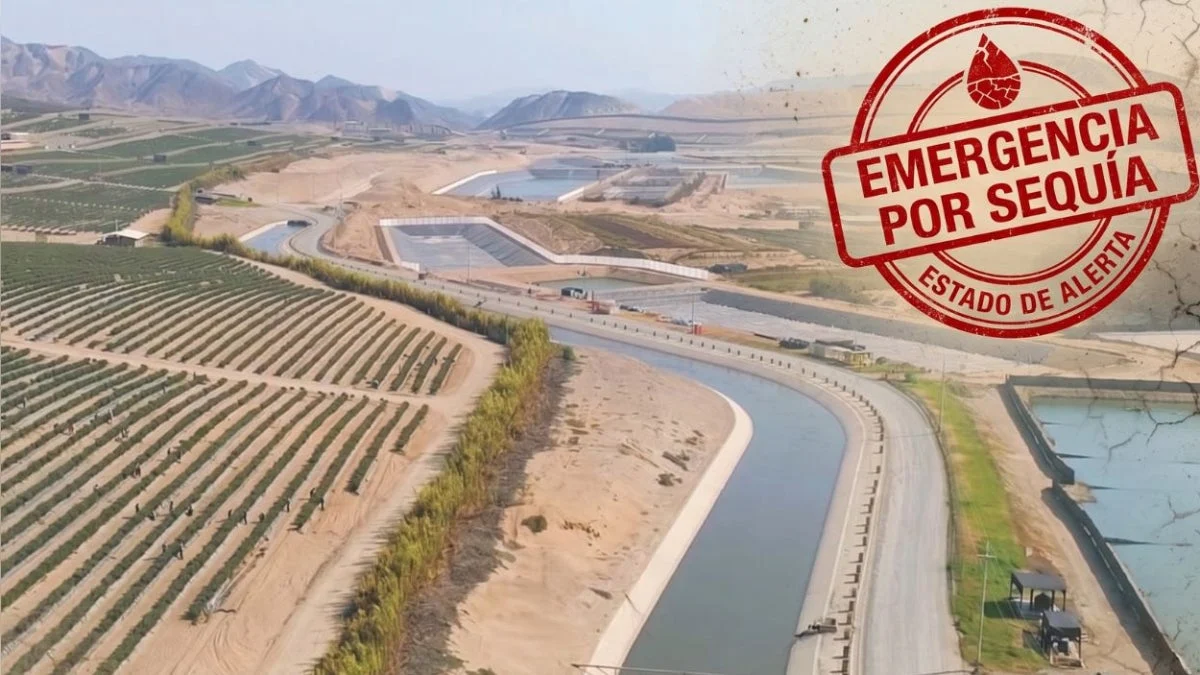
Executive Summary: The Impending Hydrological Crisis
In a decisive move to mitigate the potentially catastrophic effects of a severe water deficit, the Peruvian government has officially declared a State of Emergency in 607 districts across 16 departments. This sweeping measure, formalized through Supreme Decree No. 116-2026-PCM, addresses the urgent need to protect the nation’s agricultural and livestock sectors as the country faces a volatile climate forecast for the 2026-2027 rainy season.
The government’s decision stems from a stark reality: regional and local authorities have reported that their capacity to manage the impending drought has been entirely overwhelmed. With the agricultural calendar for 2026-2027 hanging in the balance, the central government has stepped in to orchestrate a coordinated national response to secure water resources and food stability.
Chronology of the Emergency
The path toward this declaration was not sudden; it is the culmination of months of technical monitoring and escalating environmental warnings.
- Early 2026: Scientific bodies, including the National Meteorology and Hydrology Service (SENAMHI) and the ENFEN committee, began observing anomalous patterns in the Pacific equatorial central region, signaling the onset of El Niño conditions.
- Mid-2026: Reports from the National Water Authority (ANA) indicated a progressive, alarming decline in river discharge levels and a sustained depletion of water volumes in reservoirs critical for irrigation.
- August 2026: The National Institute of Civil Defense (INDECI) compiled a comprehensive situational report, synthesizing technical data from multiple environmental agencies. The report concluded that the drought risk had reached a "very high" threshold, threatening the livelihoods of millions.
- September 2026: Following the formal validation of these reports, the Council of Ministers approved the State of Emergency, which will remain in effect for a period of 60 calendar days.
Supporting Data: A Country at Risk
The scope of the emergency is vast, spanning the southern highlands, the central Andes, the northern regions, and the Amazon basin. The data indicates that this is not a localized issue but a systemic threat to the nation’s interior.
Geographic Impact Distribution
The emergency measures target four distinct macro-regions, each facing unique challenges:
| Macro-Region | Affected Departments |
|---|---|
| South & South Sierra | Puno, Arequipa, Cusco, Apurímac, Ayacucho, Huancavelica, Moquegua, Tacna |
| Center & Central Sierra | Junín, Pasco, Huánuco |
| North | La Libertad |
| Oriente / Jungle | Loreto, San Martín, Madre de Dios, Ucayali |
Puno currently leads the list of most vulnerable regions, with over 70 districts requiring immediate intervention. It is closely followed by Cusco, Junín, and Ayacucho, where the arid conditions are expected to hit small-scale agriculture the hardest.
Technical Drivers of the Drought
The primary catalyst, according to technical reports, is the interaction between global climate patterns and regional hydrology. The phenomenon of El Niño has disrupted traditional precipitation cycles, leading to:
- Reduced River Discharge: The flow rates of major mountain rivers, which feed coastal and highland valleys, are hitting record lows.
- Reservoir Depletion: The lack of consistent runoff means that storage capacities are insufficient to sustain the agricultural cycle through the upcoming summer.
- Soil Desiccation: High temperatures and lack of moisture have increased the risk of crop failure, threatening the food security of rural families.
Official Responses and Institutional Coordination
The government’s response is structured around a multi-sectoral strategy. While the declaration of a State of Emergency provides the legal framework for immediate action, the responsibility for implementation is shared across various levels of government.
The Role of INDECI and the Executive
Under the decree, the National Institute of Civil Defense (INDECI) serves as the primary coordinator and monitor of all emergency actions. Their mandate is to provide technical oversight, ensuring that regional and local governments are not acting in silos.
The Cabinet has emphasized that while the central government is providing the legal mandate and technical guidance, the regional and local governments must lead the execution of priority actions. This decentralization of response is intended to ensure that the unique needs of each of the 607 districts are met with localized solutions rather than a "one-size-fits-all" approach.
Priority Interventions
The decree identifies specific, high-impact actions designed to alleviate the pressure on farmers and rural communities:
- Logistical Support: Distribution of emergency livestock kits to prevent herd losses.
- Nutritional Safety: Procurement of supplemental feed for livestock to counteract the lack of pasture.
- Infrastructure: The rapid habilitation of tubular wells and the construction of small-scale, high-impact hydraulic works to tap into groundwater sources.
- Technical Assistance: Deployment of agricultural experts to help farmers implement water-saving irrigation techniques.
Economic and Social Implications
The declaration of a state of emergency carries significant weight for the national economy. Agriculture and livestock represent the backbone of the economy for the regions mentioned, particularly in the Andean highlands.
Agricultural Stagnation
The 2026-2027 agricultural season is critical for staple crops such as potatoes, corn, and quinoa. A prolonged drought does not merely result in a temporary drop in production; it risks forcing thousands of smallholder farmers into debt or migration. The loss of livestock—often the primary asset for rural families—would have long-term repercussions on poverty levels in these regions.
Fiscal Constraints: The "Self-Financing" Model
One of the most notable aspects of the Supreme Decree is its approach to funding. The measure explicitly states that all contingency actions must be financed "with charge to the institutional budget of the involved pliegos."
This means that the regions are expected to reallocate existing resources rather than receiving an injection of new funds from the National Treasury. While this ensures fiscal discipline, it also raises questions among economic analysts regarding the actual financial capacity of these local governments. If regional budgets are already strained, the effectiveness of the emergency measures will depend heavily on the efficiency of resource reallocation and the ability of the central government to provide technical, if not direct financial, support.
Social Stability
The government is acutely aware that water scarcity is a frequent trigger for social unrest. By declaring the state of emergency, the administration is signaling that it acknowledges the severity of the crisis, hoping to pre-empt social friction by showing a proactive stance. However, the success of this strategy will be measured by the visible results in the field—specifically, whether the water infrastructure projects can be completed before the peak of the dry season.
Conclusion: A Test of Resilience
The 2026-2027 drought represents a significant test for Peru’s disaster management systems. With 607 districts under the microscope, the government faces the challenge of translating a bureaucratic decree into tangible relief for the agricultural sector.
As the country moves forward through this 60-day window, the eyes of the nation will be on the collaboration between the central government and regional leaders. The climate is no longer just a meteorological concern; it has become a central pillar of national security and economic policy. Whether through the successful mobilization of humanitarian aid or the rapid development of irrigation infrastructure, the actions taken in the coming weeks will define the stability of Peru’s rural heartland for the year to come.