By Editorial Staff
The landscape of labor relations in Peru is currently witnessing a period of intense volatility as the Sindicato Unitario de Trabajadores en la Educación del Perú (SUTEP) faces off against the Ministry of Economy and Finance (MEF). At the center of the controversy is Law 32581, a legislative mandate aimed at increasing the pensions of retired teachers to S/ 3,500. While the union views this as a long-overdue measure of social justice, the executive branch, led by the rhetoric of Economy Minister Elmer Cuba, has threatened to challenge the law before the Constitutional Court (TC), sparking a heated debate over fiscal responsibility, state priorities, and the rights of public servants.
The Core Conflict: A Clash of Perspectives
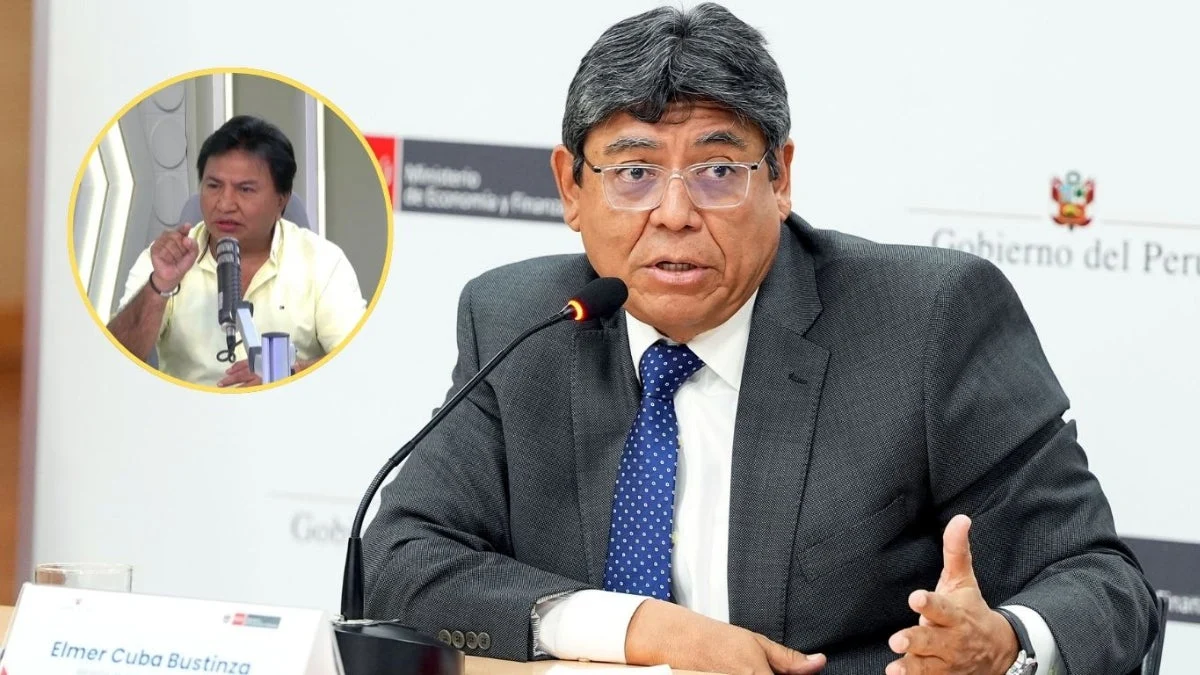
The tension reached a boiling point following recent statements by Economy Minister Elmer Cuba, who signaled the government’s intention to bring the pension increase before the Constitutional Court. For SUTEP Secretary General Lucio Castro, this is not merely a legal disagreement; it is a manifestation of an authoritarian administrative style that threatens to alienate the nation’s workforce.
During an interview on Ampliación de Noticias, Castro did not mince words, accusing Minister Cuba of acting as a "super-minister" who operates with a degree of autonomy that undermines the office of the Prime Minister. According to the union leader, such declarations exacerbate existing social friction and foster a climate of deep mistrust between the government and its employees.
"We are telling the government: be careful with your Minister of Economy," Castro warned. "He is creating a climate of confrontation. We are witnessing an attempt to bypass the democratic process of negotiation by unilaterally labeling workers’ rights as issues that must be ‘reviewed’ by the court."
Chronology of the Pension Dispute
To understand the current impasse, one must look at the progression of the legislative battle:
- Initial Advocacy: For years, SUTEP and other teaching organizations have highlighted the plight of retired teachers living on meager pensions. Current figures show that retirees under the AFP system receive approximately S/ 472, while those under the DL 19990 scheme receive between S/ 650 and S/ 700.
- Congressional Action: Recognizing the humanitarian crisis, Congress moved to approve Law 32581, which mandates an increase in pension floors to S/ 3,500. Despite executive pushback, the law was eventually promulgated by insistence.
- The Government’s Pivot: Following the promulgation, the MEF, under Minister Cuba, signaled its intent to seek a declaration of unconstitutionality. This was supported by the Lima College of Economists, which has actively prepared legal challenges against both the teacher pension law and similar measures for police and military personnel.
- Recent Mobilizations: In response to the threat of a legal challenge, teachers held national mobilizations throughout the previous week, demanding that the government honor the law rather than litigate against the survival of its retirees.
Supporting Data: The Case for Social Justice
The defense of Law 32581 rests on the argument of "human dignity." SUTEP representatives argue that the current pension levels are objectively "insufficient and inconceivable" for a dignified life.
The Economic Argument
Minister Cuba and the government have focused on the fiscal impact of the law, suggesting that the state budget cannot absorb such an increase without compromising macroeconomic stability. However, SUTEP has countered with a proposal for fiscal reallocation.
Lucio Castro points to the extensive system of tax exemptions currently enjoyed by various private sectors in Peru. He argues that if the government is truly concerned about "generating cash for the state," it should look at the systematic review of these tax breaks rather than targeting the meager pensions of retired teachers.
Furthermore, the union highlights the significant tax contribution of the active teaching force:
- Active Workforce: 426,000 teachers currently contribute to the state through the "Renta de Quinta Categoría" (Fifth Category Income Tax).
- Fiscal Contribution: These contributions account for hundreds of millions of soles annually.
- The "Social Debt": SUTEP argues that the state is currently in deep "social debt" to those who spent their lives shaping the nation’s youth and should prioritize these individuals in the upcoming budget cycle.
Official Responses and Political Implications
The government’s stance, as articulated by the Ministry of Economy, emphasizes fiscal discipline as the cornerstone of Peru’s economic policy. From the perspective of the MEF, legislating pension increases via congressional decree—without an explicit funding source or technical consensus—violates the constitutional principle of budgetary balance.
However, the political cost of this position is high. By framing the debate as a legal battle, the government risks appearing detached from the socioeconomic realities of the teaching profession.
The Call for Concerted Dialogue
In his remarks, Castro emphasized that the government must move away from the path of judicial confrontation and toward the path of "concertation." He urged the Executive to open direct channels of dialogue with union leadership. "We want the government to sit down with the workers in the appropriate ministries to find solutions that are both fiscally responsible and socially just," he stated.
The SUTEP leadership has also called for the upcoming National Budget proposal, due August 30, to reflect a genuine change in direction. They argue that the budget should include "gestures that convince the worker that there is a genuine will to solve the great problems of the nation."
Implications for the Future of Peru
The outcome of this dispute will have lasting implications for the Peruvian political landscape:
- Constitutional Precedent: Should the matter reach the Constitutional Court, the ruling will set a critical precedent regarding the power of the Legislative branch to pass laws with significant fiscal impacts. It will define the boundaries of "budgetary initiative" and whether social rights can be adjudicated by the judiciary.
- Labor Relations: A victory for the government in court would likely lead to a long-term cooling of relations between the state and labor unions, potentially sparking prolonged industrial action and educational strikes. Conversely, a victory for the teachers would bolster the union’s influence and likely inspire other public sector workers to pursue similar legislative agendas.
- Economic Policy Reform: The debate has successfully brought the issue of tax exemptions to the forefront of the public agenda. Regardless of the outcome of the pension law, the pressure to reform the tax system to "generate cash" for social programs will likely remain a persistent demand in future budget negotiations.
Conclusion
The standoff between SUTEP and the Ministry of Economy is emblematic of a broader struggle in Peru: the search for balance between fiscal stability and the moral obligation to provide for the vulnerable. As the government prepares to move its case to the Constitutional Court, it faces not only a legal challenge but a political test of its ability to manage the expectations of its citizens.
For the thousands of retired teachers waiting for a resolution, this is not a matter of macroeconomic theory; it is a matter of survival. As Lucio Castro concluded, the government must reflect on the "integral" view of the nation—one that values both its economic health and the dignity of those who served its future. The coming weeks will determine whether the administration chooses to engage in constructive dialogue or to solidify a path of institutional confrontation.