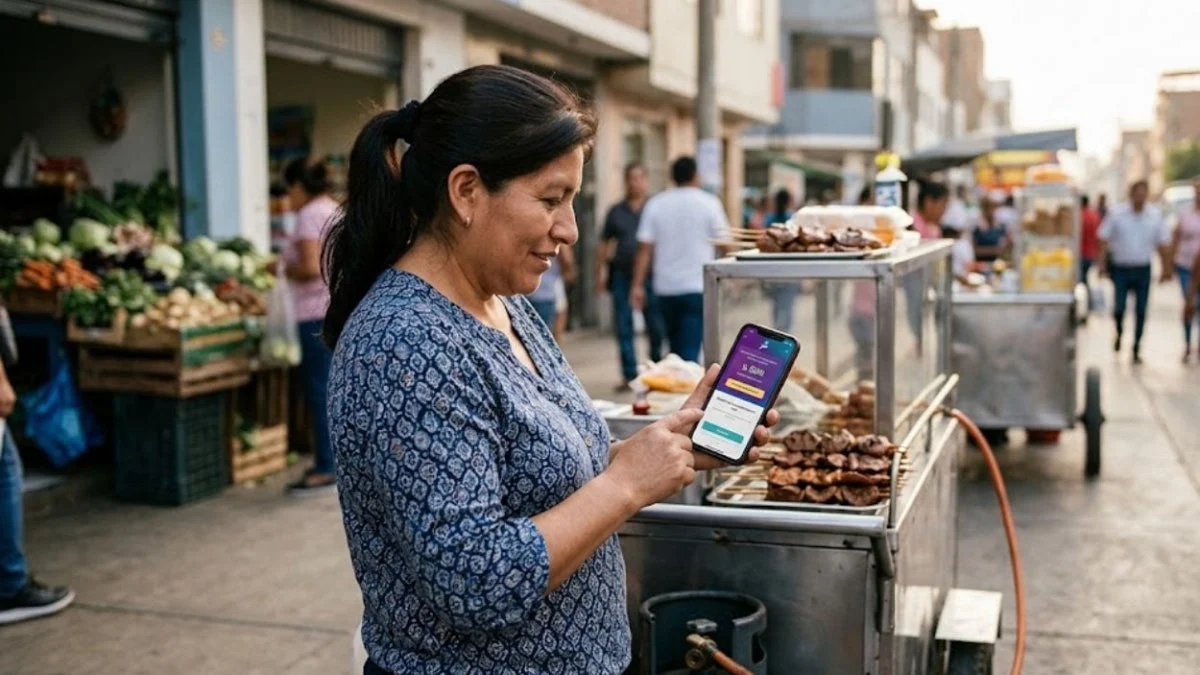
In an economy where over 70% of the workforce operates within the informal sector, the traditional banking system has historically faced a "blind spot." For decades, millions of hardworking Peruvians were effectively invisible to financial institutions, unable to provide the formal documentation or consistent payroll stubs required to qualify for credit. However, a seismic shift is underway, spearheaded by digital wallets—specifically Yape, which is successfully turning digital transaction data into a key that unlocks formal financial services for the previously excluded.
The Paradigm Shift: Redefining Creditworthiness
The fundamental challenge for traditional banks has always been data. Without a formal salary, how can a bank verify a borrower’s ability to repay? For years, the answer was to simply ignore the informal market.
Raimundo Morales, CEO of Yape, highlighted this structural failure during a recent industry event hosted by Moody’s in Peru. "In the past, banks operated with only about 30% of the formal sector," Morales noted. "For a worker who handles primarily cash, demonstrating income flow was nearly impossible."
Yape has fundamentally changed this equation. By observing the daily economic pulse of its users—tracking payments, transfers, and receipts—the platform creates a "digital footprint" that serves as a proxy for traditional financial history. This shift marks the transition from static, bureaucratic evaluation to dynamic, behavioral assessment.
Chronology of a Financial Experiment
The road to this model was not built overnight. It required a bold leap of faith and a rigorous testing phase.
Phase 1: The Proof of Concept
Yape launched its credit initiative with a controlled pilot program involving 100,000 users. At the time, the company injected approximately S/220 million into the economy through these micro-loans. Internally, there was significant trepidation; the company braced itself for a potentially high default rate, recognizing that many participants were "first-time" borrowers with no prior credit experience.
Phase 2: The Data-Driven Discovery
The results of the pilot were a revelation for the financial industry. Against expectations, 90% of the participants repaid their loans on time. This high repayment rate provided the empirical evidence needed to prove that the informal sector, when given access to credit tailored to their specific needs, is not inherently "risky"—it was simply "unserved."
Phase 3: Scaling and Refinement
Following the pilot’s success, Yape moved to formalize its credit models. It began utilizing the behavioral patterns captured during the pilot to refine algorithms that predict repayment capacity. Today, this model has evolved into a sophisticated engine that offers personal credit up to S/10,000 and business loans reaching S/60,000, depending on the user’s documented behavior on the platform.
The Strategy: Micro-Loans for Variable Incomes
A key component of Yape’s success is the rejection of the "one-size-fits-all" loan product. Traditional banking products often focus on large, long-term loans, which are costly to manage and ill-suited for those with fluctuating, day-to-day income.
Tailoring to the Informal Reality
Yape introduced products starting at S/200 or S/300 with short terms of 20 to 30 days. This design is intentionally aligned with the reality of an informal entrepreneur:
- Alignment with Cash Flow: A delivery driver or a market vendor might earn money daily, not monthly. A short-term loan that matches their cycle is far more manageable than a monthly installment plan.
- Progressive Empowerment: As users successfully repay these smaller amounts, the platform automatically recalibrates their credit limit. This acts as a ladder, allowing the user to gradually build their capacity to borrow larger sums.
The "Guardian" Effect
Perhaps the most surprising finding from the Yape data is the psychological shift in borrowers. Morales noted that when users are granted higher credit lines, they do not necessarily rush to exhaust them. Instead, they often demonstrate increased caution. "They start protecting their credit line and behaving in a super responsible way," Morales observed. This suggests that access to credit is not just a financial lifeline; it is a catalyst for financial literacy and responsible money management.
Official Perspective: The "Positive Circle" of Inclusion
Raimundo Morales frames this not just as a business expansion, but as a "positive circle" of inclusion. According to his analysis, the journey follows a clear trajectory:
- Opening an Account: The user gains access to the digital ecosystem.
- Transactional Activity: The user begins to digitize their cash flow.
- Productivity Gains: By reducing the friction of cash, the business becomes more efficient.
- Credit Access: The data generated during this process allows for the extension of formal credit.
This cycle is crucial for the survival of micro-enterprises. For example, a delivery driver whose motorcycle breaks down is essentially out of business until it is fixed. A micro-loan of S/300 allows that driver to return to work in 24 hours, preventing a short-term crisis from becoming a long-term financial disaster.
Broader Implications for the Peruvian Economy
The impact of Yape’s initiative is substantial. With over 7 million Peruvians entering the financial system through the platform, Yape has effectively become the primary gateway to modern banking for a massive segment of the population.
Bridging the Gap
The ability to turn everyday transactions into a "financial resume" is perhaps the most significant contribution to the Peruvian economy. It effectively dismantles the barrier between the informal worker and the formal financial institution. The implications are twofold:
- Economic Resilience: By providing access to capital, small businesses are better equipped to weather economic shocks and invest in their own growth.
- Systemic Transparency: As more transactions move from "under the mattress" to digital, the economy as a whole becomes more transparent and trackable, which can lead to better macroeconomic policy and broader institutional trust.
The Challenge of Sustainability
Despite the success, the path forward is not without risks. The rapid expansion of credit must be balanced with consumer protection. Morales emphasizes that the company is committed to a "prudent" growth strategy. The goal is to provide the necessary support to spur economic activity without falling into the trap of predatory lending or over-indebtedness.
Conclusion: A Future Built on Data
The lesson from Yape’s recent success is clear: the informal economy is not a monolithic obstacle to be avoided, but an untapped reservoir of potential that requires the right tools to be integrated into the mainstream.
By prioritizing behavioral data over rigid traditional metrics, Yape has proven that "financial inclusion" is not just a social goal—it is a viable, scalable, and profitable business strategy. For millions of Peruvians, the humble digital wallet has become more than just a payment tool; it is a bridge to a more stable, productive, and prosperous future. As the model continues to evolve, the challenge will be to maintain this delicate balance, ensuring that the credit provided remains a tool for empowerment rather than a burden, further cementing the role of technology as the great equalizer in the modern financial landscape.