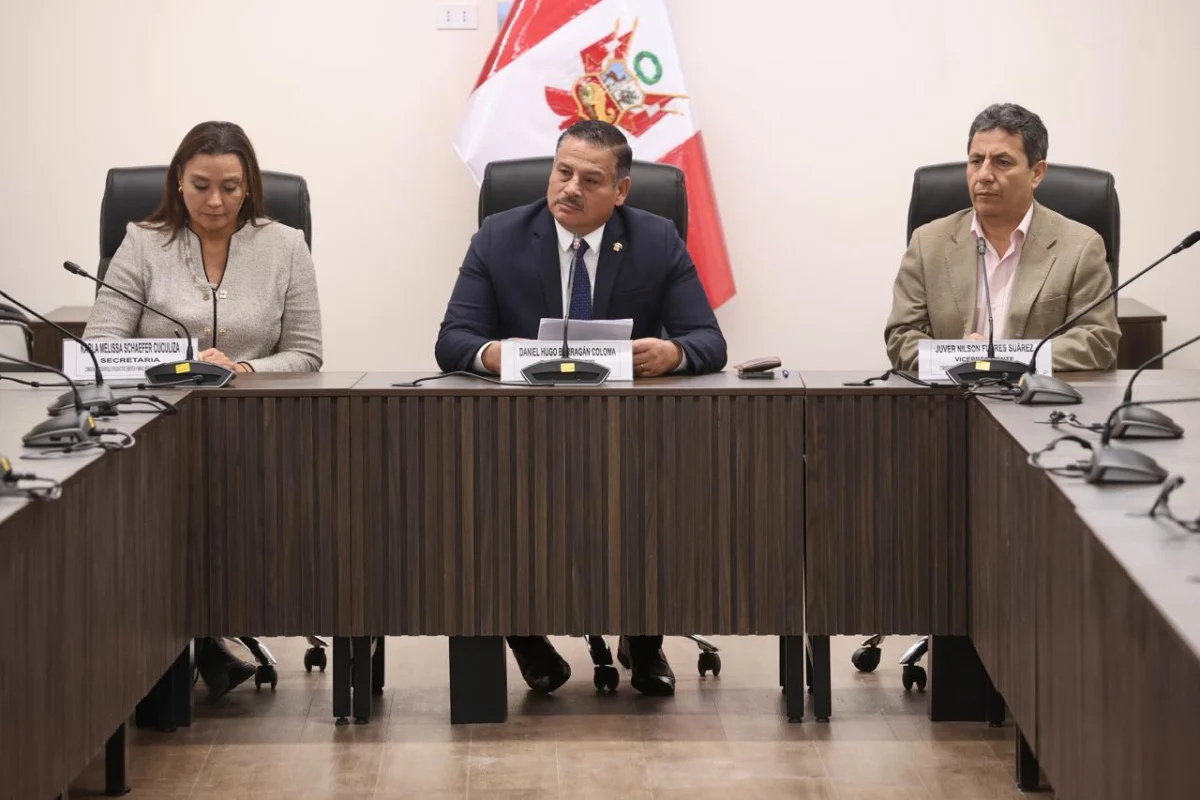
Lima, Peru – August 15, 2026 – In a decisive move to bolster Peru’s economic trajectory, Senator Daniel Barragán Coloma, representing the Obras bloc, has been unanimously elected as the new President of the Senate’s Commission on Productive Development, Energy and Mines, Infrastructure, and Labor. His tenure for the 2026-2027 Annual Session promises a strategic focus on unlocking investment, strengthening legal certainty, and fostering job creation, areas critical to the nation’s progress.
The Commission, a pivotal body overseeing some of Peru’s most vital economic sectors, will be supported by a distinguished leadership team. Vice President Nilson Flores Suárez, from the Buen Gobierno bench, and Secretary Karla Schaefer Cuculiza, of Fuerza Popular, will join Senator Barragán in steering the Commission’s ambitious agenda. This unified leadership signals a commitment to bipartisan cooperation and a shared vision for national development.
Senator Barragán, upon accepting the presidency, emphasized that his leadership is not a personal triumph but a mandate from the Senate to foster consensus and drive public policies that serve the country’s broader interests. His initial pronouncements set a clear tone for his administration, prioritizing democratic dialogue and the pursuit of agreements.
"This designation is not a personal victory, but a charge from the Senate to build consensus in service of our country," Barragán stated, underscoring the collaborative spirit that will define his leadership. He articulated a vision centered on responsible investment, robust legal frameworks, and transparent regulations that unequivocally prioritize Peru’s national interests.
Unlocking Investment and Strengthening Legal Certainty: Barragán’s Strategic Imperative
Senator Barragán’s immediate priorities revolve around dismantling the bureaucratic hurdles that often impede progress and ensuring a stable and predictable investment climate. He recognizes that for Peru to achieve its full economic potential, both domestic and foreign investors need the assurance that their ventures are protected by a clear and consistently applied legal system. This focus on "legal certainty" is paramount in attracting the sustained capital needed for large-scale projects and long-term growth.
The Commission is expected to dedicate significant attention to the "destrabe" – the unblocking – of critical infrastructure projects that have languished due to regulatory complexities, land acquisition issues, or inter-agency disputes. This includes a particular emphasis on addressing the reconstruction challenges in the Junín region, a testament to the Commission’s commitment to regional development and disaster recovery. The efficient resumption and completion of these projects are not only vital for improving the lives of citizens but also for stimulating economic activity and creating employment opportunities.

Beyond infrastructure, Barragán highlighted the crucial role of the Commission in promoting responsible investment across all sectors. This involves encouraging practices that are environmentally sustainable, socially equitable, and economically beneficial for Peru. The aim is to foster an investment environment that is not only attractive but also aligned with the nation’s long-term development goals and its commitment to sustainable practices.
Fostering Dignified Employment: A Cornerstone of the Commission’s Agenda
A significant pillar of Senator Barragán’s leadership will be the proactive generation of "dignified and formal employment," with a specific focus on empowering young people and women. This initiative acknowledges the demographic realities of Peru and the urgent need to create pathways to meaningful work for its burgeoning workforce. The Commission intends to explore policies that incentivize businesses to hire young graduates, provide skills training, and offer fair wages and benefits. Similarly, efforts will be made to dismantle barriers that hinder women’s participation in the formal labor market, promoting gender equality and economic inclusion.
This focus on job creation is intrinsically linked to the Commission’s broader mandate of strengthening productive development. By fostering an environment conducive to business growth and innovation, the Commission aims to create a virtuous cycle where increased economic activity naturally leads to more employment opportunities. This includes supporting small and medium-sized enterprises (SMEs), which are often the backbone of local economies and significant employers.
Vice President Nilson Flores Suárez: Advocating for Pragmatism Over Dogma
Vice President Juver Nilson Flores Suárez brings a pragmatic and results-oriented approach to the Commission. He expressed his commitment to assuming his role with responsibility, seriousness, and a strong work ethic. Flores Suárez underscored the fundamental requirements for successful national development: technical capacity, deep knowledge, and unwavering honesty.
His call to avoid "dogmatic positions" is a crucial reminder that effective policymaking requires flexibility, evidence-based decision-making, and a willingness to adapt strategies as needed. He stressed that the Commission’s success hinges on its ability to move beyond ideological divides and concentrate on tangible objectives that yield concrete results for the Peruvian people.
"It is easy to destroy. It is difficult to build, and to build requires capacity, knowledge, and honesty," Flores Suárez remarked, articulating a philosophy that emphasizes constructive action and meticulous execution. His perspective highlights the importance of a collaborative spirit within the Commission, where diverse viewpoints are welcomed but ultimately channeled towards unified action for the common good. The Commission, under his vice-presidency, is poised to become a forum for robust debate that leads to practical solutions.

Secretary Karla Schaefer Cuculiza: Bridging Regional Divides and Adding Value to Raw Materials
Secretary Karla Schaefer Cuculiza brings to the Commission a keen understanding of the need to bridge the persistent disparities between Peru’s capital, Lima, and its diverse regions. She emphasized the Commission’s responsibility in contributing to national development and expanding employment opportunities, particularly for the youth.
Schaefer highlighted the strategic importance of investing in infrastructure and multimodal corridors to enhance territorial connectivity. This vision aims to overcome geographical challenges, facilitate trade, and ensure a more equitable distribution of development benefits across the country. By improving transportation networks and logistics, Peru can unlock the economic potential of its regions, foster greater integration, and strengthen the presence of the State in remote areas.
A key proposal from Schaefer is the imperative to "industrialize raw materials" produced within Peru. This strategic shift from exporting unprocessed resources to adding value domestically is seen as a critical pathway to generating greater economic returns, creating higher-skilled jobs, and fostering a more robust and diversified national economy. By transforming raw materials into finished or semi-finished goods, Peru can capture more of the value chain, boost its export competitiveness, and reduce its reliance on primary commodity prices.
The Commission’s Strategic Significance for Peru’s Economy
The Commission on Productive Development, Energy and Mines, Infrastructure, and Labor holds immense strategic relevance for the Peruvian economy. Its purview encompasses sectors that are fundamental to national prosperity, including:
- Investment Attraction: The Commission’s efforts to streamline regulations and enhance legal certainty will be crucial in attracting both domestic and foreign investment, the lifeblood of economic expansion.
- Infrastructure Development: Investing in modern and efficient infrastructure is essential for improving productivity, facilitating trade, and enhancing the quality of life for all Peruvians. This includes transportation networks, energy grids, and telecommunications.
- Mining and Energy Sector Governance: Peru’s rich mineral resources and its potential in renewable energy require careful management, responsible extraction, and sustainable development policies. The Commission will play a key role in shaping these critical sectors.
- Job Creation and Human Capital Development: The focus on dignified employment, skills training, and educational opportunities is vital for ensuring that Peru’s growing population can contribute to and benefit from economic growth.
- Regional Equity and National Integration: Addressing the economic and social disparities between Lima and the regions is essential for building a cohesive and prosperous nation. The Commission’s focus on regional infrastructure and development will be instrumental in this regard.
The unanimous election of Senator Barragán and the collaborative spirit displayed by the newly formed leadership team of the Commission signal a promising new chapter for Peru. By prioritizing dialogue, consensus-building, and a pragmatic approach to policy, this body is poised to make significant strides in fostering sustainable economic growth, creating meaningful employment, and ultimately, improving the lives of all Peruvians. The challenges are substantial, but the collective resolve and clear vision articulated by the Commission’s leaders offer a beacon of hope for Peru’s future prosperity.