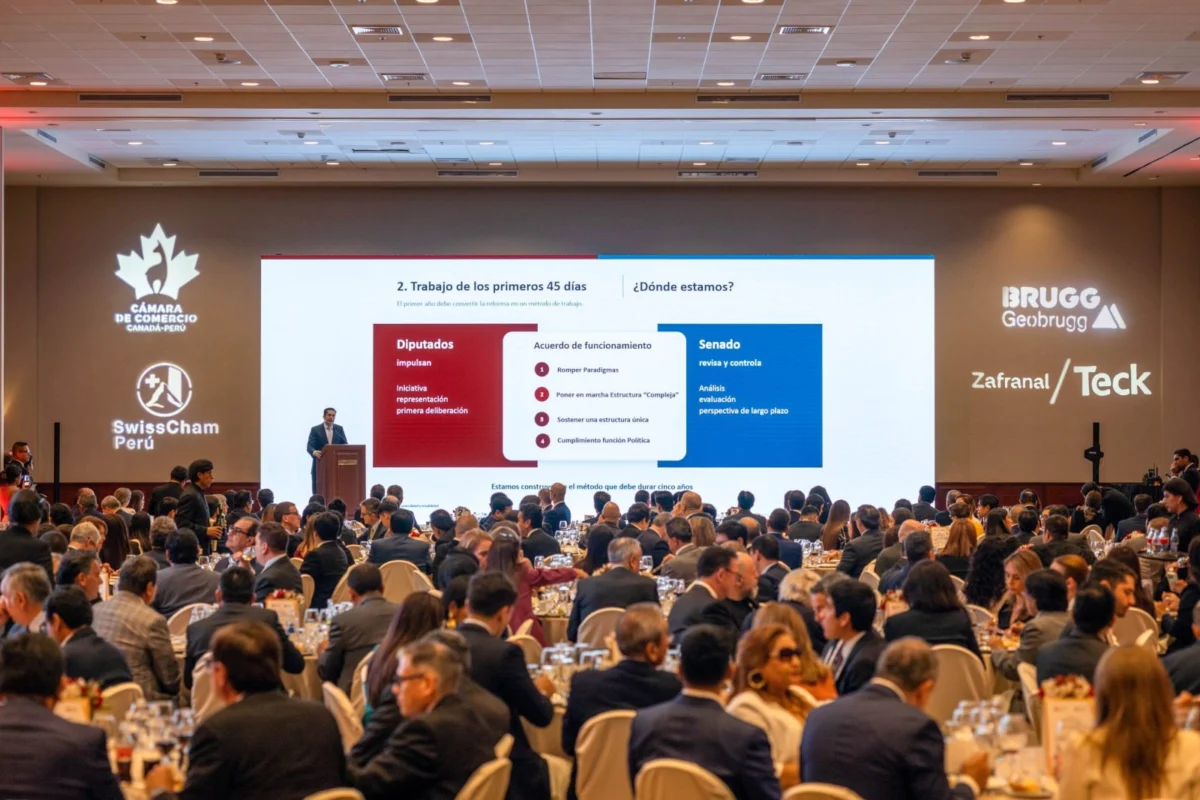
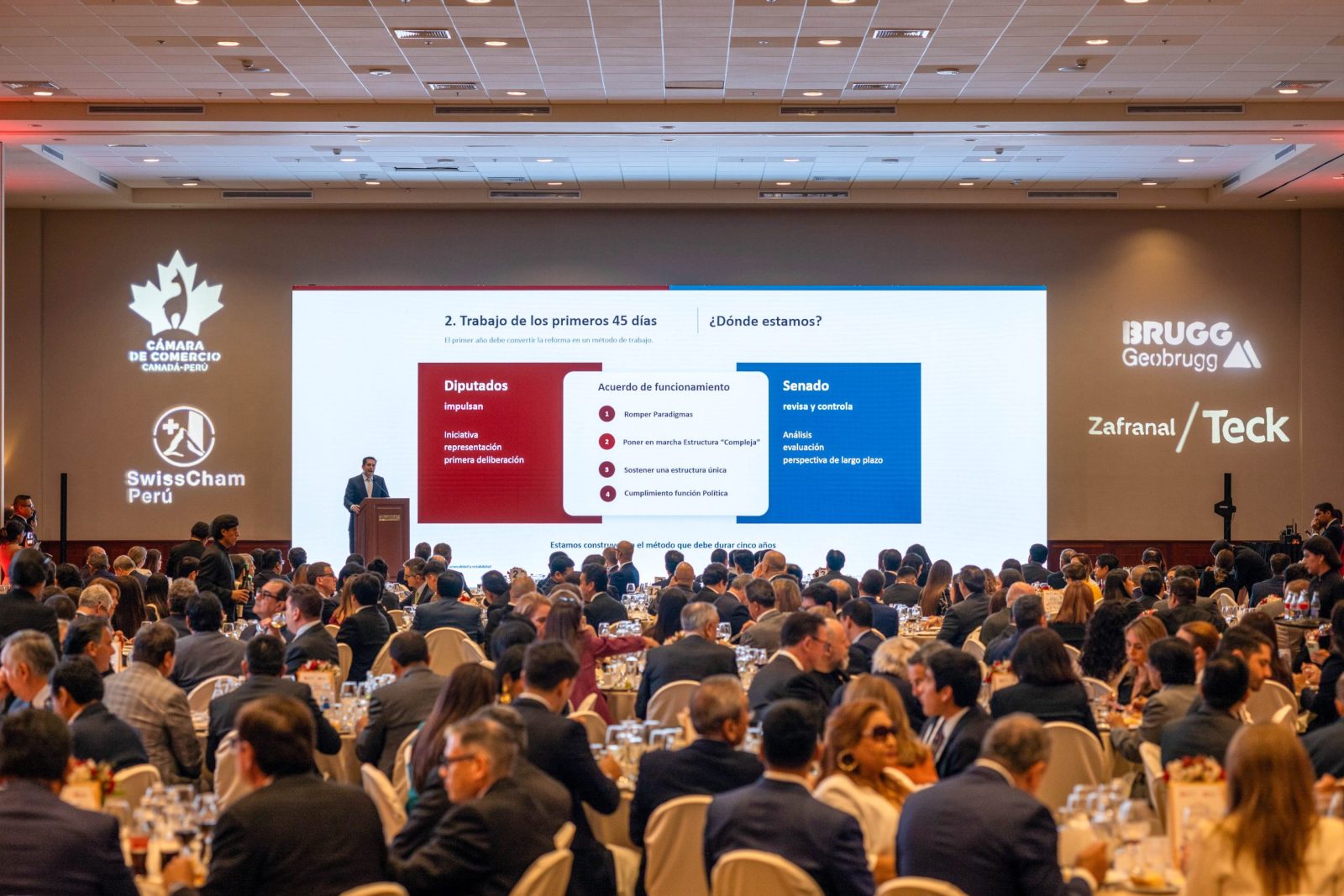
Lima, Peru – October 26, 2023 – In a pivotal gathering aimed at fostering collaboration and charting a course for national development, over 230 distinguished representatives from the Peruvian business community convened for "CENA: AGENDA PERU 2027 – Government and Business: Priorities, Challenges, and Investment." This significant event, jointly organized by the Canadian Chamber of Commerce in Peru (CCCP) and the Swiss Chamber of Commerce in Peru (SwissCham Peru), served as a crucial platform for dialogue between the private sector and key government ministries, offering a first-hand look at the strategic priorities and pressing challenges facing Peru as it looks towards 2027.
The evening commenced with welcoming remarks from His Excellency Eric Mayoraz, Ambassador of Switzerland to Peru and Honorary President of SwissCham Peru, and Oscar Benavides, President of the CCCP and Partner at Estudio Rodrigo, Elías & Medrano Abogados. Both leaders underscored the critical importance of such collaborative forums in building a shared agenda for development, bridging the gap between public and private sector objectives, and fostering an environment conducive to sustainable economic growth and societal well-being.
Key Priorities and Challenges: A Ministerial Overview
The core of the event featured insightful presentations from ministers representing vital sectors of the Peruvian economy and government. These discussions provided attendees with a comprehensive understanding of current governmental strategies, anticipated challenges, and investment opportunities.
H2: The Senate’s Role in Shaping Peru’s Future
The initial address was delivered by Miguel Torres, President of the Senate and Second Vice President of the Republic. Senator Torres eloquently articulated the Senate’s crucial role in the legislative process, particularly in reviewing and shaping initiatives emanating from the Chamber of Deputies. He emphasized that the Senate’s function is paramount in constructing a framework of stability and predictability, essential for attracting and retaining long-term investments. His remarks highlighted the Senate’s commitment to fostering an environment where clear, consistent, and favorable regulations encourage robust economic activity and solidify trust between investors and the state. This focus on legislative stability is a cornerstone for any nation aspiring to attract significant foreign and domestic capital, ensuring that businesses can plan and operate with confidence.
H3: Energizing Peru: Mining, Energy, and Hydrocarbons
Guillermo Shinno, the Minister of Energy and Mines, provided a detailed overview of his ministry’s proactive initiatives across three pivotal sectors: mining, energy, and hydrocarbons. Minister Shinno highlighted the government’s dedicated efforts to unblock stalled projects, a critical step in revitalizing the mining sector, which is a significant contributor to Peru’s economy. He detailed strategies aimed at creating an attractive investment climate for new ventures, signaling a renewed focus on fostering growth and innovation within the industry.
Furthermore, the Minister elaborated on the ambitious plan to expand natural gas accessibility across seven regions of the country. This initiative is poised to not only improve energy security and affordability for Peruvian households and businesses but also to drive economic development and reduce reliance on more polluting energy sources.
In the realm of mining, Minister Shinno addressed the ongoing efforts to formalize artisanal and small-scale mining operations. He provided an update on the status of the Registry of Small-Scale Miners (REINFO) and outlined the framework for a new formalization process. This initiative is crucial for ensuring environmental sustainability, improving labor conditions, and integrating informal mining activities into the formal economy, thereby maximizing their contribution to national development while mitigating associated risks. The formalization process aims to bring greater transparency, regulatory compliance, and responsible practices to a sector that is vital for Peru’s resource-based economy.
H3: Agricultural Resilience: Preparing for El Niño 2026-2027
Marco Vinelli, the Minister of Agrarian Development and Irrigation, focused his presentation on the critical preparations and response strategies being implemented to mitigate the impact of the anticipated El Niño Phenomenon for the 2026-2027 period. Minister Vinelli detailed a comprehensive suite of interventions designed to bolster the resilience of Peru’s agricultural sector against the potential adversities posed by this recurring climate event.
Key preparedness measures include the systematic cleaning and desilting of riverbeds and ravines. These actions are vital for preventing flooding and ensuring the efficient flow of water, thereby protecting agricultural lands and infrastructure. Additionally, the Minister highlighted the allocation of dedicated financial resources for preparedness and response activities. This proactive financial commitment underscores the government’s understanding of the significant threat El Niño poses to food security and agricultural livelihoods, and its determination to invest in measures that safeguard these essential aspects of national well-being. The focus on early warning systems, agricultural adaptation strategies, and infrastructure reinforcement signals a commitment to building a more resilient agricultural sector capable of weathering climatic shocks.
H3: National Defense and Disaster Preparedness
Rafael Belaúnde, the Minister of Defense, presented a dual focus for his ministry’s engagement. Firstly, he outlined the ongoing and planned actions within the Ministry of Defense aimed at combating crime, a persistent challenge for national security and public safety. Secondly, Minister Belaúnde detailed the significant capabilities of the Defense Sector in preparing for, responding to, and rehabilitating communities affected by the El Niño Phenomenon.
He specifically emphasized the crucial role of the Armed Forces in disaster response. This includes the deployment of specialized units such as the Rapid Intervention Companies for Disasters, urban search and rescue teams, and engineering battalions. These units possess the expertise and resources necessary to provide immediate assistance in times of crisis, ranging from rescue operations in collapsed structures to the provision of essential logistical support and the reconstruction of critical infrastructure. The Ministry of Defense’s integrated approach to disaster management highlights its readiness to deploy its considerable resources to protect citizens and facilitate recovery in the face of natural calamities.
A Renewed Dialogue: Bridging Government and Business
The "CENA: AGENDA PERU 2027" event was explicitly framed as a significant moment marking the resumption of vital dialogue spaces between the government and the business sector. It was acknowledged that these crucial interactions had been somewhat diminished in recent years. However, the clear and timely communication fostered during this event signals a renewed commitment to consolidating these relationships. The shared vision articulated by the participants underscores a collective aspiration to translate dialogue into concrete actions. This collaborative spirit is fundamental for building a future characterized by shared commitment, responsibility, and sustainable growth for Peru.
The success of the event was significantly bolstered by the generous support of its sponsors. The CCCP and SwissCham Peru extended their profound gratitude to the companies whose contributions made this edition of "CENA: AGENDA PERU 2027" possible, underscoring the collaborative nature of achieving national development goals.
Official Sponsors:
- Geobrugg
- Teck Zafranal
Platinum Sponsors:
- ABB
- Banco Santander
- Confipetrol
- Hilti
Supporting Data and Context
The discussions at "CENA: AGENDA PERU 2027" are situated within a broader context of Peru’s economic and social landscape. Understanding these underlying factors provides crucial data points that inform the priorities and challenges highlighted by the ministers.
H2: Economic Landscape and Investment Climate
Peru, a nation rich in natural resources, has historically relied heavily on its mining sector for economic growth. In 2022, mining exports accounted for a substantial portion of Peru’s total exports, underscoring its economic significance. However, fluctuations in global commodity prices and internal regulatory uncertainties have often impacted investment flows. The government’s focus on "unblocking projects" and creating "favorable conditions for new investments" directly addresses the need to ensure a stable and predictable investment climate. This includes streamlining bureaucratic processes, ensuring the rule of law, and fostering transparency in project approvals.
The push for natural gas massification, as highlighted by the Minister of Energy and Mines, is a strategic move to diversify Peru’s energy matrix and reduce costs for consumers and industries. Natural gas is a cleaner and more affordable energy source compared to traditional fuels, and its expanded use can stimulate industrial development and improve the quality of life for citizens. For instance, the expansion of natural gas pipelines and distribution networks creates job opportunities and stimulates local economies in the regions it reaches.
H3: Agricultural Vulnerability and Climate Change Adaptation
Peru’s agricultural sector is a critical source of employment and food security, particularly for rural populations. However, it is highly vulnerable to climate change impacts, with El Niño being a recurring and significant threat. The 2017 El Niño event, for example, caused widespread damage to agricultural infrastructure and crops, leading to significant economic losses and impacting food prices. The preparedness measures discussed by the Minister of Agrarian Development and Irrigation, such as riverbed cleaning and financial resource allocation, are directly informed by the lessons learned from past events. These interventions aim to build resilience by reducing the risk of flooding, landslides, and crop damage, thereby safeguarding livelihoods and ensuring a stable food supply.
The government’s investment in El Niño preparedness is not just an expenditure but a crucial investment in national resilience. Studies by international organizations consistently show that proactive disaster risk reduction measures are significantly more cost-effective than post-disaster recovery efforts. For every dollar invested in preparedness, multiple dollars can be saved in disaster response and reconstruction.
H3: Security and Public Order
The Minister of Defense’s mention of combating crime is a response to persistent challenges related to public safety and security in Peru. Crime rates, particularly those associated with organized illicit activities, can deter investment and negatively impact the quality of life for citizens. The strategies employed by the Ministry of Defense, in conjunction with other law enforcement agencies, are aimed at creating a more secure environment, which is a fundamental prerequisite for economic growth and social stability.
The dual role of the Defense Sector in national security and disaster response highlights its strategic importance. The Armed Forces are often the first responders in humanitarian crises, possessing the logistical capabilities and trained personnel to provide essential aid and maintain order when civilian infrastructure is overwhelmed. The specific mention of Rapid Intervention Companies for Disasters and urban search and rescue teams underscores a sophisticated and organized approach to emergency management.
Official Responses and Implications
The "CENA: AGENDA PERU 2027" event represents a significant step towards a more coordinated and strategic approach to national development in Peru. The implications of the discussions and commitments made are far-reaching and hold the potential to shape the country’s trajectory in the coming years.
H2: Implications for Investment and Economic Growth
The emphasis on stability, predictability, and favorable regulations from the Senate and the ministerial presentations sends a clear signal to both domestic and international investors. By prioritizing these factors, Peru aims to reduce investment risk and attract capital for critical projects across various sectors. The unblocking of mining projects, the expansion of natural gas infrastructure, and the development of the agricultural sector are all avenues that can drive job creation, increase exports, and foster broader economic growth.
The commitment to formalizing mining operations, for instance, has the potential to integrate a significant informal economy into the formal sector, leading to increased tax revenues, improved working conditions, and more responsible environmental practices. This can unlock new investment opportunities in responsible mining and processing.
H3: Enhancing National Resilience
The proactive approach to El Niño preparedness is a testament to Peru’s growing understanding of the interconnectedness of climate change, disaster risk, and national development. By investing in resilient infrastructure, agricultural adaptation, and robust emergency response mechanisms, Peru is building its capacity to withstand climate shocks. This resilience not only protects lives and livelihoods but also ensures the continuity of economic activities, minimizing the disruptive impact of natural disasters.
The integration of the Ministry of Defense’s capabilities into disaster response planning further strengthens national resilience. The ability to rapidly deploy specialized units and utilize military logistics in times of crisis is invaluable for minimizing damage and accelerating recovery. This integrated approach to national security and disaster management is a hallmark of forward-thinking governance.
H3: Strengthening Public-Private Partnerships
The very nature of the "CENA: AGENDA PERU 2027" event underscores the critical importance of public-private partnerships. The collaborative organization by the Canadian and Swiss Chambers of Commerce, along with the active participation of government ministers and business leaders, highlights a shared recognition that national progress is best achieved through concerted efforts. The renewed commitment to dialogue signifies an understanding that open communication, mutual trust, and shared responsibility are essential for navigating complex challenges and seizing opportunities.
The success of these partnerships will hinge on sustained engagement, transparency, and the effective implementation of agreed-upon strategies. By fostering an environment where businesses can confidently contribute their expertise and resources, and where the government can provide a stable and supportive framework, Peru can indeed forge a path towards a more prosperous, resilient, and sustainable future by 2027 and beyond. The active participation of sponsors from leading international and national companies further validates the interest and commitment from the private sector to contribute to Peru’s development agenda.