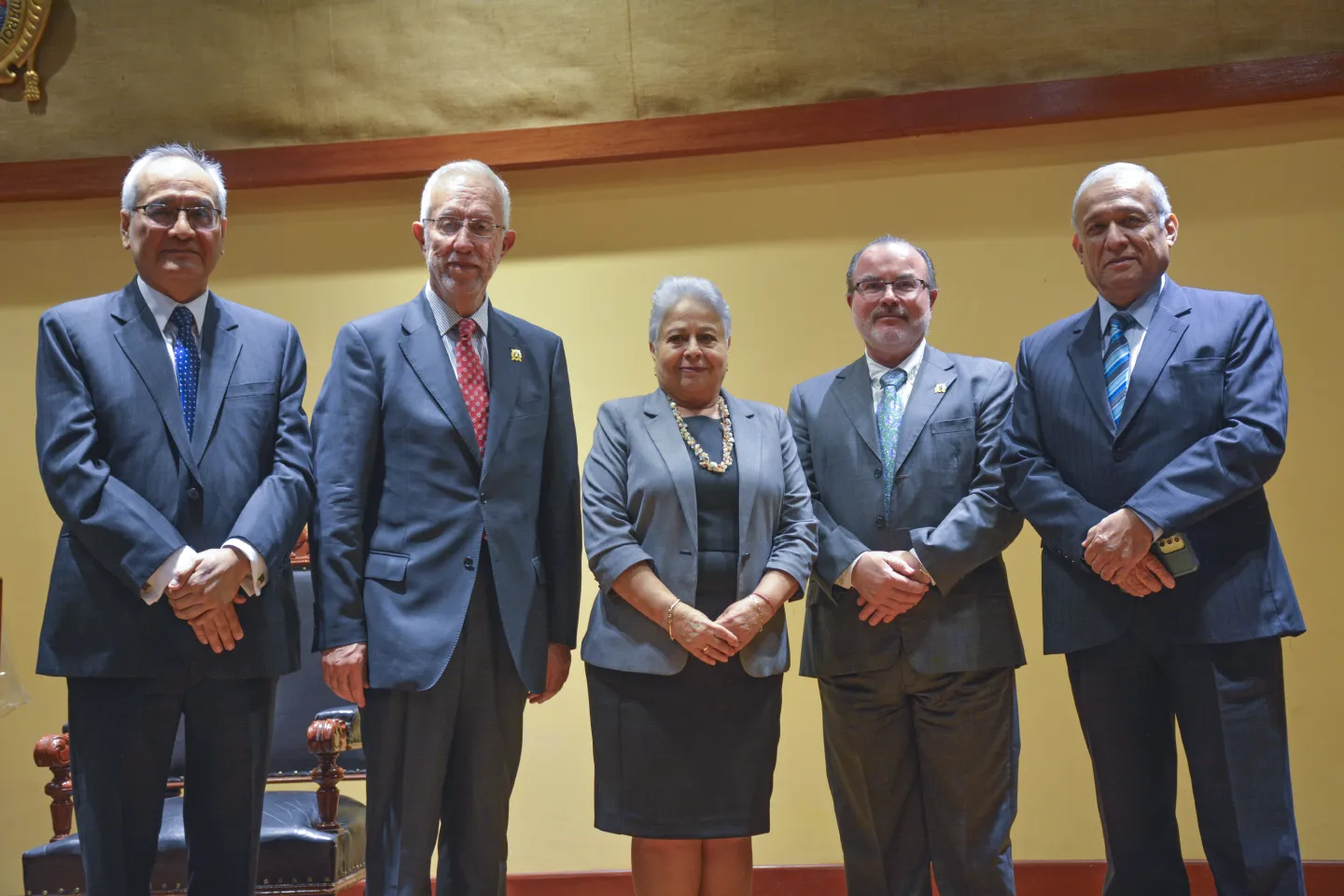
Lima, Peru – [Insert Date] – The prestigious Faculty of Law and Political Science at the Universidad Nacional Mayor de San Marcos (UNMSM), an institution renowned as the "Dean of America," recently concluded its highly successful Third Academic Conference on Mining Law. Held from June 18th to 22nd, 2026, this significant event brought together a distinguished cadre of national and international legal scholars, industry experts, and public officials. The conference served as a critical platform for in-depth analysis of the multifaceted legal challenges confronting Peru’s vital mining sector, encompassing crucial areas such as mining concessions, legal certainty, formalization processes, and the imperative of sustainable development.

A Tripartite Exploration of Mining Law’s Complexities
The three-day academic program, meticulously organized as part of UNMSM’s 160th-anniversary celebrations, delved into a comprehensive array of topics central to the Peruvian mining legal framework. The conference structure included three distinct academic sessions, culminating in a formal closing ceremony. Participants comprised esteemed university professors, former members of the Mining Council, government officials, representatives from the mining industry, and leading specialists in both Mining Law and Administrative Law.

The opening address and welcome remarks were delivered by Dr. José F. Palomino Manchego, Dean of the Faculty of Law and Political Science at UNMSM. Dean Palomino Manchego officially inaugurated the academic proceedings, emphasizing the program’s objective to critically examine the fundamental legal institutions that underpin Peru’s mining industry and its evolving legal landscape.

Day One: Foundations of State Dominance, Obligations, and Concessions
The inaugural academic session, held on June 18th, 2026, focused on the bedrock principles of state ownership, legal obligations within the mining sector, and the intricate nature of mining concessions.

A pivotal presentation was delivered by Dr. Alejandro Vergara Blanco, a distinguished professor of Mining Law and Administrative Law at the Catholic University of Chile. Dr. Vergara Blanco’s insightful address, titled "The Dissolution of State Dominance Over Mines and the Current Public Nature of Mineral Wealth in Rerum Natura: The Collapse of Traditional Theses," challenged established legal paradigms concerning state control over mineral resources. His analysis provided a theoretical framework for understanding the evolving relationship between the state and mineral wealth.

Following this, Dr. Humberto Martínez Aponte, a former esteemed professor of Mining Law at UNMSM, the Pontificia Universidad Católica del Perú (PUCP), and the Universidad de Lima, addressed the critical topic of "Mining Obligations and Caducity." His presentation offered a pragmatic overview of the duties incumbent upon mining concessionaires and the legal consequences of non-compliance, particularly focusing on the potential for concession termination.

The discussion then moved to the crucial interplay between recognized rights and their enforceability. Dr. Xennia María Forno Castro Pozo, a former professor of Mining Law at PUCP and UPC, and a former President of the Mining Council, delivered a compelling presentation on "Recognized Rights, Enforceable Rights: The State’s Duty to Make Them Viable." Dr. Forno Castro Pozo underscored the state’s affirmative obligation to ensure that legally recognized mining rights can be effectively exercised, highlighting the administrative and legal mechanisms necessary for this purpose.

The first session concluded with Dr. Juan Francisco Baldeón Ríos, a current professor of Mining Law at the Universidad Nacional Federico Villarreal and a former professor at UNMSM, examining the fundamental concept of the "Mining Concession." His exposition elucidated the legal framework governing mining concessions, a cornerstone of Peru’s mining regulatory regime.

Day Two: Navigating Legal Certainty and Due Diligence in Mining Operations
The second academic session, conducted on June 19th, 2026, placed a significant emphasis on the paramount importance of legal certainty within mining activities and the critical role of due diligence in transactions involving mining rights.

A key contributor to this session was Dr. William Freire, a professor of Mining Law at the Federal University of Minas Gerais, Brazil. Dr. Freire’s presentation, "Study of the Partial Elements of Legal Uncertainty in Mining," provided an international perspective on a challenge that significantly impacts investment decisions in the sector. His analysis highlighted the specific factors that contribute to legal uncertainty in mining and their potential ramifications for project development.

Next, Dr. Jaime Tejada Gurmendi, a professor of Mining Law at several Peruvian universities including USMP, USIL, and Universidad ESAN, delivered a comprehensive discourse on "Due Diligence of Mining Rights." This topic is indispensable for any entity seeking to acquire, divest, or invest in mining projects, as it involves a thorough legal assessment of all relevant rights and obligations.

The session also featured Dr. Liliana Pautrat Medina, a former professor of Mining, Petroleum, and Gas Law at UPC and a former President of the Mining Council. Dr. Pautrat Medina addressed the vital subject of "Closure of Mining Activities." Her presentation delved into the legal and regulatory considerations surrounding the cessation of mining operations, including environmental remediation and social responsibilities.

Rounding out the second day’s academic discussions, Dr. Ramón Huapaya Tapia, a professor of Administrative Law at PUCP, presented his findings on "The Real Administrative Right Born from the Mining Concession for Exploration and Exploitation." This presentation effectively bridged the disciplines of Administrative Law and Mining Law, examining the specific legal nature of rights derived from mining concessions.

Day Three: Formalization, Cadastre, and Sustainable Development Strategies
The third and final academic session, held on June 22nd, 2026, shifted its focus to topics directly impacting the practical management and sustainable development of mining activities within Peru.

Dr. Piero Paredes Rivasplata, Legal Chief at Compañía Minera Santander, provided critical insights into "Authorization for Commencement and Resumption of Mining Operations for Exploitation and Beneficiation." His presentation outlined the procedural requirements and legal considerations for initiating or restarting mining activities, a crucial aspect of operational compliance.

A significant contribution to the day’s proceedings came from Dr. Roxana Gutiérrez Chara, Director General of Mining Formalization at the Ministry of Energy and Mines. Dr. Gutiérrez Chara addressed the "Process of Mining Formalization," offering the official perspective on one of the most pressing issues in Peru’s mining sector. Her insights provided valuable context on the government’s strategies for bringing informal mining operations into the legal framework.

The impact and evolution of the "National Mining Cadastre Law" were thoroughly examined by Dr. Ángela Chávez García, a consultant in Mining Law, Social Management, and Sustainability. Her presentation, "30 Years of the National Mining Cadastre Law: Impact on the Development and Legal Certainty of Mining Activity in Peru," offered a retrospective analysis of the law’s effectiveness and its contribution to legal security within the sector.

Further underscoring the importance of sustainable practices, Dr. Miguel Ampudia Belling, a founding member of the Mining-Energy Study Group (GEDEM), presented on "Mechanisms for Sustainable Development Driven by Mining." His contribution highlighted the growing need to integrate sustainability principles into mining operations and explore how the sector can contribute positively to broader development goals.

The academic program culminated with a special keynote address by Dr. Luis Aliaga Jibaja, a professor of Mining and Energy Law at UNMSM’s Faculty of Law and Political Science. Dr. Aliaga Jibaja’s lecture, "Mining Contracts," provided an in-depth analysis of the contractual relationships that form the backbone of many mining ventures.

UNMSM: A Catalyst for Academic Discourse in Mining Law
The Third Academic Conference on Mining Law at UNMSM successfully convened a diverse array of stakeholders, fostering a rich exchange of perspectives on the legal institutions and procedures that govern Peru’s mining sector. The conference agenda successfully integrated discussions on mining concessions, obligations and their caducity, legal certainty, formalization processes, the national mining cadastre, operational closures, contractual frameworks, and the critical imperative of sustainable development.

The event was particularly noteworthy for its broad representation, featuring specialists from renowned Peruvian and international universities, alongside former and current officials from key mining administrative bodies.

The closing ceremony was presided over by Dr. Jorge Guillermo Gutiérrez Tudela, Director of the School of Law at UNMSM’s Faculty of Law and Political Science, who formally concluded the proceedings.

Through this significant academic initiative, UNMSM has solidified its role as a vital hub for specialized discussion and critical analysis within the field of Mining Law. The conference not only facilitated a deep dive into the contemporary legal challenges confronting Peru’s mining industry but also underscored the crucial interconnections between legal certainty, public administration, and sustainable development within the nation’s resource-rich economy.