In a significant milestone for environmental governance in Peru, the Organismo de Evaluación y Fiscalización Ambiental (OEFA)—a specialized agency under the Ministry of the Environment—has been formally recognized for its transformative approach to public management. Seven of its strategic initiatives were selected as "Good Practices in Public Management 2026" by the prestigious organization Ciudadanos al Día (CAD). This acknowledgment underscores a paradigm shift in how the Peruvian state approaches environmental protection, moving away from traditional, reactive oversight toward a model defined by artificial intelligence, geospatial intelligence, and robust scientific evidence.
This recognition represents more than just an award; it validates the OEFA’s multi-year effort to modernize the state apparatus. By integrating advanced technology into its core mandate, the agency has successfully optimized its resource allocation, reduced administrative bottlenecks, and expanded its reach across the vast and complex Peruvian geography.
The Strategic Shift: A New Era of Environmental Oversight
The seven initiatives awarded by CAD demonstrate a cohesive strategy: using data to anticipate environmental degradation rather than merely recording it after the fact. The OEFA’s transition toward "predictive oversight" has been facilitated by five distinct categories of intervention: Internal Management, Effective Environmental Management, Fiscalization and Regulatory Compliance, Public-Public Cooperation, and Technical Capacity Building.
1. The Power of Integrated Digital Methodology
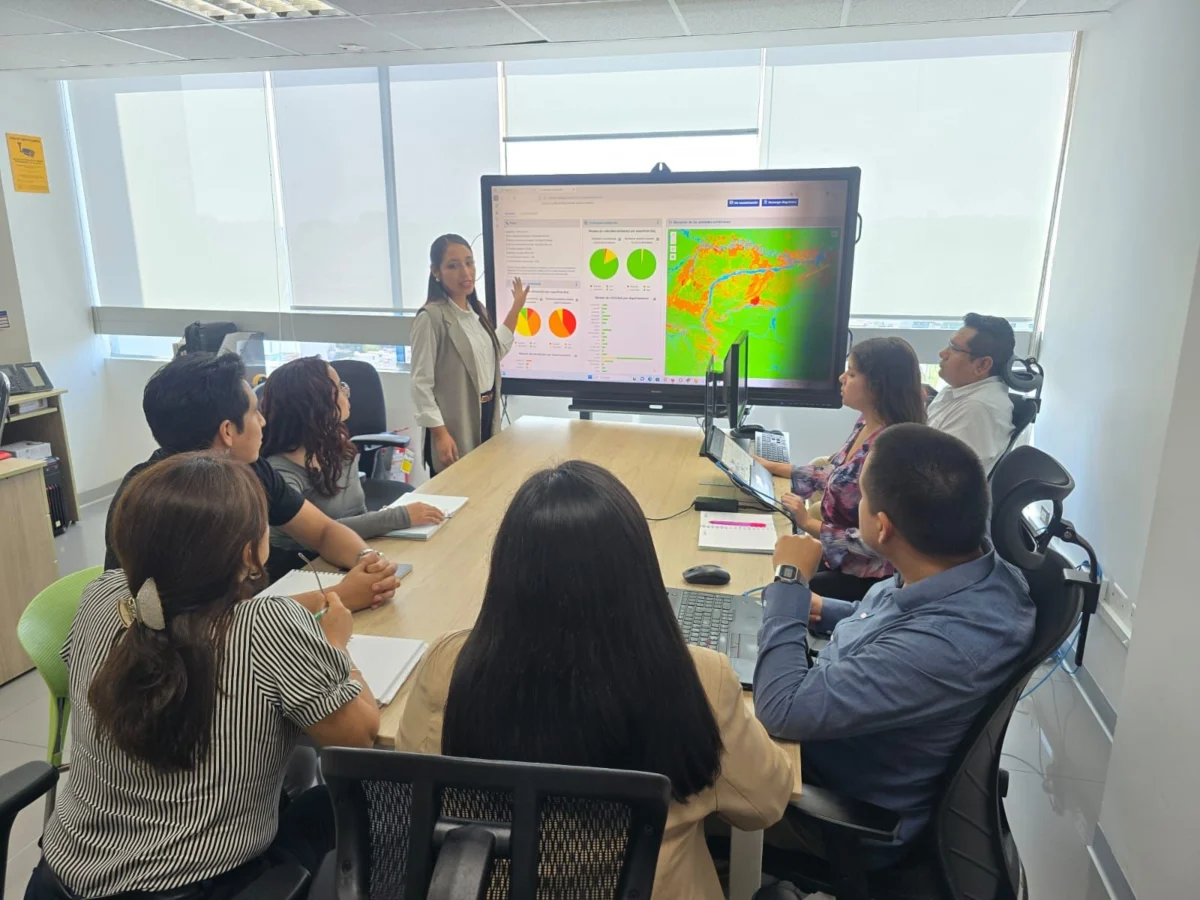
Perhaps the most notable shift in internal operations is the implementation of a sophisticated geospatial viewer. By consolidating 16 disparate databases into a single, unified interface, the OEFA has bridged the gap between raw data and actionable intelligence. Previously, planning an environmental inspection of oil and gas fields was a fragmented process. Today, the agency can analyze terrain, environmental risk factors, and historical documentation simultaneously.
The impact is measurable: the agency expanded its territorial analysis coverage for inspection planning from a mere 163 hectares to a staggering 11,960 hectares. This represents a 7,200% increase in analytical capacity, allowing the agency to pinpoint areas of concern with clinical precision.
2. Deep-Dive Science: Subsurface and Marine Monitoring
Since 2018, the OEFA has moved beyond terrestrial oversight by launching a specialized underwater inspection program. Recognizing that a significant portion of industrial impact—particularly from mining and hydrocarbon sectors—is hidden beneath the surface, the agency deployed expert divers to evaluate subsea infrastructure.

The findings have been startling and impactful. In seven major marine-coastal zones, the agency assessed numerous submarine outfalls. The data revealed that 92% of the evaluated outfalls were incorrectly positioned, while others lacked necessary permits. These revelations forced industrial actors to immediately rectify their infrastructure, effectively preventing long-term damage to fragile marine ecosystems.
3. "Mi Ambiente Perú": The AI-Driven National Map
The "Mi Ambiente Perú" initiative stands as a cornerstone of the agency’s technological arsenal. This platform uses machine learning to classify and zone the entire national territory based on environmental sensitivity. By processing massive datasets, the agency successfully mapped 4.7 million hectares as areas of "high" or "very high" environmental criticality. This allows the OEFA to prioritize its presence in regions where the ecological risk is greatest, ensuring that limited public resources are deployed where they can have the most significant impact.
Chronology of Institutional Modernization
The path to these 2026 awards was not accidental; it was the culmination of a deliberate, three-year roadmap aimed at technical transformation.
- 2022: The OEFA initiates the partnership with the National Commission for Aerospace Research and Development (CONIDA), signaling the start of the "Sat-Eva" project to integrate satellite imagery into standard inspection protocols.
- 2023: Initial testing of the integrated geospatial viewer begins, focusing on the pilot phase for oil sector monitoring.
- 2024: A comprehensive, multi-year training program is launched, focusing on equipping field supervisors with drone operation skills and advanced image processing capabilities.
- 2025: The "Mi Ambiente Perú" platform reaches full maturity, covering 100% of the national territory. During this year, the collaboration with the Regional Government of Tacna is solidified, establishing a model for sub-national air quality monitoring.
- 2026: The formal recognition by CAD confirms that the cumulative impact of these initiatives has fundamentally changed the agency’s efficacy, marking the OEFA as a leader in digital public administration in Latin America.
Data-Driven Impact: Supporting Metrics
The success of these initiatives is rooted in hard numbers. The transition from manual, legacy processes to automated, tech-heavy oversight has resulted in several key performance indicators (KPIs) that highlight the agency’s increased efficiency:
- Satellite Reach: Through the Sat-Eva initiative, the agency moved from 59 satellite imagery records in 2022 to 133 by 2025, monitoring over 56 million hectares.
- Territorial Coverage: The integration of geospatial databases enabled a massive expansion in oversight, jumping from roughly 160 hectares to nearly 12,000 hectares of planned inspections.
- Compliance Improvement: By using evidence-based inspection (such as the underwater diver assessments), the agency has seen a direct correlation between its interventions and the subsequent voluntary or mandatory remediation by private sector entities.
- Operational Savings: The decentralization of oversight, which empowered local offices with better tools and training, has significantly reduced the logistical costs previously associated with centralized dispatch of inspection teams from Lima.
Institutional Synergy: The Role of Collaboration
A critical element of the OEFA’s recent success is its focus on "Public-Public Cooperation." Environmental management is inherently cross-jurisdictional, often requiring coordination between the national government and regional authorities.
The partnership with the Regional Government of Tacna serves as a template for future decentralized environmental monitoring. By integrating the regional air quality station directly into the OEFA’s real-time national network, the two agencies have eliminated data silos. This not only optimizes the use of existing public infrastructure—saving the state from unnecessary investment in duplicate equipment—but also ensures that the public has access to transparent, high-quality, and traceable data. This information is now published on the OEFA’s Interactive Environmental Oversight Portal, fostering greater public trust and accountability.

Implications for Future Governance
The recognition of these seven initiatives has profound implications for the future of environmental management in Peru and the broader region.
Strengthening the Rule of Law
By moving toward a "fiscalization based on evidence," the OEFA is reducing the margin for arbitrary enforcement. When an environmental violation is backed by satellite imagery, AI-driven risk mapping, and high-resolution subsea photography, the legal case for compliance becomes irrefutable. This strengthens the rule of law and provides a predictable environment for regulated industries, who now understand that the "rules of the game" are monitored with high-tech precision.
The Role of Technology in Decentralization
One of the most significant takeaways from the 2026 awards is the success of decentralization. By equipping local offices with tools like drones and geospatial software, the OEFA has empowered regional staff to act as the first line of defense. This shift from a "Lima-centric" model to a distributed network of expertise has proven that, when properly equipped, regional governments are capable of managing complex environmental challenges.
Environmental Resilience and Proactive Defense
Perhaps the most critical implication is the shift from reaction to prevention. The "Mi Ambiente Perú" initiative, in particular, allows the state to see "hotspots" of environmental pressure before they turn into full-blown crises. This proactive stance is essential in the face of climate change, where environmental variables are increasingly volatile.
Conclusion: A Benchmark for the Future
As the OEFA looks beyond 2026, the challenge will be to maintain this momentum and ensure these technologies remain updated in a rapidly evolving digital landscape. However, the path is clear. The agency has demonstrated that effective public management in the environmental sector is no longer about the number of inspectors on the ground, but about the quality of the data they utilize.
By winning these seven awards, the OEFA has set a new benchmark for public agencies across Peru. It has proven that with the right mix of institutional will, technological investment, and inter-agency cooperation, the state can effectively manage even the most daunting environmental challenges. As citizens, the expectation is that these "Good Practices" will become the standard, ensuring that the protection of the environment is not merely a legal requirement, but a technologically-enabled reality for the benefit of all Peruvians.