Main Facts: A Digital Tribute to Peruvian Sovereignty
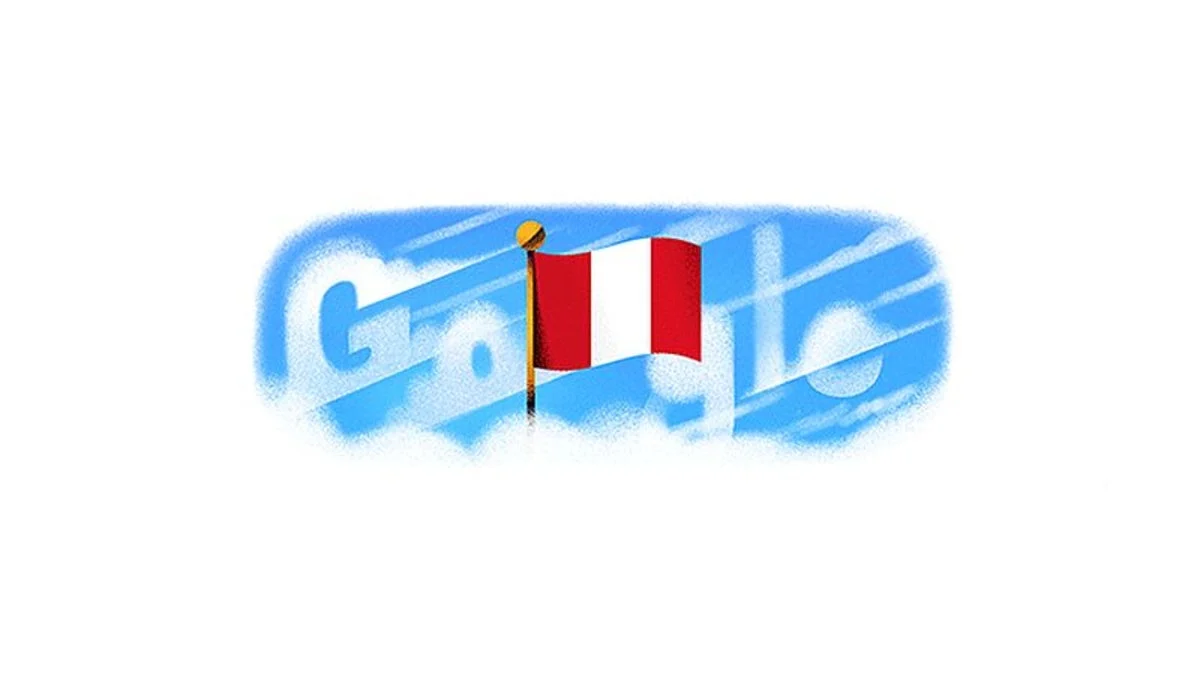
On July 28, the global technology giant Google transformed its iconic homepage to honor the 205th anniversary of Peru’s independence. This gesture, executed through one of the company’s signature "Doodles," serves as a digital nod to the nation’s most significant national holiday.
For users accessing the search engine within Peruvian territory, the standard colorful Google logo was replaced by a patriotic illustration. The design features the Peruvian flag—the iconic red and white vertical stripes—waving against a serene, light blue sky. In a clever integration of branding and art, the clouds within the illustration are subtly shaped to spell out "Google," blending the company’s identity with the aesthetic of a clear Andean horizon.
This digital tribute is more than just a decorative change; it is a gateway to historical education. By clicking on the Doodle, users are instantly redirected to a curated search results page providing comprehensive information, historical context, and the latest news regarding the independence of Peru. This initiative by Google highlights the tech giant’s strategy of acknowledging local cultural milestones and fostering national pride among its user base in Latin America.
Chronology: From the Proclamation to the Digital Age
To understand the significance of this 205-year milestone, one must revisit the historical sequence that defined the Peruvian nation.
1821: The Birth of a Republic
The story of modern Peru began on July 28, 1821, in Lima. General José de San Martín, the Argentine military leader and key figure in the South American wars of independence, stood in the Plaza de Armas and famously declared: "From this moment, Peru is free and independent by the general will of the peoples and the justice of the cause that God defends." This proclamation effectively ended three centuries of Spanish colonial rule, though military conflicts continued until the decisive Battle of Ayacucho in 1824.
The Evolution of Fiestas Patrias
Since that pivotal day, July 28 has been established as the cornerstone of the Fiestas Patrias. Over the last two centuries, the day has evolved from a military declaration into a deep-rooted cultural tradition. It typically involves the Te Deum mass, the Grand Military Parade, and various civic ceremonies.
The Digital Era: Google’s Integration
In the 21st century, the way citizens interact with their national history has shifted to digital platforms. Google began its tradition of regional Doodles years ago, recognizing that national independence days provide a unique opportunity for brand localization. By integrating the 205th anniversary into its interface, Google effectively bridges the gap between the 19th-century struggle for liberty and the 21st-century information age, ensuring that the history of the republic remains accessible to a younger, tech-savvy generation.
Supporting Data: Historical Context and National Significance
The 205th anniversary is a milestone that transcends simple commemoration. It serves as a moment of national introspection regarding Peru’s trajectory since the departure of the Spanish Royalists.
Historical Demographics and Growth
At the time of independence in 1821, Peru was a nation emerging from the ruins of colonial administration and the heavy toll of revolutionary warfare. Today, with a population exceeding 33 million, the country stands as one of the most culturally diverse nations in the region. The Independence celebration acts as an annual "check-in" for the state to assess its progress in terms of economic development, social cohesion, and the preservation of indigenous and colonial cultural legacies.
Digital Reach and Search Trends
Data from search engine analytics suggests that on July 28, search queries related to "Independence of Peru," "José de San Martín," and "Peruvian history" spike significantly. Google’s decision to feature a custom Doodle is backed by internal data trends indicating that users seek educational content during these periods. By providing a direct link to reliable historical sources, Google facilitates a more informed citizenry, moving beyond the celebratory aspect to provide academic and historical depth.
Official Responses and Cultural Impact
The reaction to such digital celebrations has been largely positive, reflecting the pride of the Peruvian people. While Google remains a private entity, its cultural interventions are often viewed by local observers as a mark of relevance.
Public Reception
On social media platforms, Peruvian users frequently share screenshots of the Doodle, using it as a starting point for patriotic posts. Historians and educators have noted that these digital gestures act as "gateway history." By placing the date of independence front and center on the most visited website in the country, Google ensures that the significance of July 28 is reinforced, even for those who may have forgotten the historical intricacies of the date.
Corporate Social Responsibility
Google’s policy on Doodles is strictly non-political, yet it is profoundly cultural. The company maintains that it celebrates "events and anniversaries that are meaningful to local cultures." By limiting the 205th-anniversary Doodle to the Peruvian domain, Google acknowledges the unique regional identity of the nation. This demonstrates a nuanced understanding of global marketing: global platforms can only remain relevant by catering to local sensibilities.
Implications: The Role of Big Tech in National Narratives
The inclusion of the Peruvian flag on Google’s homepage carries broader implications for how history is consumed in the modern era.
The Digital Archive as Public Space
In the modern world, the "digital public square" is largely controlled by a handful of corporations. When Google highlights an independence day, it is effectively curating what millions of people see as they start their day. This carries the responsibility of accuracy and respect. By providing historically accurate summaries of San Martín’s proclamation, Google reinforces the consensus history of the nation, helping to solidify a shared national narrative.
Strengthening National Identity
In an era of globalization, where national boundaries are increasingly fluid due to the internet, the reaffirmation of national identity—even through a search engine logo—is significant. It provides a shared experience for all Peruvians, whether they are in Lima, Cusco, or living abroad. For the diaspora, seeing their home country recognized on a global platform like Google serves as a powerful reminder of their roots and the enduring nature of their national independence.
Educational Potential
The link between the Doodle and the information page is an educational tool. It minimizes the barrier to entry for learning. A student or curious citizen who might not otherwise look up the history of the 1821 proclamation is one click away from scholarly articles and historical accounts. This seamless integration of technology and pedagogy is perhaps the most lasting impact of such digital celebrations.
Conclusion: A Lasting Legacy
The 205th anniversary of Peru’s independence is a testament to the endurance of the Peruvian spirit. While the struggles of 1821 were fought on battlefields, the contemporary celebration takes place on the screens of millions of devices. Google’s participation in these festivities, through its thoughtfully designed Doodle, acknowledges the importance of this date not just as a day off from work, but as a defining moment in the history of a nation that continues to grow and evolve.
As Peru moves toward its third century of independence, the intersection of technology and history will likely become even more pronounced. Digital tributes, while seemingly ephemeral, contribute to the ongoing process of nation-building, ensuring that the legacy of those who fought for freedom remains etched in the collective memory of the Peruvian people and the digital architecture of the modern world.