In a decisive move to fortify national resilience against climate volatility, President Keiko Fujimori has officially announced the creation of the National Commission for the Management of El Niño Phenomenon Risks. This high-level entity is designed to serve as the central nervous system for the state’s response to potential climate disasters, including torrential rains, widespread flooding, and prolonged droughts projected for the 2026–2027 period.
The commission is mandated to transcend bureaucratic silos, aiming to accelerate decision-making processes and synchronize the efforts of various state sectors. By centralizing strategic authority, the government seeks to move beyond reactive emergency management toward a proactive model of prevention, mitigation, and rapid deployment.
The Leadership Structure and Mandate
The commission will be chaired by the Minister of Agrarian Development and Irrigation, Marco Vinelli. His leadership is expected to bring a technical focus to the management of water resources, which is central to both flood prevention and drought mitigation.
The commission’s composition is strictly intersectoral, ensuring that key pillars of the economy and civil safety are represented at the highest level. Permanent members include:
- The Minister of Defense: Responsible for logistics, deployment, and military support in disaster zones.
- The Minister of Economy and Finance: Tasked with the rapid mobilization of fiscal resources.
- The Minister of Housing, Construction, and Sanitation: Responsible for urban infrastructure and public water/sewage integrity.
- The Head of the National Institute of Civil Defense (INDECI): Providing technical oversight for disaster response.
- The Head of the National Water Authority (ANA): Who will also serve as the Technical Secretariat, ensuring that all policies are backed by rigorous hydrological and geological data.
The formation of this commission will be formalized via a Supreme Resolution, granting it the authority to act as the primary political decision-making body for both public and private interventions during the preparation and response phases of El Niño.
Chronology of Preparedness: Building the Roadmap
The establishment of this commission is the culmination of a broader strategic shift in national disaster management. Over the past several months, the government has transitioned from general monitoring to targeted intervention.
- Early 2026 Planning: Initial meteorological reports indicated a high probability of anomalous climatic patterns, prompting the government to initiate a census of vulnerable areas.
- Mid-2026 Identification Phase: The state identified approximately 1,900 "critical points" across the country—geographic locations prone to catastrophic failure due to extreme weather.
- Late 2026 Prioritization: Faced with fiscal constraints and logistical realities, the government narrowed the immediate focus to 569 high-priority sites.
- Current Phase: The inauguration of the National Commission marks the transition from planning to execution, with a heavy emphasis on pre-emptive infrastructure maintenance before the peak of the storm season.
Supporting Data: Mapping the Critical Points
The effectiveness of the new commission will be measured by its ability to secure and intervene in the identified critical zones. Of the 1,900 points identified nationwide, the current priority list of 569 represents the most urgent threats to human life and economic infrastructure.
In Lambayeque, a region historically susceptible to the impact of El Niño, 80 specific points have been flagged. The distribution of work here serves as a pilot model for the rest of the country: 40 points are being managed by the regional government, while the remaining 40 are under the direct purview of the new National Commission. This division of labor is intended to prevent the "responsibility gap" that has historically hampered disaster response.
The Ministry of Economy and Finance (MEF) is playing a critical role in this framework. President Fujimori highlighted a systemic issue where regional governments possess the necessary heavy machinery for clearing riverbeds or reinforcing embankments, but fail to execute the work due to a lack of liquidity for fuel or specialized operators. The commission is tasked with bypassing these administrative bottlenecks, allowing the MEF to channel emergency funds directly to where they are needed most.
Official Responses and Strategic Vision
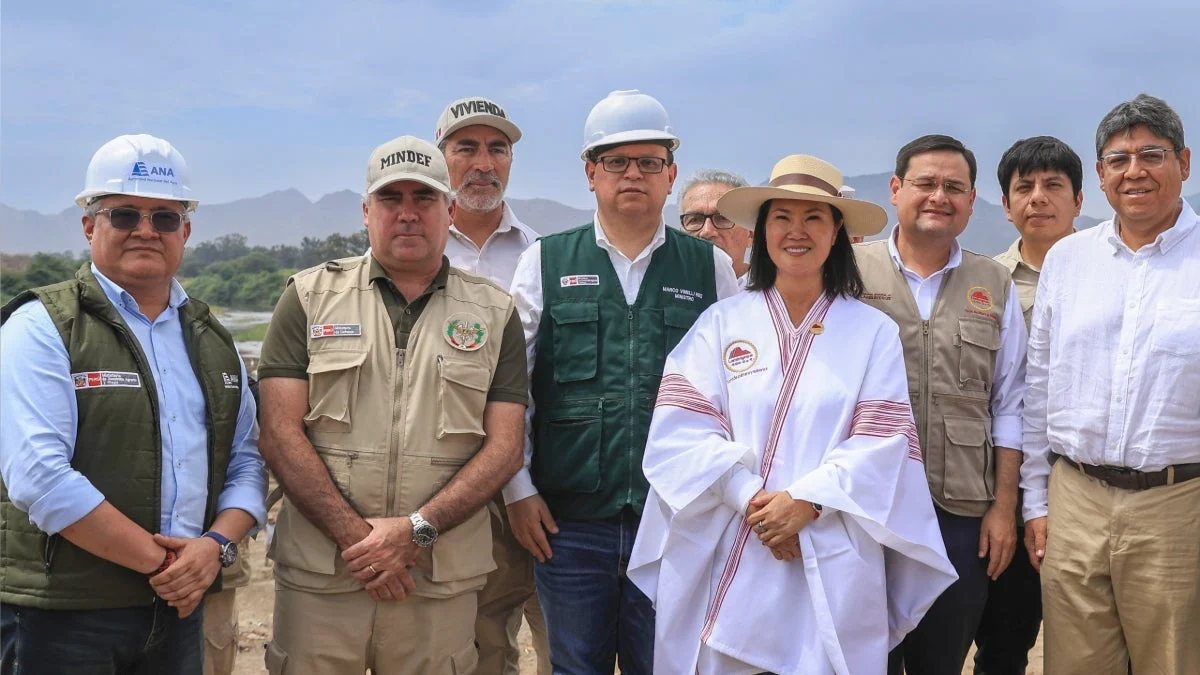
During her visit to the Lambayeque region, President Fujimori underscored the urgency of the situation. "This commission is designed to take decisions rapidly and mobilize all competent authorities," she stated. "The priority is speed, efficiency, and preparedness. We are moving away from the era of slow, fragmented responses."
The President also addressed the political landscape, urging regional and local authorities to set aside partisan differences. With the country navigating an electoral cycle, the risk of political polarization stalling disaster mitigation is high. Fujimori was explicit: "We are not here to entertain political colors or differences. The priority is to clear the riverbeds, desilt the drainage systems, and ensure that no family is left vulnerable due to political gridlock."
The involvement of the private sector is another pillar of this strategy. The government aims to leverage private infrastructure and logistics support to expand the number of treated critical points beyond the initial 569, provided the commission can offer the necessary regulatory and financial stability.
Beyond Floods: Addressing the Drought Crisis
While public attention is often captured by the dramatic images of floods and heavy rains, the commission’s mandate is dual-focused. It will simultaneously address the severe drought conditions currently plaguing the southern and Andean regions of the country.
The effects of El Niño in the high Andes often result in a paradoxical outcome: while the coast faces inundation, the highlands face water scarcity, leading to agricultural failure and the loss of livestock. The commission has already initiated plans to support small-scale producers through:
- Direct Aid: Distributing fodder and essential vaccines for livestock in affected zones.
- Water Infrastructure: The rapid construction of small-scale reservoirs and water harvesting systems to store water during the rainy season for use during dry spells.
- Contingency Stockpiling: The government has begun replenishing regional warehouses with food, high-capacity motobombs, and rescue watercraft to ensure that rural communities remain connected even if roads are washed away.
The Broader Implications: A New Era of Climate Governance
The creation of this commission represents a significant shift in how the state perceives its duty toward environmental protection. By institutionalizing the response to El Niño, the government is acknowledging that climate change is no longer a "potential" future threat, but a permanent feature of the national landscape that requires a standing, specialized cabinet.
Economic Implications
The financial burden of disaster reconstruction consistently outweighs the cost of prevention. By front-loading the budget for desilting and infrastructure reinforcement, the Ministry of Economy hopes to mitigate the long-term impact on the national GDP. Every million spent on prevention is estimated to save five to ten million in post-disaster recovery costs.
Social and Political Stability
The ability of the government to protect its citizens during extreme weather events will be a key determinant of social stability over the next two years. If the commission proves successful, it will strengthen public trust in state institutions. Conversely, a failure to act effectively could exacerbate social unrest, particularly in the most vulnerable rural districts.
Future-Proofing Infrastructure
The commission’s work will likely lead to a permanent revision of national building codes and zoning laws. By identifying the 1,900 critical points, the state has created a map of "high-risk zones" that will influence urban planning for decades to come. The long-term goal is to integrate these findings into the national land-use registry, ensuring that future residential and commercial development is prohibited in areas that are chronically prone to climate-induced disaster.
Conclusion
As the 2026–2027 window approaches, the National Commission for the Management of El Niño Phenomenon Risks faces a monumental task. Its success will depend on the harmony between the ministerial leaders, the technical precision of the ANA and INDECI, and the cooperation of regional governors. By prioritizing speed, cutting through red tape, and balancing the needs of both the flood-prone coast and the drought-stricken Andes, the commission aims to ensure that Peru is not just waiting for the storm, but actively shaping its own resilience. The message from the executive branch is clear: the time for debate has passed, and the time for coordinated, decisive action has begun.