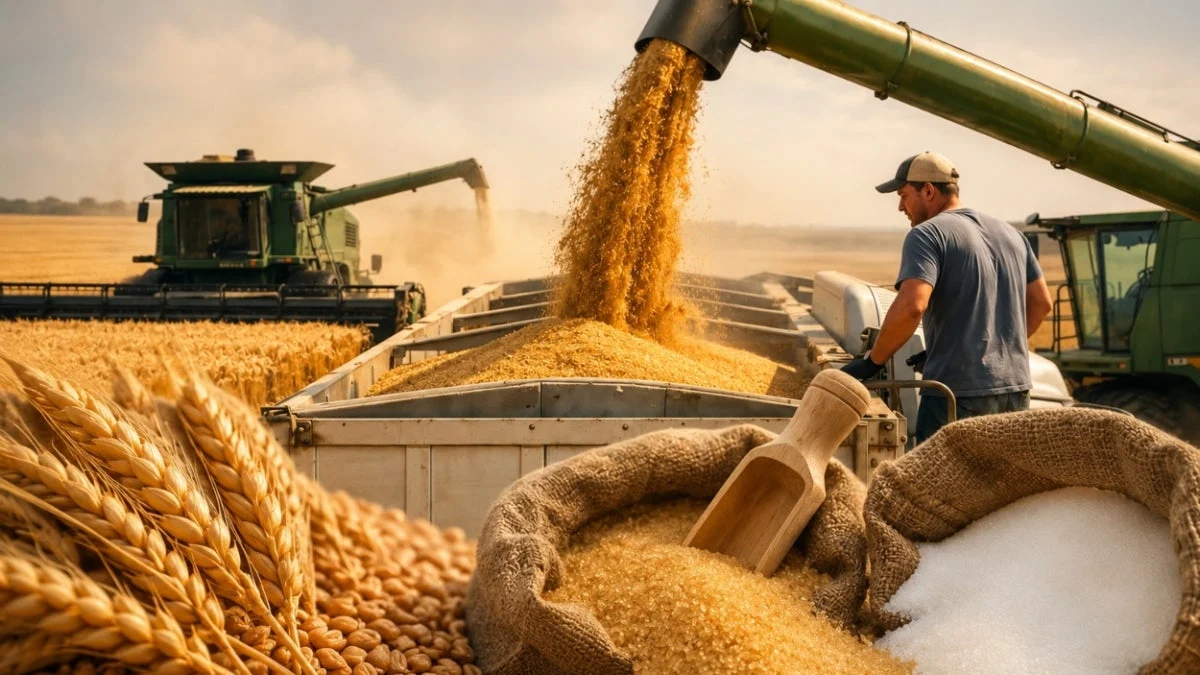
The global food market is navigating a period of renewed turbulence. According to the latest data released by the Food and Agriculture Organization of the United Nations (FAO), international food prices surged in July, hitting their highest level in over three years—specifically since January 2023. The FAO Food Price Index, a vital barometer for tracking the monthly change in international prices of a basket of food commodities, reached 131.1 points. This represents a 0.6% increase compared to June and a 1% rise year-on-year, signaling a worrying trend for global food security.
The recent escalation is primarily driven by sharp increases in the costs of cereals, vegetable oils, and sugar. While the index remains significantly lower than the historical peaks witnessed during the 2022 global food supply shock, the current upward trajectory highlights the fragility of global supply chains in the face of persistent conflict and an increasingly unpredictable climate.
The Perfect Storm: A Chronology of Recent Price Volatility
The path to the current 131.1-point threshold has been paved by a confluence of geopolitical instability and environmental stressors.
- Early 2023: The global market began to see the initial signs of stabilization after the record-breaking price spikes of 2022. However, the relief was short-lived as structural weaknesses remained.
- Late 2025 – Early 2026: Persistent inflationary pressures and logistical bottlenecks began to re-exert influence on commodity markets, particularly in the energy and transport sectors.
- June 2026: Market analysts noted a tightening of supplies in major grain-producing regions, setting the stage for the July surge.
- July 2026: The FAO confirms the index reached a 42-month high. The month was defined by the intersection of military escalation in the Black Sea and extreme weather patterns across both the Northern and Southern Hemispheres.
The volatility is not merely a numbers game; it reflects a world where the margin for error in food production is shrinking. As the FAO continues its mission to combat global hunger, the rising index serves as a stark reminder of the mounting barriers to food accessibility for the most vulnerable populations.
Supporting Data: The Drivers of Inflation
To understand why the index has climbed, one must look at the specific commodities that have acted as the catalysts for this movement.
Cereals and the Black Sea Crisis
Cereals remain the backbone of the global diet, and their volatility has outsized consequences. In July, the international price of wheat jumped by 5.8% in a single month. This surge is directly linked to the ongoing war between Russia and Ukraine. As two of the world’s most critical "breadbaskets," any disruption to their ability to export via the Black Sea sends immediate shockwaves through global markets. Recent attacks on port infrastructure and commercial vessels have increased insurance premiums and freight costs, which are ultimately passed down to consumers.
Furthermore, these geopolitical tensions have been compounded by climate-related setbacks. Severe heatwaves have significantly degraded crop yields in major wheat-producing nations, shrinking the global surplus. Maize (corn) prices followed suit, rising 3.6% due to a combination of high energy costs—which impact fertilizer prices—and prolonged drought conditions in critical agricultural regions of the United States.
The Vegetable Oil Surge
Vegetable oils hit their highest index level since June 2022, climbing 2% to reach 195.7 points. The demand for palm oil, in particular, has seen a sharp uptick, driven by a robust demand from the Indonesian biodiesel sector. As countries pivot toward renewable energy sources, the diversion of vegetable oils for fuel rather than food creates a "food-versus-fuel" dilemma that exerts upward pressure on prices. While palm and soy oil saw increases, some relief was provided by a slight cooling in the prices of sunflower and rapeseed oils.
The Sugar Dilemma
The sugar market remains in a state of high alert. July saw a 5.6% increase in sugar prices. This uptick is fueled by concerns regarding the impact of hot and dry weather on sugar beet harvests within the European Union. Additionally, the lingering effects of the El Niño phenomenon have clouded the production outlook for major Asian producers, creating a speculative environment that has kept prices elevated.
Official Responses and Market Mitigation
The FAO and other international bodies are actively monitoring these developments. While the organization has not yet declared a state of emergency, the data is being used to lobby for greater transparency in trade policies.
Agricultural ministers from various nations have begun calling for the suspension of export restrictions to prevent further panic buying, which historically exacerbates price spikes. The FAO has consistently emphasized that "market intelligence and transparency are the best defenses against volatility." By providing accurate, timely data on stock levels and crop projections, the FAO aims to prevent the irrational market behaviors that often occur when information is scarce.
There is also a growing push from international financial institutions to support countries that rely heavily on food imports. Financial aid packages and trade financing facilities are being discussed to help developing nations weather the current cost-of-living crisis, ensuring that local markets can continue to supply basic necessities even when international prices fluctuate.
Implications: The Human Cost of Market Volatility
The macroeconomic data masks a deeper, more troubling reality. When the FAO index rises, the most direct impact is felt by households in low- and middle-income countries. In regions where food costs consume a large portion of daily income, even a 1% increase in the global index can lead to food insecurity for millions.
The Impact on Food Accessibility
Recent reports from the National Institute of Statistics and Informatics (INEI) in countries like Peru have highlighted that a significant number of people have been forced to skip meals or forgo necessary nutrition due to the lack of purchasing power. This is a global phenomenon. When staple items like bread (wheat), cooking oil, and sugar become unaffordable, the nutritional quality of the average diet plummets, leading to long-term health consequences such as malnutrition and stunted growth in children.
The "Double-Edged Sword" of Energy Costs
The reliance of modern agriculture on energy—for both fuel-intensive machinery and the production of synthetic fertilizers—means that when energy markets are volatile, food markets are inevitably affected. The current geopolitical tensions have kept oil and gas prices elevated, which creates a floor for food prices that is difficult to break. As long as energy remains expensive, the cost of production for farmers will stay high, preventing a swift return to pre-2022 price levels.
A Look Ahead
While the current index remains 18.2% below the all-time high of March 2022, the trend is undeniably concerning. The "cushion" provided by lower meat and dairy prices—which saw a decline in July—has acted as a brake on the total index, preventing a sharper rise. Specifically, the decline in poultry, pork, and beef prices helped offset the surge in grains. However, the historic high reached by the ovine (sheep) meat index serves as a reminder that localized supply shortages can still trigger isolated price crises.
The future of global food security depends on three factors: the restoration of stable logistics in the Black Sea, the ability of farmers to adapt to extreme climate patterns, and the capacity of international markets to avoid protectionist policies. As the global community looks toward the coming harvest seasons, the FAO’s 131.1-point reading serves as a clear warning: the era of "cheap and abundant" food is facing its most significant stress test in recent history. Policymakers must now balance the needs of global trade with the moral imperative of protecting the world’s most vulnerable from the volatility of the commodities market.