
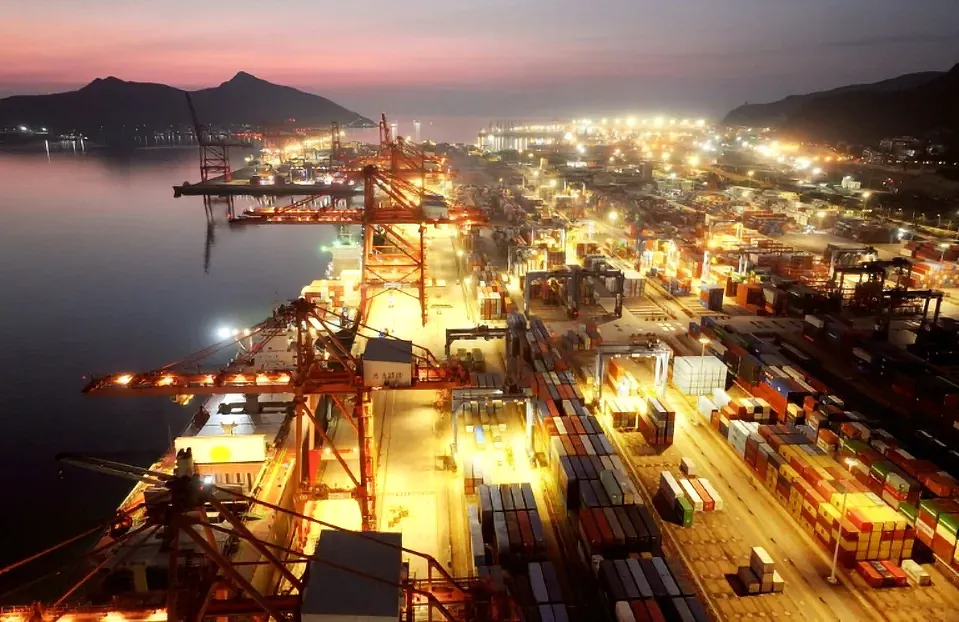
Beijing, China – August 18, 2026 – China’s economic engine roared to life in July, with official data revealing a substantial surge in both exports and imports. This robust performance, particularly in outbound trade, is significantly attributed to a burgeoning global demand for Chinese technological products, fueled by the transformative wave of Artificial Intelligence (AI). The country’s General Administration of Customs reported a remarkable 23.9% year-on-year increase in exports for July, underscoring its continued dominance as a manufacturing powerhouse. Imports also showed strong growth, rising by 27.5%, though this figure represents a slight moderation from the 36% surge witnessed in June.
This latest economic report paints a picture of resilience for the world’s second-largest economy, which has consistently leveraged its manufacturing prowess to offset domestic consumption fluctuations. Last year, China achieved a record-breaking trade surplus, nearing an astonishing US$1.2 trillion, a testament to its ability to navigate complex global economic landscapes. The current surge in exports is a clear indicator that this trend is not only continuing but accelerating, driven by a strategic pivot towards high-demand technological sectors.
The AI Catalyst: A New Era of Demand
The primary driver behind China’s impressive export performance in July appears to be the insatiable global appetite for AI-related technologies. As businesses worldwide scramble to enhance their AI capabilities, the demand for sophisticated data processing equipment and related components manufactured in China has skyrocketed. This has translated into a significant boost for Chinese technology exporters, positioning them at the forefront of a technological revolution.
According to the latest figures, Chinese exports of computers and technological components have experienced a dramatic ascent this year. From January to July, these categories saw a staggering 45.2% increase in value compared to the same period in the previous year. This surge highlights a strategic shift in global supply chains, with companies increasingly relying on China for the foundational hardware necessary to build and deploy advanced AI solutions. The implications of this trend are far-reaching, suggesting that China’s role in the global technological ecosystem is set to become even more pronounced.
Navigating Geopolitical Headwinds: Trade with the US
Despite the formidable global trade pressures, including ongoing geopolitical conflicts and persistent trade tensions between Beijing and Washington, China’s export figures have demonstrated remarkable strength. Notably, shipments from China to the United States, a key trading partner, saw a significant increase of 17% year-on-year in July. This growth occurs even as the two economic giants remain locked in a complex and often contentious trade relationship, with ongoing efforts to de-escalate tensions yielding mixed results.
The release of these figures comes on the heels of a recent escalation in trade friction between the world’s two largest economies. In a move that further complicates the trade landscape, Washington imposed sanctions on China, citing concerns related to forced labor and national security. In response, Beijing retaliated earlier this week by announcing restrictions on drone exports to the United States and implementing a blacklist of six American companies. This tit-for-tat exchange underscores the delicate balance of power and the inherent volatility in Sino-US trade relations, making the continued robust export growth to the US even more noteworthy.

Chronology of Trade Dynamics
To fully appreciate the current economic climate, it is essential to consider the recent trajectory of China’s trade performance and the factors that have shaped it:
- Late 2025/Early 2026: A period characterized by cautious optimism as global economies began to rebound from earlier disruptions. China’s manufacturing sector showed signs of recovery, buoyed by increasing domestic demand and a gradual easing of global supply chain bottlenecks.
- Q1 2026: Initial signs of the AI boom began to manifest in trade data, with early increases in the export of computing hardware and related components. However, the overall trade figures were still influenced by a variety of global economic factors.
- June 2026: A strong performance in imports was recorded, showing a significant increase of 36% year-on-year, indicating a robust demand for raw materials and intermediate goods to fuel manufacturing. Exports also saw healthy growth, setting the stage for the July surge.
- July 2026: The pivotal month, with exports jumping 23.9% and imports rising 27.5%. The significant increase in tech exports, particularly those related to AI, became the dominant narrative. This coincided with escalating trade disputes between China and the United States.
- Early August 2026: The US imposed new sanctions on China, citing human rights and security concerns. China responded with export restrictions on drones and blacklisting of US firms, highlighting the ongoing geopolitical undercurrents impacting trade.
This timeline illustrates a dynamic and often unpredictable trade environment. While external pressures and geopolitical rivalries persist, China’s ability to adapt and capitalize on emerging market trends, such as the AI revolution, has proven to be a significant stabilizing factor for its export-driven economy.
Supporting Data and Economic Indicators
The latest trade figures from China’s General Administration of Customs provide concrete evidence of the nation’s economic vitality:
- Total Exports (July 2026): Increased by 23.9% year-on-year.
- Total Imports (July 2026): Increased by 27.5% year-on-year.
- Total Imports (June 2026): Increased by 36% year-on-year.
- Trade Surplus (2025): Reached a historic high of nearly US$1.2 trillion.
- Exports of Computers and Tech Components (Jan-July 2026): Increased by 45.2% year-on-year.
- Exports to the United States (July 2026): Increased by 17% year-on-year.
These statistics are not merely numbers; they represent the tangible outcomes of China’s manufacturing prowess and its strategic positioning within the global economy. The sustained growth in exports, particularly in high-value technological goods, indicates a shift towards a more sophisticated and competitive export base. Furthermore, the substantial trade surplus achieved last year has provided a crucial buffer against domestic economic headwinds, enabling continued investment in key industries and infrastructure.
The AI-driven demand for Chinese technology is a significant factor in this positive outlook. As the global race to develop and deploy AI intensifies, the components and hardware manufactured in China are becoming indispensable. This creates a virtuous cycle, where increased demand fuels production, which in turn supports further innovation and expansion within China’s tech sector.
Official Responses and Market Reactions
The robust trade figures have elicited a generally positive, albeit measured, response from Chinese officials and economic analysts. The General Administration of Customs, in its official release, highlighted the positive momentum and reiterated China’s commitment to fostering an open and stable global trade environment. While acknowledging the challenges posed by geopolitical tensions, the administration emphasized the resilience of China’s economy and its capacity to adapt to evolving market dynamics.

Economists widely attribute the surge to the confluence of factors, with the AI boom being a primary contributor. They note that China’s extensive manufacturing infrastructure and its established supply chains for electronic components have placed it in an advantageous position to meet this burgeoning global demand. The government’s long-term strategic investments in technology and manufacturing are now yielding significant dividends.
However, the context of ongoing trade disputes with the United States cannot be ignored. While exports to the US have increased, the underlying tensions and retaliatory measures could pose future risks. Analysts are closely monitoring the impact of sanctions and export controls on the overall trade relationship. The effectiveness of these measures in significantly altering trade flows remains to be seen, particularly given the deep integration of Chinese components into global supply chains.
Broader Implications for Global Trade and Technology
The implications of China’s surging exports, particularly in the AI sector, are profound and far-reaching:
- Reinforced Global Manufacturing Dominance: The data solidifies China’s position as the world’s preeminent manufacturing hub, especially in critical technological sectors. This dominance is likely to continue as global demand for AI-powered solutions grows.
- Shifting Global Supply Chains: The reliance on Chinese-made components for AI development suggests that global supply chains are becoming even more intertwined with China’s manufacturing capabilities. This could lead to greater scrutiny and potential efforts by other nations to diversify their supply sources, but the immediate impact points towards increased dependency.
- Geopolitical Trade-offs: The continued strength of Sino-US trade, despite ongoing tensions, highlights the complex trade-offs involved in economic decoupling. While political rhetoric may call for separation, the economic realities of integrated supply chains present significant challenges.
- AI Development Acceleration: China’s ability to export critical AI components at scale will likely accelerate the global development and adoption of artificial intelligence. This has implications for innovation, economic growth, and potentially, global security.
- Economic Resilience: China’s demonstrated ability to leverage emerging technological trends to drive export growth underscores its economic resilience. This provides a degree of insulation against external shocks and domestic economic pressures.
In conclusion, China’s July trade performance offers a compelling snapshot of its economic dynamism. The nation’s ability to capitalize on the AI revolution, coupled with its established manufacturing prowess, has propelled its exports to new heights. While geopolitical headwinds and trade disputes persist, the current data suggests that China’s economic trajectory remains robust, with significant implications for the global economic and technological landscape for years to come. The intricate dance between global demand, technological innovation, and geopolitical maneuvering will continue to shape the future of international trade, with China undoubtedly playing a central role.