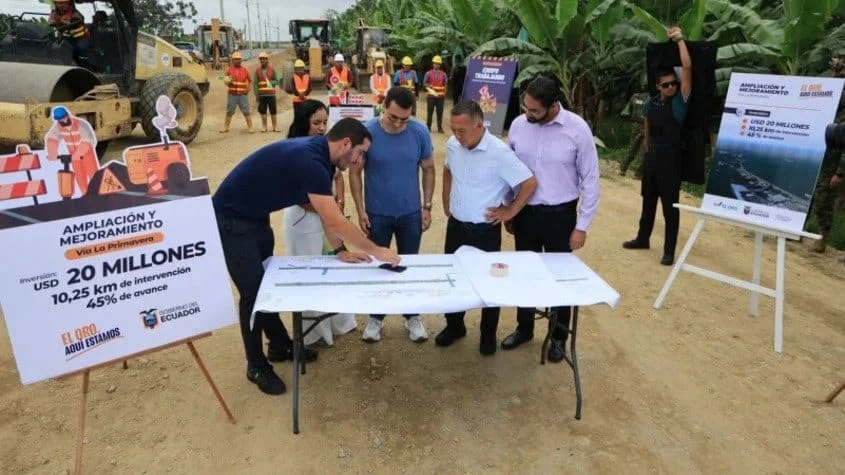
In a strategic move to bolster national connectivity and economic competitiveness, President Daniel Noboa recently conducted an extensive inspection of two critical infrastructure projects in the El Oro province of Ecuador. The combined investment of $29.4 million underscores the administration’s commitment to revitalizing the nation’s logistical framework, aiming to facilitate smoother commerce, enhanced road safety, and improved quality of life for hundreds of thousands of citizens.
The projects, specifically the La Primavera highway expansion and the rehabilitation of the Palosolo–Ñalacapa–San Roquito–Balsas corridor, serve as pivotal arteries for the region’s agricultural and industrial output. By prioritizing these developments, the government seeks to transform historically neglected transit zones into modern, efficient corridors that support Ecuador’s broader socio-economic goals.
Main Facts: The Scope of the Investment
The $29.4 million investment is split between two distinct but equally vital projects. The largest portion, valued at $20 million, is dedicated to the La Primavera road, a critical link between the provincial capital of Machala and the essential maritime hub of Puerto Bolívar. This infrastructure project is not merely a paving exercise; it is a comprehensive regeneration and expansion initiative designed to accommodate high-volume heavy transport.
The second project, located in the canton of Balsas, involves the rehabilitation of a 20.69-kilometer stretch spanning the Palosolo–Ñalacapa–San Roquito–Balsas corridor. With a budget of $9.4 million, this project is currently 78% complete. Once finished, it will provide a modernized, resilient route for over 38,000 residents, significantly reducing the risks associated with the previous, deteriorating infrastructure.
Chronology of Development and Inspection
The trajectory of these projects reflects a broader governmental push to address infrastructure deficits across Ecuador.

- Initial Planning and Procurement: Before breaking ground, both projects underwent rigorous feasibility studies. The La Primavera route, in particular, was identified as a bottleneck for heavy freight moving toward the coast.
- The Commencement of Works: Construction on the Palosolo–Ñalacapa–San Roquito–Balsas corridor began as a response to years of complaints regarding the dangerous, narrow road conditions that became impassable during the heavy rainy seasons.
- Presidential Inspection (July 2026): During his recent visit, President Noboa engaged with local stakeholders and contractors to assess the current progress. His visit served as a catalyst for local morale, confirming the government’s timeline for completion and addressing potential logistical hurdles.
- The Path Forward: With the Balsas corridor reaching nearly 80% completion, the government expects the final phase—which includes finishing touches on signage, drainage systems, and safety barriers—to be finalized in the coming months, marking a significant milestone for the region’s transit capabilities.
Supporting Data: Economic and Social Impacts
Infrastructure is the backbone of regional development, and the data behind these two projects illustrates why such high capital allocation is necessary.
The La Primavera Corridor: Logistical Efficiency
The La Primavera expansion is projected to benefit approximately 714,000 people. The most significant metric for this project is the drastic reduction in travel time. Commuters and transport operators, who previously endured 40-minute transit times between La Primavera and Machala, are expected to see that duration cut to just 15 minutes. This 62.5% reduction in travel time represents a massive increase in operational efficiency for the freight industry moving goods from the interior to the international port of Puerto Bolívar.
The Balsas Corridor: Safety and Resilience
For the 38,000 inhabitants of the Balsas canton, the rehabilitation of their primary corridor is a matter of both economic survival and physical safety. The previous road was characterized by narrow shoulders and a lack of proper drainage, leading to constant landslides and road surface degradation during the rainy season. By widening the lanes and reinforcing the structural base, the new design ensures that the road remains open year-round, regardless of weather conditions, thus preventing the isolation of rural communities during extreme weather events.
Official Responses and Strategic Vision
During his tour of the construction sites, President Noboa emphasized that these projects are not isolated incidents but integral components of a wider national infrastructure strategy.
"Our objective is to turn these corridors into true engines of development," the President noted. The government’s narrative centers on the idea that "connectivity equals opportunity." By reducing the cost of logistics, the administration aims to lower the final price of consumer goods and enhance the competitiveness of Ecuadorian exports in global markets.

Government representatives highlighted that the investment in El Oro was selected based on a "Productivity-First" framework. By focusing on areas where agriculture, industry, and trade intersect, the administration aims to maximize the return on investment (ROI) for the Ecuadorian taxpayer. Minister of Transportation officials have echoed these sentiments, promising rigorous oversight to ensure that the remaining 22% of the Balsas project is completed to international engineering standards.
Implications for the Future of El Oro
The completion of these projects carries profound implications for the province of El Oro.
Economic Implications
The modernization of the link to Puerto Bolívar is likely to attract further investment into the Machala industrial zone. Improved road access generally leads to lower insurance and maintenance costs for transport companies, which in turn encourages more investment in logistics infrastructure and warehousing along these routes. For the agricultural sector, specifically, having a reliable, high-speed road to the port means that perishable goods spend less time in transit, reducing spoilage rates and increasing profit margins for local farmers.
Social and Safety Implications
Road safety is a significant public health issue in rural Ecuador. By eliminating "black spots"—areas of the road prone to accidents due to poor visibility or narrow paths—the government is directly reducing the burden on the national healthcare system. The transformation of the Palosolo–Ñalacapa–San Roquito–Balsas route will allow families and workers to traverse their region with confidence, fostering better access to education, healthcare, and social services.
Environmental Considerations
Modern road construction today includes considerations for environmental mitigation. The current projects have incorporated improved drainage systems, which are essential to prevent the erosion and soil instability that previously plagued the region. These systems ensure that the roads act as controlled water-management channels rather than impediments to local hydrology, protecting the surrounding agricultural land from the runoff that often accompanies poorly designed infrastructure.

Conclusion: A New Standard for Ecuadorian Infrastructure
The $29.4 million investment in the province of El Oro stands as a testament to the transformative power of well-planned civil engineering. As President Noboa continues his tour of the nation, the progress in these two corridors serves as a template for future infrastructure projects across the country.
By balancing the urgent needs of local rural populations with the macro-economic requirements of a globalized port city, the government is demonstrating a nuanced understanding of what is required to modernize a developing economy. As the project reaches its final stages, the focus will shift toward maintenance and long-term sustainability—ensuring that these new, smooth roads serve the people of Ecuador for decades to come.
The successful delivery of these works will undoubtedly strengthen the administration’s political standing and, more importantly, provide the residents of El Oro with the modern, safe, and efficient infrastructure they have long required to thrive in an increasingly competitive economic landscape.