By IDLADS | May 15, 2017
The Peruvian Congress faces a defining moment in its commitment to constitutional democracy. As the plenary session approaches, all eyes are on Congresswoman Úrsula Letona Pereyra and the members of the Constitution and Control of Constitutional Norms working groups. Having previously voted in favor of repealing Legislative Decree (DL) 1333, these legislators now face mounting pressure from the Ministry of Economy and Finance (MEF) to reverse their position. At the heart of this conflict lies a fundamental question: Should the rights of indigenous peoples be sacrificed at the altar of expedited investment, or is the state obligated to honor its constitutional and international mandates regarding prior consultation?
The Core Controversy: What is DL 1333?
In an effort to accelerate national infrastructure and investment, the Executive branch promulgated Legislative Decree 1333, which established the "Special Project for Access to Land for Prioritized Investment Projects" (APIP) within the agency ProInversión.
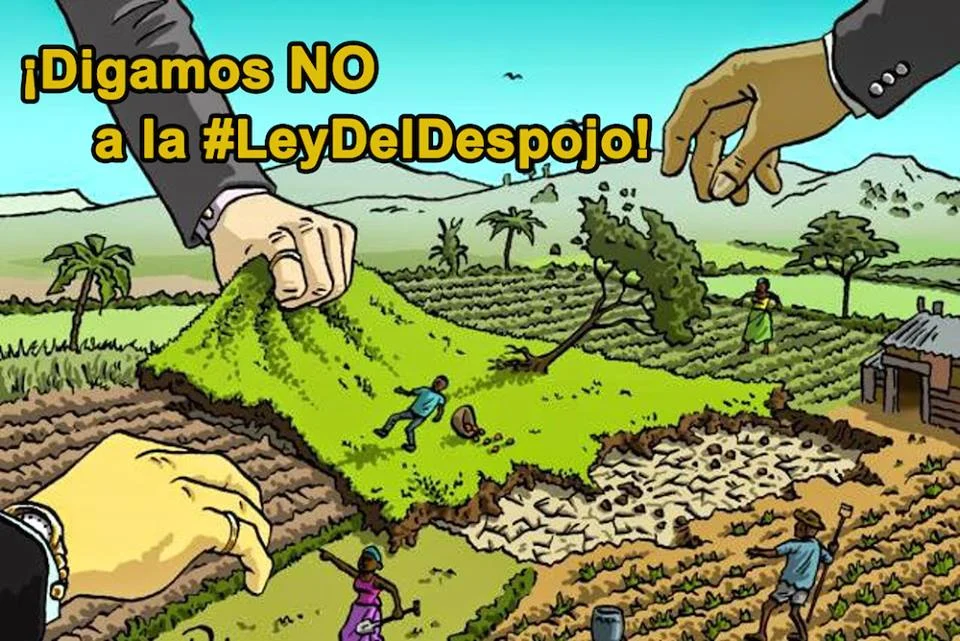
The government’s stated objective is to "sanitize" the legal status of land required for priority projects. The mechanism, termed "Process Zero," is designed to clarify the legal status of land titles before acquisition or expropriation. While government officials emphasize that "APIP does not expropriate," legal analysts and civil society organizations argue that the "sanitization" process essentially grants the State ownership of unregistered land without the requirement of a justiprecio (fair market value) payment.
This move directly threatens two vulnerable groups:

- Possession holders: Families and farmers currently seeking title through acquisitive prescription who meet all legal requirements but have not yet been granted formal deeds.
- Indigenous peoples: Ancestral communities whose territories remain untitled. Statistics indicate that approximately 49.6% of these territories are already impacted by state-granted concessions.
Chronology of the Dispute
The trajectory of DL 1333 has been marked by a lack of transparency and a failure to engage in meaningful dialogue:
- Promulgation: The Executive issued the decree, bypassing the mandatory prior consultation process required by Convention 169 of the ILO and national law.
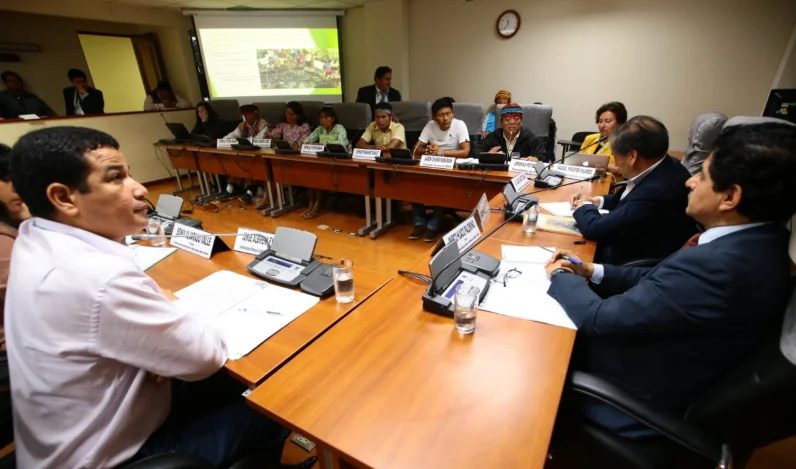
- Congressional Pushback: The Commission of Constitution and the Working Group on Constitutional Control reviewed the decree, concluding that the Executive had exceeded its delegated powers and violated indigenous rights.
- The "Consultation" Facade: Following the recommendation to repeal, the MEF attempted a last-minute outreach to indigenous organizations. This outreach was widely criticized as a superficial effort to "check a box" rather than a good-faith effort to reach consensus.
- Current Standpoint: As of May 2017, the decree remains a flashpoint for social conflict, with various indigenous groups and human rights organizations ready to escalate their legal challenges to the Constitutional Court.
Thirteen Reasons for Derogation
The argument for the total repeal of DL 1333 is built on a foundation of legal, social, and ethical concerns:
1. Violation of Communal Property Rights
The decree affects communal property without prior consultation. The Ombudsman’s Office (Defensoría del Pueblo) has documented the "24-step" bureaucratic nightmare communities must face to secure their ancestral land titles. By bypassing this, the state further marginalizes these groups.
2. Failure of Prior Consultation
The MEF claims to have consulted with the "Pact of Unity" (FENMUCARINAP, ONAMIAP, CNA, and CNP), yet these organizations have formally denied reaching any agreement. The government’s approach has been to deliver "modified versions" of the law rather than engaging in the 120-day formal consultation process.
3. Exceeding Executive Power
The Constitution Committee explicitly found that the Executive ignored the legal framework regarding the necessity of consultation for decrees that alter the legal status of collective rights.

4. The "120-Day" Requirement
The law requires a comprehensive process including information workshops, internal evaluations, and dialogue. The government’s attempt to circumvent this through hurried, informal meetings is a violation of the spirit and letter of the law.
5. A Dangerous Precedent
Allowing the Executive to "correct" unconstitutional decrees through subsequent legislative fixes would set a precedent that would render the right to prior consultation effectively dead in Peru.
6. Legal Insecurity and Litigation
The Confederation of National Agrarians (CNA) and the National Organization of Andean and Amazonian Indigenous Women of Peru (ONAMIAP) have already filed amparo (constitutional protection) actions. The National Coordinator of Human Rights (CNDH) is prepared to challenge the decree’s constitutionality at the highest level.
7. Admission of Impact
Internal government documents have confirmed that the original decree encroached upon communal autonomy and self-determination, justifying the necessity of a full consultation process that was never held.
8. Colonial Attitudes
The government’s approach treats indigenous communities as "minors" who need to be told what is best for their territory, failing to respect their spiritual and cultural connection to their ancestral lands.

9. The Myth of "Voluntary" Relocation
The MEF claims that relocations promoted by APIP will be "voluntary." However, for indigenous peoples, the threat of losing ancestral territory is an existential one. When communities are pressured, the "voluntariness" of their consent is rendered void by the state of necessity imposed upon them.
10. Lack of Good Faith
The principle of good faith requires transparency and the provision of all relevant information. The government’s conduct from inception to the present has been characterized by evasion and a lack of mutual respect.
11. Immunity for Officials
The decree grants excessive protection to APIP officials, requiring their own "informed opinion" before they can be investigated for criminal acts. This undermines the separation of powers and the autonomy of the Public Prosecutor’s Office.
12. Shielding Administrative Irresponsibility
Officials are provided with insurance against administrative and civil liability, making them practically untouchable unless "willful negligence" can be proven—a high bar in a system where the entity is "judge and party."
13. Economic Fallacy
There is a persistent myth that prior consultation delays economic development. In reality, consensus-based development is more stable and sustainable. The current economic stagnation in Peru is linked to structural issues like the Odebrecht scandal and the impact of the Niño Costero climate phenomenon, not the legal protection of indigenous rights.

Official Responses and the Stance of the MEF
The Ministry of Economy and Finance has maintained that the decree is essential to "de-bottleneck" stalled investment. In their defense, officials have argued that they have held meetings with indigenous leaders and that they are willing to clarify the text of the decree. However, the "modifications" offered by the MEF are seen by legal scholars as mere cosmetic adjustments that fail to address the underlying violation of collective rights.
The MEF’s position effectively treats indigenous land rights as a "side issue" to be managed, rather than a fundamental human right that must be at the forefront of policy planning.
Implications for the Future of Peru
The potential ratification of this decree would have dire implications for the rule of law in Peru. If the Congress validates an unconstitutional act, it signals to the citizenry that the executive branch can override the rights of minorities whenever they become an "inconvenience" to investment.
Furthermore, this situation risks triggering widespread social unrest. History in Peru, specifically the events leading to the "Baguazo" tragedy, demonstrates that when indigenous voices are silenced and their rights disregarded by state legislation, the result is deep-seated social conflict.
Conclusion: A Test for Democracy
As the parliamentary session looms, Congress stands at a crossroads. The choice is between acting as an "enabler" of executive overreach or serving as an effective check on power.

The hope remains that Congresswoman Úrsula Letona Pereyra and her colleagues will honor their original commitment to repeal DL 1333. By doing so, they would not only uphold the rights of indigenous peoples but also send an unequivocal message: that the State of Peru is a constitutional democracy where the rule of law prevails over the interests of the few. The legacy of this Congress will be defined by whether it chose to protect the fundamental rights of its most vulnerable citizens or to serve as a rubber stamp for the expansionist agendas of the executive branch. The nation is watching, and the call for a civil, consultative, and democratic approach to governance has never been louder.