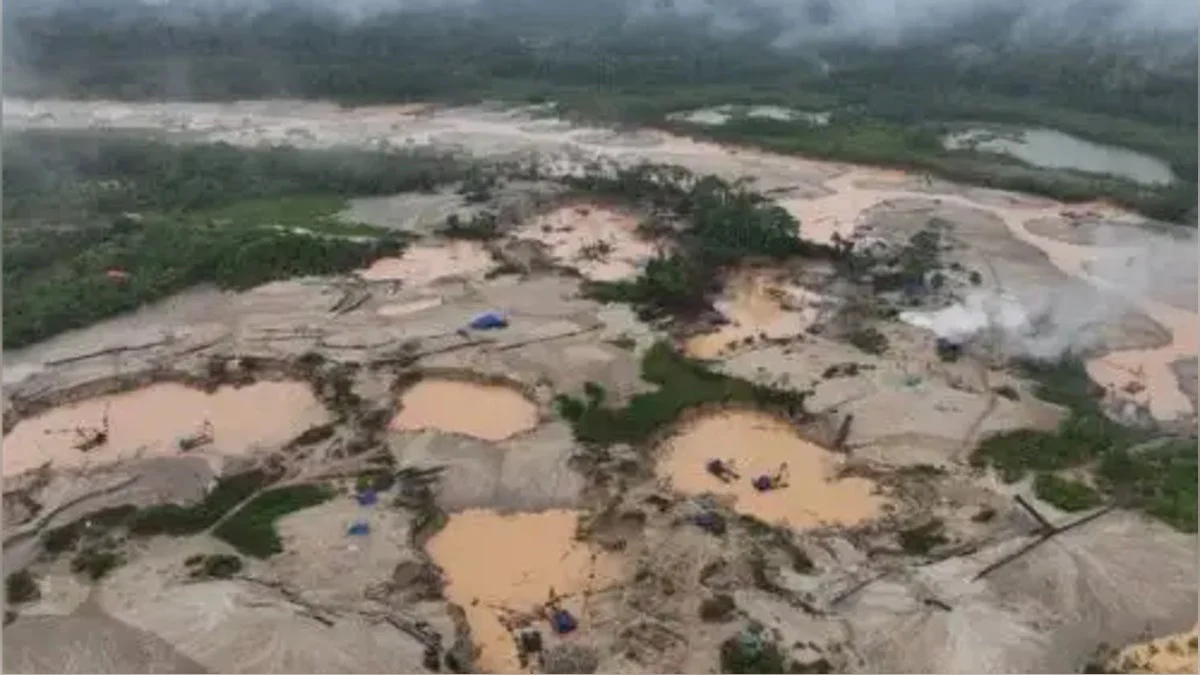
The illegal mining sector in Peru has metastasized into the country’s most formidable illicit economy, eclipsing even the drug trade in scale, financial reach, and territorial control. As the nation prepares for a pivotal second-round electoral contest, a sobering report from the Peruvian Institute of Economics (IPE) has sounded the alarm: the candidates’ proposals to confront this existential threat are not only insufficient but, in some cases, risk exacerbating a problem that has reached critical, destabilizing levels.
Despite the mounting evidence of environmental devastation, labor exploitation, and systemic corruption, the current political discourse remains trapped in a cycle of inaction. Analysis of the government plans from the leading political forces—Fuerza Popular, Juntos por el Perú, and Renovación Popular—reveals a collective failure to address the fundamental structural flaw that facilitates this growth: the Registro Integral de Formalización Minera (REINFO).
A Chronology of Failure: The REINFO Debacle
To understand the current crisis, one must look at the trajectory of the formalization process. For over two decades, the Peruvian state has attempted to bring artisanal and small-scale miners into the legal economy under various regulatory frameworks. The latest iteration, the REINFO, was intended to be an extraordinary, temporary mechanism. Instead, it has become a permanent shelter for illegal actors.
- 2014-2016: The government launches the formalization process with the promise of bringing thousands of informal miners into the light.
- 2017-2020: As deadlines approach, Congress begins a recurring pattern of granting extensions. Rather than forcing compliance, these extensions signal to illegal operators that the state lacks the political will to enforce closure.
- 2023-2024: Despite clear data showing that only 2.4% of registered miners have achieved full formalization over the last decade, the political appetite for reform remains stagnant.
- December 2025: In a move that shocked policy experts, the legislative benches of the leading presidential candidates voted in favor of a fifth consecutive extension of the REINFO, effectively shielding illegal miners from prosecution for another period.
This cycle of "endless formalization" has created a loophole where miners can operate under the guise of being "in process," while essentially ignoring environmental regulations, tax obligations, and safety standards.
Supporting Data: The Magnitude of the Illicit Economy
The IPE report provides a quantitative breakdown of why the current status quo is unsustainable. The growth of illegal mining is not merely a regional nuisance; it is a macroeconomic force.
The Financial Disparity
Illegal mining has become ten times more lucrative than the illicit drug trade in Peru. According to data from the Financial Intelligence Unit (UIF), suspicious operations linked to illegal mining reached a staggering $6 billion in 2025. This figure is nearly double the amount recorded just four years ago.
Carlos Gallardo, General Manager of the IPE, notes the alarming velocity of this expansion: "While reports of other criminal activities have multiplied by three in recent years, suspicious operations tied to illegal mining have increased eightfold."
The "Gold Rush" Factor
The explosion of this illicit economy is fueled by the historic, record-high prices of gold. As global markets drive demand, illegal miners have moved into protected areas, national parks, and indigenous territories with increasing boldness. The state’s limited presence in remote zones has effectively handed over governance to criminal syndicates, who provide their own form of "security" and infrastructure in exchange for control over the mines.
Official Responses and the Call for Structural Reform
The consensus among economists and government officials is that the legislative framework is currently broken. Rodolfo García, the High Commissioner for the Combat of Illegal Mining at the Presidency of the Council of Ministers (PCM), has been vocal about the need for a radical shift in policy.
"The most urgent step is to reform the legal framework. We must terminate the REINFO and implement a new, functional standard that actually enables the formalization of the approximately 31,000 entities currently listed as active or suspended," García stated.
The PCM official argues that the current system is not just ineffective; it is a facade. By maintaining a registry that provides no real path to legality, the state is essentially providing a "get out of jail free" card to those who have no intention of complying with the law. He advocates for a dedicated, modernized law for small-scale and artisanal mining that balances environmental protection with the economic necessity of the sector.
The Geography of Contagion: A Country-Wide Crisis
While Madre de Dios is frequently cited as the epicenter of environmental destruction—a reputation built over 40 years of unchecked dredging and mercury pollution—the crisis has now blanketed the entire country.
- The Amazonian Front: Regions like Loreto, Amazonas, Ucayali, and Huánuco are witnessing an unprecedented influx of illegal mining operations that threaten the biodiversity of the rainforest and the survival of isolated indigenous communities.
- The Andean Corridor: In regions like La Libertad (notably the Pataz province), Apurímac, Puno, and Arequipa, illegal mining has infiltrated established social structures. In these areas, the violence associated with illegal gold extraction has begun to mirror the territorial conflicts typically reserved for drug cartels.
The lack of resources allocated to combat this plague remains a point of contention. Despite the threat being exponentially larger than that posed by drug trafficking, the state has historically allocated a budget ten times smaller to address illegal mining. This discrepancy highlights a fundamental lack of prioritization by the executive branch.
Implications for the Future of Peru
The consequences of failing to address this crisis extend far beyond the loss of tax revenue or environmental degradation. The implications for the next administration are profound and potentially destabilizing:
1. Erosion of State Sovereignty
When illegal mining groups control land, they begin to supplant the state. They influence local politics, provide local employment, and often co-opt regional authorities through bribery or intimidation. The longer the state waits to re-establish its monopoly on force and regulation, the harder it will be to reclaim these territories.
2. Environmental Catastrophe
The reliance on mercury and the massive deforestation caused by illegal extraction have irreversible consequences. As the industry moves into pristine areas, the ecological debt being accumulated is one that future generations of Peruvians will have to pay.
3. Economic Distortion
The influx of billions of dollars of illicit cash creates a "shadow economy" that distorts local prices, fuels inflation in mining hubs, and provides a platform for money laundering. This undermines the formal economy and discourages legitimate investment in mining, which operates under strict social and environmental scrutiny.
4. Security Risks
As seen in Pataz, the convergence of illegal mining and organized crime syndicates is leading to a spike in violent crime, including extortion, kidnapping, and murder. The mining sector is increasingly being used as a vehicle for broader criminal activity, creating a security threat that the national police and armed forces are currently ill-equipped to manage.
Conclusion: The Path Forward
The next government of Peru faces a critical fork in the road. The IPE’s analysis serves as a final warning: the era of incrementalism and "extraordinary" extensions must end.
A successful strategy requires more than just rhetoric; it demands a four-pronged approach:
- Legislative Reset: Closing the REINFO and creating a transparent, merit-based formalization process that rewards compliance rather than mere registration.
- Territorial Control: Increasing the physical presence of the state in high-risk regions, backed by a budget that reflects the actual scale of the threat.
- Financial Intelligence: Strengthening the UIF’s capacity to track and freeze the assets of the illicit gold trade, attacking the "money" side of the operation.
- International Cooperation: Recognizing that illegal gold is a transnational problem that requires cooperation with neighboring countries to stem the flow of mercury and the illegal cross-border trade of minerals.
If the candidates for the presidency continue to view the mining sector through the lens of political expediency, they risk presiding over a country where the rule of law is increasingly a suggestion, and the "invisible empire" of illegal mining becomes the de facto architect of the national economy. The time for empty promises has passed; the time for decisive, structural reform is long overdue.