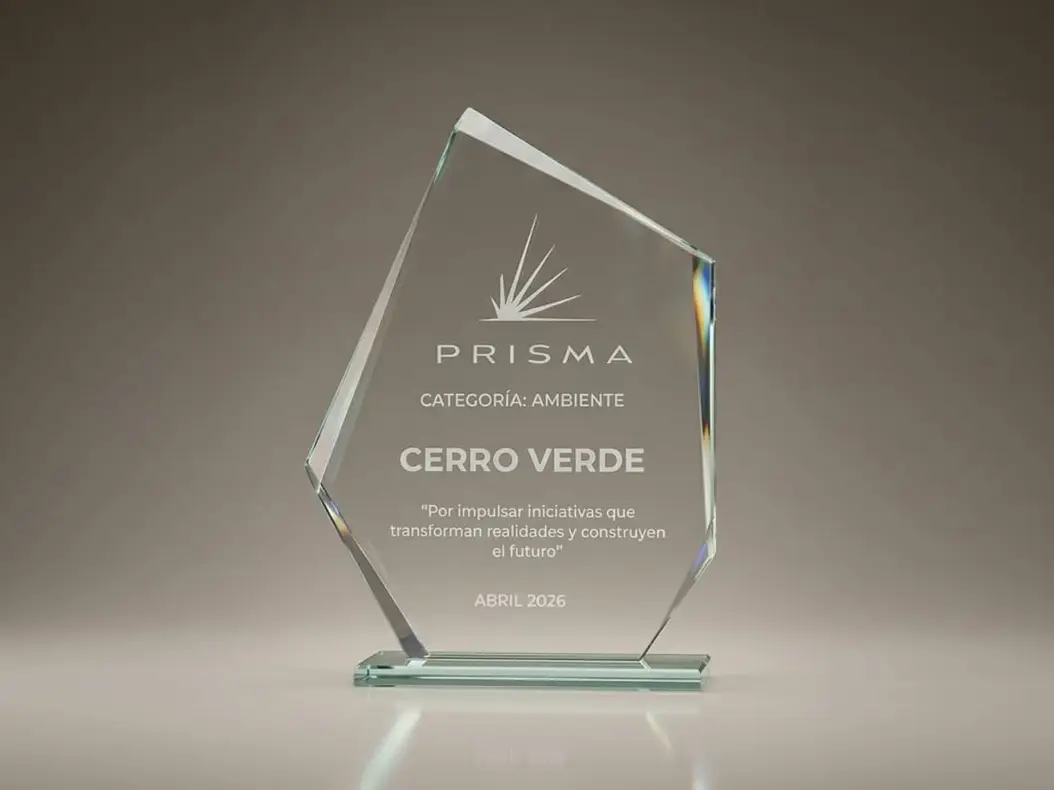
In a significant acknowledgment of corporate social responsibility and environmental stewardship, the Sociedad Minera Cerro Verde has been honored with the prestigious PRISMA Award in the "Environmental Projects" category. This recognition highlights the profound impact of the La Enlozada Wastewater Treatment Plant (PTAR La Enlozada), a facility that has become the cornerstone of water security and environmental restoration in the Arequipa region of Peru.
The PRISMA Awards, organized by the non-profit Asociación Atmosphera, serve as a benchmark for excellence in sustainable development. By evaluating public institutions, private corporations, and civil society organizations, the awards identify initiatives that provide tangible, long-term social value. Cerro Verde’s recognition underscores a shift in how modern mining operations engage with the critical resources of their host communities.
The Genesis of the ‘Virtuous Circle of Water’
To understand the magnitude of the PRISMA award, one must look at the comprehensive strategy Cerro Verde implemented to address the severe water deficit in Arequipa. The PTAR La Enlozada is not an isolated project; it is the crowning achievement of a broader, multi-faceted initiative known as the “Virtuous Circle of Water.”
Chronology of Development
- The Planning Phase: Recognizing that water scarcity was a threat to both regional agriculture and urban health, Cerro Verde initiated a dialogue with regional stakeholders to identify critical infrastructure gaps.
- Expansion of Storage: The initiative began with the co-financing of essential dams—Pillones, Bamputañe, and San José de Uzuña. These reservoirs were designed to capture seasonal runoff, ensuring a steady supply of water during the dry months.
- Potable Water Infrastructure: The construction of the La Tomilla II treatment plant and distribution system marked a turning point for urban access, providing clean, potable water to thousands of residents who previously lacked consistent service.
- Distribution Networks: The project extended into the implementation of robust connection networks in the Cono Norte and Cono Este sectors of Arequipa, integrating marginalized urban areas into the formal water grid.
- The Launch of La Enlozada: The final, and perhaps most vital, link was the commissioning of the La Enlozada plant. This facility was engineered to intercept and treat the sewage discharge that had, for decades, contaminated the Chili River.
Technical Prowess and Environmental Restoration
The PTAR La Enlozada stands as a testament to industrial-scale engineering serving the public good. Before its operation, the Chili River—the lifeline of Arequipa—was subjected to the heavy toll of untreated urban wastewater.
Ecological Impact
The discharge of untreated sewage into the river had decimated native aquatic ecosystems. Since the plant’s inception, the restoration of the Chili River’s biodiversity has been remarkable. Monitoring agencies have reported the return of migratory birds and the resurgence of endemic flora along the riverbanks. This ecological recovery is not merely a symbolic victory; it represents the stabilization of a river basin that sustains the agricultural sector of the region.
Agricultural Transformation
Perhaps the most direct economic benefit of the "Virtuous Circle of Water" is felt by local farmers. Historically, agricultural runoff and the use of polluted river water for irrigation posed significant health risks to consumers and prevented farmers from entering high-value export markets. With the treated water from La Enlozada, farmers in the Chili River valley can now irrigate their crops with high-quality, treated water. This shift has enabled local producers to meet the stringent sanitary requirements for international markets, effectively turning a liability into an economic engine for the region.
Economic Implications and Private Sector Engagement
The scale of this investment is unprecedented. With a total expenditure nearing US$ 700 million, the "Virtuous Circle of Water" stands as the most significant water infrastructure project of the century in the Arequipa region.
A Model of Sustainable Operations
What distinguishes Cerro Verde’s involvement from standard corporate social responsibility is the long-term operational commitment. The mining company covers 100% of the operation and maintenance costs of the La Enlozada plant. By absorbing these costs, Cerro Verde ensures that the burden of high-quality sanitation does not fall on the shoulders of the local population. This prevents an increase in household water tariffs, effectively shielding the community from the financial volatility often associated with large-scale municipal infrastructure.
This model of private-sector participation serves as a blueprint for other regions in Latin America. It demonstrates that when a private entity views itself as an integrated partner of the community rather than an external guest, it can solve systemic urban challenges that governments often struggle to address alone.
The Role of the PRISMA Award
The PRISMA Award is more than just a trophy; it is a validation of the rigorous technical criteria applied by the Asociación Atmosphera. Composed of young, environmentally-conscious professionals with a footprint in Arequipa, Camaná, Islay, and Lima, the association focuses on projects that prioritize sustainability over short-term gains.
By selecting the PTAR La Enlozada, the association has sent a clear message: environmental sustainability in mining is not just about reducing a company’s own footprint; it is about leaving the host territory better than it was found. The judges focused on:
- Sustainability: Does the project provide benefits for the next generation?
- Scalability: Can this model be replicated in other industrial hubs?
- Social Impact: Does the project improve the daily lives of the local population?
Cerro Verde’s project met all three, proving that industrial water management can catalyze regional development.
Future Outlook: Challenges and Opportunities
While the success of the PTAR La Enlozada is undeniable, it also serves as a reminder of the ongoing nature of water security. As climate change continues to impact glacial retreat in the Andes—a primary water source for the region—the infrastructure established by Cerro Verde becomes even more critical.
Strengthening the Infrastructure
Future challenges involve maintaining the efficiency of the "Virtuous Circle" as the population of Arequipa grows. The integration of advanced monitoring technology and potential expansions in the treatment capacity will be necessary to ensure that the water supply remains resilient against extreme weather events.
The Standard for Future Mining
The broader implication of this achievement is the pressure it places on the mining industry to adopt similar standards. Today, stakeholders, investors, and local communities are no longer satisfied with simple donations or one-off charity projects. They demand the kind of structural, foundational change that Cerro Verde has demonstrated. By proving that a mining operation can be a pillar of public health and agricultural development, Cerro Verde has set a high bar for the entire extractive industry in Peru and beyond.
Conclusion
The recognition of Sociedad Minera Cerro Verde with the PRISMA Award is a culmination of years of technical diligence and strategic investment. By transforming the management of water—the most precious resource in the arid landscape of Arequipa—the company has not only secured its own operational license but has also provided a permanent, life-altering benefit to the regional population.
The "Virtuous Circle of Water" remains a shining example of how the synergy between private enterprise, environmental protection, and social well-being can redefine the role of the extractive industry. As the world moves toward a more sustainable future, the lessons learned from the banks of the Chili River and the halls of the La Enlozada plant will undoubtedly continue to resonate. The PRISMA Award is not just a tribute to what has been done; it is an endorsement of a path forward—a path where industry and environment exist in a balance that benefits all of society.