Introduction: A New Paradigm for Rural Energy
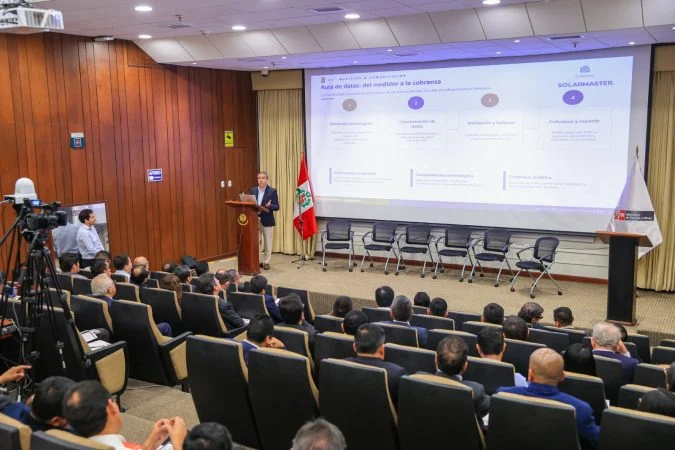
The Peruvian Ministry of Energy and Mines (MINEM), through its General Directorate of Rural Electrification (DGER), has embarked on a pivotal strategic transformation. Recognizing that the traditional model of extending power lines is no longer sufficient for the complex geographical and social landscape of the Andean and Amazonian regions, the government held the National Conversatorio: "Perspectives, Challenges, and Opportunities for Rural Development."
This two-day event, held on May 6 and 7 at the MINEM headquarters, served as the primary forum for gathering expert input to update the National Rural Electrification Plan (PNER). The initiative marks a departure from mere domestic connection targets, signaling an ambitious transition toward an integrated, product-oriented energy policy designed to catalyze economic growth in the country’s most isolated and border territories.
Chronology of the Strategic Shift
The recent workshop is the culmination of months of internal assessment regarding the efficacy of existing rural electrification policies.
- Pre-Event Preparations (Q1 2026): Technical teams from the DGER conducted a diagnostic review of the current PNER, identifying gaps in technological adaptation and maintenance sustainability.
- Day 1 (May 6): The focus centered on the "Technological Horizon." Experts debated the integration of distributed generation, the role of digital modeling in infrastructure planning, and the deployment of microgrids in areas where national grid expansion is physically or economically unviable.
- Day 2 (May 7): The conversation shifted to "Socio-Economic Impact." Stakeholders from public and private sectors evaluated how electricity can move beyond lighting homes to powering agricultural processing, irrigation systems, and small-scale manufacturing in remote communities.
Core Pillars of the Updated PNER
The modernization of the National Rural Electrification Plan rests on four fundamental pillars, which were the subject of rigorous analysis during the ministerial sessions:
1. Beyond Domestic Access: The Productive Focus
Historically, electrification metrics were calculated based on the number of households connected. The new vision flips this metric, prioritizing "productive loads." By providing reliable, high-capacity power to agricultural clusters, the ministry aims to enable cold-chain storage, milling, and irrigation, thereby transforming energy into a driver of regional GDP.
2. Technological Diversification
The reliance on heavy transmission infrastructure is being tempered by a shift toward a hybrid energy mix. Distributed generation—incorporating solar photovoltaic systems, small-scale wind, and hybrid mini-grids—allows for faster deployment in the Amazon basin and high-altitude Andean zones. Digital systems are now being employed to model load demand, ensuring that infrastructure is sized appropriately for both current needs and future industrial expansion.
3. Sustainability and Territorial Management
A significant challenge in rural electrification is the "sustainability trap," where systems fail due to lack of maintenance or community ownership. The updated PNER emphasizes a "territorial approach," which integrates local government participation, community training, and long-term maintenance protocols into the initial project design phase.
4. Institutional Articulation
The Ministry of Energy and Mines has identified that energy policy cannot function in a vacuum. By inviting stakeholders from across the public and private spheres to this national dialogue, the DGER is working to align its infrastructure rollout with other government initiatives, such as rural road development, telecommunications expansion, and water sanitation projects.
Official Perspective: Minister Milko Zacarías on the New Vision
During the inauguration of the event, Deputy Minister of Electricity Milko Zacarías delivered a keynote address that set the tone for the proceedings. His remarks underscored that the government’s approach to energy is no longer just about light, but about opportunity.
"The process of rural electrification in our country is changing," Zacarías stated. "We are no longer simply talking about the expansion of standard transmission lines. We are talking about a complex ecosystem that integrates technological innovation, environmental sustainability, and a deep-seated territorial focus."
Zacarías emphasized that the shift is a direct response to the socio-economic realities of the "Deep Peru." He argued that electricity must act as a bridge to modernize rural economic activity. "We are transitioning from a vision centered on domestic access to a vision of integral development. In this new framework, electricity becomes a primary input for economic activity, fostering better quality of life and creating sustainable livelihoods in the most isolated border regions of our country."
Supporting Data and Technical Challenges
The urgency for this update is underscored by the current state of rural access. While Peru has made significant progress in the last decade, the remaining "last mile" is the most expensive and technically demanding.
The Infrastructure Gap
The geography of Peru presents a unique challenge to engineers. The high-altitude terrain of the Andes requires costly substations, while the dense, dispersed nature of communities in the Amazon makes traditional wire-based electrification prohibitively expensive. This is why the adoption of "Distributed Generation" is a focal point of the current dialogue. By generating power at or near the point of consumption, the state can reduce transmission losses and increase system reliability.
The Digital Transformation of Planning
One of the most significant technical advancements discussed during the conference was the use of Geographic Information Systems (GIS) and big data analytics to update the PNER. By mapping potential economic activity against existing resource availability, the Ministry can prioritize projects that yield the highest socio-economic return on investment (ROI). This "data-first" approach is intended to replace ad-hoc project selection with a rigorous, evidence-based roadmap.
Implications for Rural Populations
The implications of this policy shift for the average rural citizen are profound. For decades, electricity in remote villages was synonymous with a single light bulb and a television. Under the proposed PNER, the goal is to provide "industrial-grade" stability.
Economic Empowerment
When a rural community gains access to reliable electricity, the entire local value chain shifts. Farmers who previously had to sell their harvest immediately to avoid spoilage can now utilize electric refrigeration. Craftsmen can use power tools to increase production volume, and students can benefit from better lighting and internet-connected devices, which are now being integrated into rural educational infrastructure.
Border Integration
A critical, often overlooked aspect of the PNER is the development of border regions. These areas are frequently the most underserved and vulnerable to illicit activities. By providing the energy backbone required for formal commerce, the government is effectively asserting state presence and promoting economic security in strategic border zones.
Moving Forward: The Road to Implementation
The collaborative nature of the May 6-7 conference signals a new era of transparency and inclusivity in ministerial planning. By incorporating the "expert recommendations" gathered during the two-day event, the DGER is expected to release a finalized, updated PNER document later this year.
The next steps for the Ministry involve:
- Refining Technical Regulations: Adapting current energy codes to facilitate the integration of private investment in decentralized rural power grids.
- Resource Allocation: Realigning the national budget to prioritize "productive" energy projects over simple grid extensions.
- Monitoring and Evaluation: Implementing a tracking system to measure the socio-economic impact of new connections, ensuring that the PNER is meeting its goals beyond simple kilowatt-hour delivery.
Conclusion: A Resilient Energy Future
The National Conversatorio on Rural Electrification represents more than just a bureaucratic update; it is a fundamental shift in how the Peruvian state views its responsibility toward the rural poor. By moving from a "provisioning" model to a "developmental" model, the Ministry of Energy and Mines is positioning energy as the catalyst for the next generation of rural prosperity.
As the country continues to navigate the complexities of climate change and economic development, the integration of technology, sustainability, and productive capacity will remain the defining factors of a successful rural energy policy. With the PNER update, Peru is signaling that the future of its heartland is bright—not just because it will have light, but because it will have the power to grow.