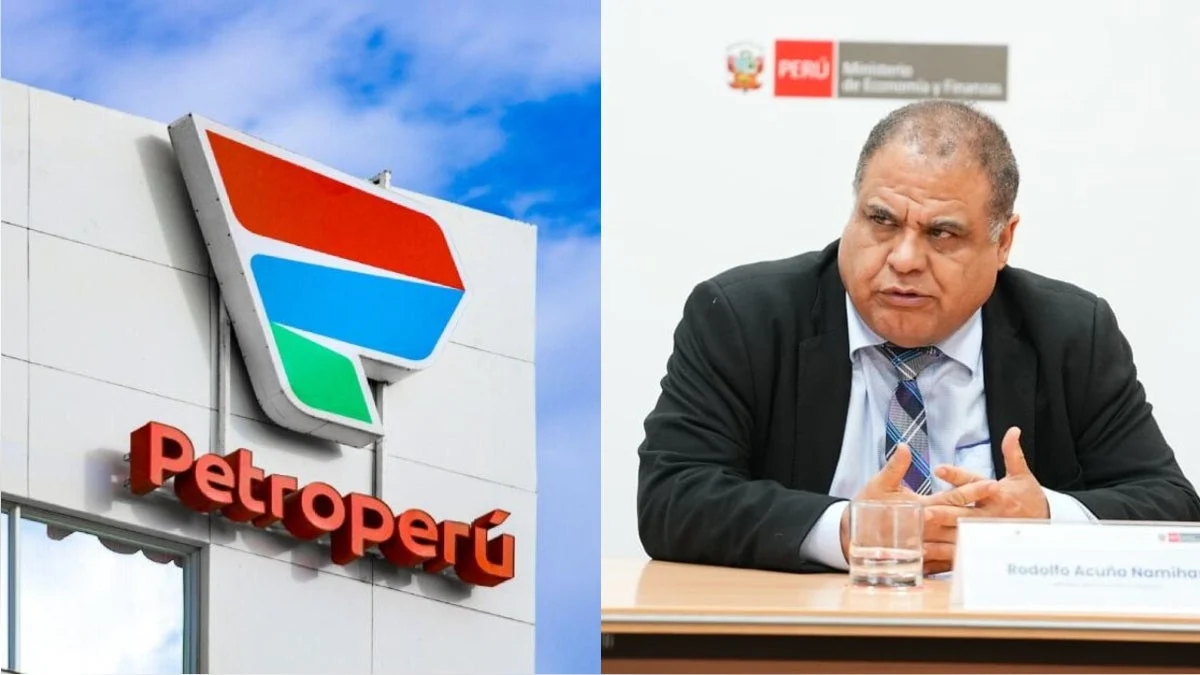
In a decisive move to avert a potential energy crisis, the Peruvian government has enacted an emergency decree authorizing a financial mechanism of up to US$ 2 billion for the state-owned oil company, Petroperú. The measure, designed to stabilize the supply chain of refined fuels, aims to prevent critical shortages, particularly in the Amazon region, where the company provides over 85% of the fuel requirements.
Main Facts: A Strategic Financial Shield
The emergency decree establishes a sophisticated financial structure: a trust fund (fideicomiso) backed by the Ministry of Energy and Mines (Minem) and administered by the Private Investment Promotion Agency (ProInversión). By channeling funds through this dedicated vehicle, the government seeks to bypass the traditional "general fund" approach, ensuring that capital is strictly allocated to purchasing crude oil and operational inputs.
According to the Ministry of Economy and Finance (MEF), the initiative is not a "bailout" in the traditional sense. Instead, it is a conditional liquidity facility designed to ensure that the company maintains its operational continuity amidst volatile global market conditions. With international crude oil prices having breached the US$ 100 per barrel mark, Petroperú’s ability to import and refine fuel had reached a precarious inflection point.
Chronology of the Crisis
The path to this decree has been marked by mounting pressure on the company’s liquidity. Over the last several months, global energy volatility and internal financial obligations created a "perfect storm" for Petroperú.
- Early Q1 2025: Petroperú began signaling that its working capital was being severely eroded by the rising costs of imported crude. Internal reports indicated that without immediate intervention, the supply chain to the Amazon could face severe disruptions as early as May.
- Late Q1 2025: The Ministry of Economy and Finance initiated high-level consultations with private banks to gauge the feasibility of a state-backed financing model.
- Current Week: The Executive Branch officially published the emergency decree, providing the legal framework for the US$ 2 billion facility.
- The 15-Day Outlook: ProInversión has confirmed that the first tranche of US$ 500 million will be mobilized within 15 days to address immediate operational cash-flow needs, with the remainder of the credit line to be activated in subsequent phases.
Supporting Data: The Amazonian Imperative
The government’s primary motivation for the intervention is the protection of the Peruvian Amazon. Economic data highlights that this region suffers from some of the highest poverty rates in the country. Because the Amazon is highly dependent on river and air transport, both of which rely heavily on fuel, any spike in energy prices results in a disproportionate inflationary surge in the cost of basic goods and food.
Minister of Economy and Finance, Rodolfo Acuña, emphasized the social stakes: "The Amazon is a region of high vulnerability. If fuel prices were to skyrocket due to supply chain failures, the resulting inflationary pressure would be catastrophic for the local population. These costs are already high; we cannot allow a supply collapse to drive them further into poverty."
The logistical reality is stark: more than 85% of the refined fuel consumed in the Amazonian departments originates from Petroperú’s refining and distribution network. Ensuring that the company remains solvent is, therefore, framed by the government as a matter of national security and social stability.
Official Responses and Governance
A critical component of this decree is the oversight mechanism. Unlike previous capital injections, the current model removes the discretion of Petroperú’s management over these specific funds. ProInversión, an entity with significant experience in infrastructure project management, will oversee the trust.
"The funds will not enter the ‘common pot’ of Petroperú," Minister Acuña stated firmly. "This is a controlled operation. The bank system is willing to support this because they see that the structure is shielded. We are imposing strict conditions on how every dollar is spent."
Luis del Carpio, the head of ProInversión, added that the repayment structure is designed for long-term sustainability. The facility includes a seven-year grace and repayment period, during which time it is expected that the company will have undergone the necessary internal reforms to return to profitability and eliminate the need for further state support.
Implications for the Energy Sector and Economy
The decision has sparked a robust debate regarding the role of the state in the oil sector. However, the government insists that the move protects public resources. By leveraging the trust fund, the MEF expects that the debt will not impact other areas of the national budget, such as rural electrification or social programs.
1. Market Stability and Banking Confidence
The fact that private financial institutions are participating in this credit line suggests a level of confidence in the specific structure of the trust fund. Banks, typically wary of state-owned entities with volatile balance sheets, have reportedly signaled their willingness to participate because the repayment is secured by the state and managed by a third party, mitigating the credit risk of the company itself.
2. Inflationary Control
By ensuring a steady supply of fuel, the government is effectively putting a ceiling on potential transport-led inflation in the country’s most isolated regions. This is a crucial move to maintain the recent, albeit fragile, economic recovery that has seen poverty rates begin to stabilize after the post-pandemic slump.
3. Long-term Reform
The "no-bailout" narrative is essential for the government. Ministers have made it clear that this is a bridge to operational stability, not a permanent subsidy. The underlying expectation is that Petroperú must use this breathing room to optimize its refining processes and reduce its debt profile. Failure to do so would likely lead to much harsher austerity measures within the state company in the coming years.
Conclusion: A Balancing Act
The government’s decision to provide a $2 billion credit facility is a high-stakes balancing act. On one hand, it prevents a humanitarian and economic crisis in the Amazon; on the other, it increases the state’s exposure to the risks of the global oil market.
As the first $500 million is readied for disbursement, the focus will now shift to the execution phase. The success of this policy will be measured not just by the ability to keep the lights on and the boats running in the jungle, but by the transparency and efficiency with which ProInversión manages the funds. For the administration, the goal is clear: to ensure that the energy sector remains a pillar of national development rather than a drain on the public treasury. The coming months will be the ultimate test of whether this "special mechanism" can successfully transition Petroperú toward a more sustainable and fiscally responsible future.