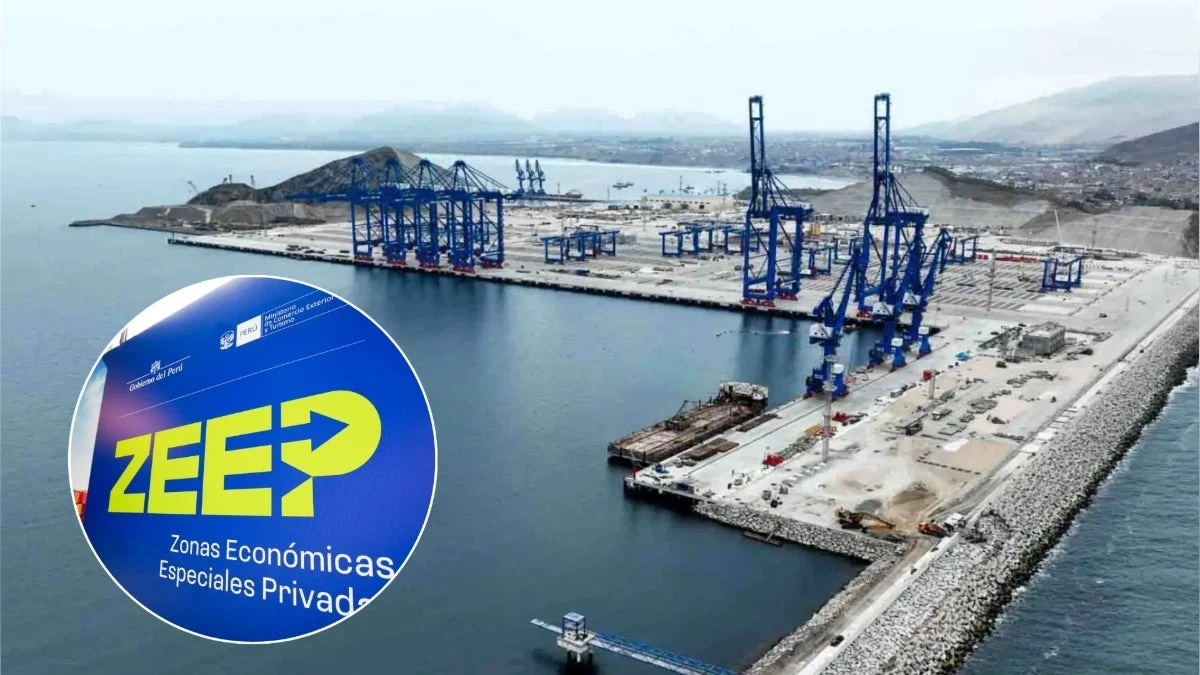
Peru has officially embarked on a transformative economic journey with the publication of the regulations for the Law on Private Special Economic Zones (ZEEP). This legislative milestone marks a decisive shift in the nation’s industrial strategy, aiming to decentralize production, boost export competitiveness, and solidify Peru’s position as a premier logistics hub for the South Pacific. By incentivizing the development of specialized industrial corridors, the government seeks to bridge the gap between Peru’s vast natural resource potential and its ambitions for value-added industrialization.
The Strategic Vision: From Callao-Chancay to a Global Hub
The core objective of the ZEEP framework is to leverage the recent expansion of Peru’s port infrastructure—most notably the Port of Chancay—to integrate the nation more deeply into the global supply chain. As the Minister of Foreign Trade and Tourism (Mincetur), Úrsula Desilú León Chempén (represented in official policy by Minister José Reyes Llanos), emphasized, the goal is to transform Peru into the logistical and industrial heart of the South American Pacific.
This initiative is not merely about creating isolated parks; it is about creating interconnected ecosystems. The government has identified regions with high, medium-high, and medium-low potential to host these zones. Lima, Callao, and Arequipa currently lead the list as high-probability candidates for rapid implementation, while Moquegua, La Libertad, and Piura are being positioned as critical secondary hubs.
Chronology: The Road to Regulatory Implementation
The path to the current regulatory framework has been characterized by intense dialogue between the public sector and industry stakeholders.
- Initial Legislative Push: The government identified a need for a modern, private-led ZEEP model to replace outdated, underperforming industrial regimes.
- Consultation Phase: Mincetur collaborated extensively with the National Society of Industries (SNI) to ensure that the regulation would meet the practical needs of private investors.
- The Chancay Factor: The rise of the Callao-Chancay axis became the focal point of the discourse, with industry leaders pushing for this area to serve as the "pilot project" for the ZEEP model.
- Official Promulgation: In May 2026, the executive branch officially published the regulatory decree, setting the stage for private investment applications.
- The Current Pendency: While the structural and operational regulations are in place, the business community remains in a "wait-and-see" mode regarding the specific tax incentives, which are currently being drafted by the Ministry of Economy and Finance (MEF).
Regional Specialization: A Multi-Corridor Strategy
Industry leaders, led by Felipe James, President of the SNI, have proposed a vision that transcends simple manufacturing. The strategy envisions distinct regional corridors that capitalize on local comparative advantages:
The Northern Agro-Industrial Corridor
Leveraging the success of irrigation projects in regions like La Libertad and Piura, this zone aims to move beyond raw agricultural exports. By creating specialized processing hubs within ZEEPs, the goal is to export high-value, processed food products directly to Asian and North American markets.
The Southern Mining-Industrial Cluster
Arequipa and its neighbors are primed to host a cluster that focuses on the mining supply chain. This would involve localizing the manufacturing of machinery, chemical reagents, and technological services that are currently imported, thereby retaining more capital within the Peruvian economy.
The Amazonian and Bioceanic Links
Looking toward the interior, the government is exploring logistical spaces that connect the Amazon basin to the Bioceanic corridor with Brazil. This represents a long-term strategic play to capture the transit of goods between the Atlantic and Pacific oceans, a feat that could redefine the logistical geography of the continent.
Requirements and Operational Framework
For private operators, the barrier to entry has been clearly defined. The regulation mandates that any proposed ZEEP must occupy a minimum of 90 hectares, ensuring that these projects have the scale necessary to host complex industrial ecosystems.
However, the government has shown flexibility regarding the Callao region. Given the extreme scarcity of industrial land in the country’s most vital port area, a specific exception to the 90-hectare rule will be applied, allowing for smaller, high-density industrial clusters.
The Application Process
- Project Presentation: Private operators must submit comprehensive proposals detailing their impact on employment generation, infrastructural connectivity, and territorial development.
- Technical Evaluation: Projects will undergo a rigorous vetting process by Mincetur to ensure they align with the national industrial strategy.
- Legislative Approval: Unlike previous models, the creation of these zones will require an individual law for each project, ensuring a high level of transparency and parliamentary oversight.
Official Responses and Industry Sentiment
The business community has expressed cautious optimism. Felipe James of the SNI has been vocal about the need for "logical progression." He argues that starting with the Callao-Chancay axis is the most secure way to build investor confidence. "Let us start with what is logical and secure," James stated, "and then expand the development to other areas linked to the broader logistics corridors."
From the perspective of the government, the focus remains on the "Three Pillars of Success": legal stability, administrative agility, and modern infrastructure. Minister Reyes Llanos emphasized that the government is fully committed to reducing the bureaucratic friction that has traditionally hampered large-scale investments in Peru.
The Missing Link: The MEF’s Tax Mandate
Despite the excitement surrounding the regulations, the most critical piece of the puzzle remains missing: the specific tax incentive package. The MEF is currently tasked with drafting a supplementary norm that will define the fiscal benefits for companies operating within these zones.
For the ZEEPs to be competitive against regional rivals like Chile or Panama, the fiscal regime must be highly attractive. Investors are looking for long-term certainty—specifically regarding income tax exemptions, VAT exemptions for imports, and stable labor regulations—for at least a 25-year horizon. The business sector expects this norm to be finalized swiftly to prevent the momentum gained from the publication of the regulation from dissipating.
Implications for the Future of Peru
The implementation of the ZEEP law signals a fundamental change in the Peruvian economic model. For decades, the country has been criticized for being a provider of raw materials with limited domestic industrial capacity.
Economic Decentralization
By providing incentives to operate outside of the Lima metropolitan area, the ZEEPs offer a path toward true regional development. This could mitigate the social pressures caused by urban overcrowding and create high-quality employment opportunities in regions that have historically been left behind.
Global Competitiveness
As global trade shifts increasingly toward the Asia-Pacific, Peru is positioning itself as a vital gateway. The success of these zones will determine whether Peru becomes a true "hub" or remains merely a "transshipment point."
Challenges Ahead
Success is not guaranteed. The government must ensure that the ZEEPs are not used as tax shelters but as engines of productivity. This will require:
- Infrastructure Synergy: Aligning ZEEP locations with planned highway and railway expansions.
- Human Capital: Investing in vocational and technical training to ensure the local workforce can handle the advanced industrial requirements of these zones.
- Institutional Strength: Preventing corruption in the designation of zones and ensuring that the "individual law" requirement does not become a bottleneck for legitimate investors.
Conclusion
The unveiling of the Private Special Economic Zones regulation is a bold step into the future of Peruvian industry. By focusing on regional clusters, integrating logistical hubs with production centers, and prioritizing the Callao-Chancay corridor, the government is laying the groundwork for a more diversified and robust economy.
The next few months will be crucial. As the MEF prepares the final tax incentive package, the eyes of both domestic and international investors will be fixed on Peru. If the incentives are robust and the regulatory implementation remains transparent, these zones have the potential to turn Peru’s geographic advantage into an enduring economic legacy, fostering a new generation of industrial growth that benefits not just the capital, but the entire nation.