By International Business Desk
As Peru positions itself to regain momentum in global capital markets, the spotlight has turned sharply toward its state-owned oil giant, Petroperú. Amidst ongoing efforts to stabilize the company’s precarious financial standing, international bondholders are demanding definitive proof that the Peruvian government’s proposed reforms will result in a sustainable, well-governed entity capable of honoring its long-term debt obligations.
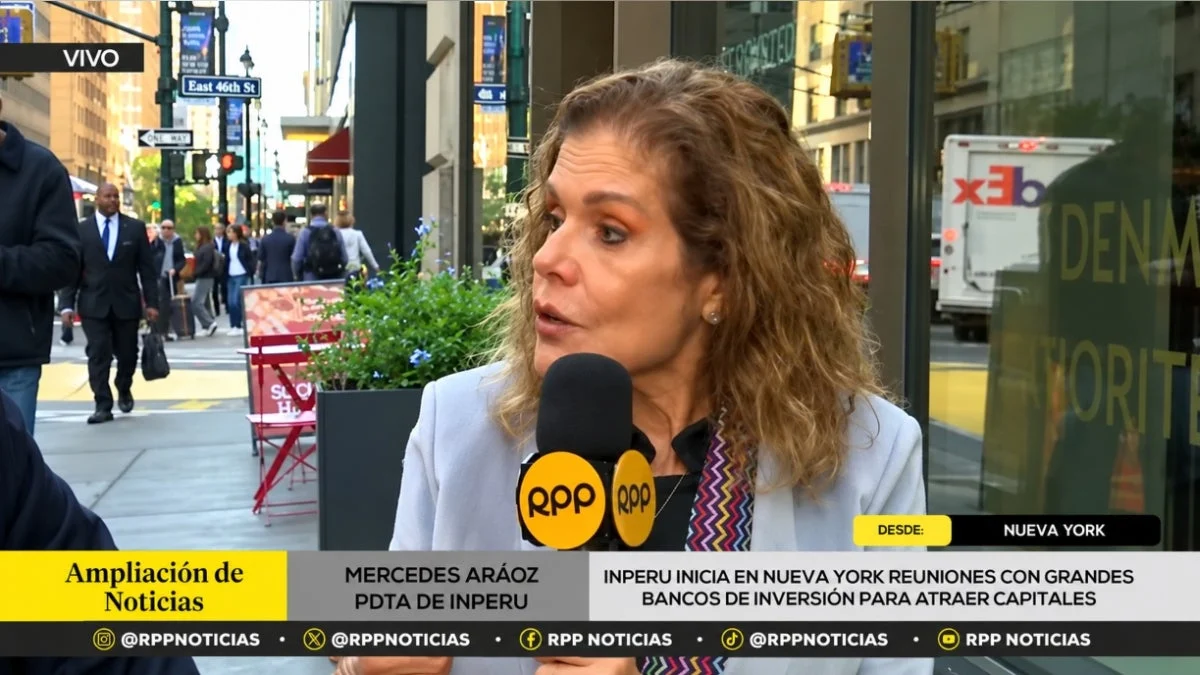
Mercedes Aráoz, former Minister of Economy and current President of InPerú—the association tasked with promoting the Andean nation as a premier destination for foreign investment—has underscored the gravity of these negotiations. Speaking from the sidelines of the XIX InPerú Roadshow in New York, Aráoz emphasized that the "wait-and-see" approach currently adopted by international investors is contingent upon the transparency and efficacy of the state’s governance overhaul.
The Core Conflict: Transparency vs. Uncertainty
The relationship between Petroperú and its global creditors has been strained by years of operational volatility and fiscal instability. For bondholders, who represent the backbone of the company’s external financing, the primary concern is not merely the current deficit, but the structural integrity of the company’s management moving forward.
According to Aráoz, the message from the investor community in New York is clear: they are looking for "certainty." This term, often used in financial circles, refers to a concrete roadmap that ensures the company will no longer be subject to the political interference or administrative mismanagement that has historically plagued its balance sheet.
"The bondholders are seeking clarity regarding the reforms the Peruvian State is implementing to ensure a clear improvement in the governance and management of Petroperú," Aráoz stated during her interview with RPP. She noted that these guarantees are the fundamental prerequisite for any continued financial commitment. If the state cannot provide a compelling narrative of corporate renewal, the cost of future financing could become prohibitive, further destabilizing the company.
A Chronology of the Crisis and Intervention
To understand the current impasse, one must look at the recent trajectory of Petroperú’s financial health:
- 2023-2024 (The Liquidity Crunch): Petroperú faced significant cash-flow challenges, exacerbated by the delayed operationalization of the Talara Refinery and global fuel price volatility.
- Early 2025 (Regulatory Intervention): Recognizing the existential threat posed by the company’s debt load, the government enacted Decreto de Urgencia N.° 010-2025. This decree effectively transferred the responsibility for the company’s restructuring to ProInversión, the agency for private investment promotion.
- Mid-2025 (Bridge Financing): To keep operations running, the state secured a bridge loan of US$ 475 million. This was designed as a stop-gap measure to provide the company with the liquidity necessary to function while long-term debt solutions were negotiated.
- Late 2025 (The International Roadshow): The current push in New York, led by the Ministry of Economy and Finance (MEF) and the Central Reserve Bank of Peru (BCRP), marks a critical juncture in seeking a broader financial restructuring of up to US$ 2 billion, involving major global financial institutions like JPMorgan and Citibank.
The "Privatization" Misconception
One of the most sensitive aspects of the restructuring process has been the political narrative surrounding it. In Peru, the word "privatization" often triggers intense social and political debate. Aráoz was categorical in dismissing these fears, framing the government’s actions as a professionalization rather than a divestment of public assets.
"This does not mean privatization—which is what some seek to use as a scare tactic—but rather a comprehensive restructuring of the system and the management of the Peruvian oil company," Aráoz clarified. "We want a healthy company that is fully capable of meeting its fiduciary duties to our bondholders."
This distinction is vital for the current administration. By framing the reform as a "modernization of governance," the government hopes to appease market skeptics without triggering a populist backlash. The goal is to move Petroperú toward a model of corporate governance that mirrors private sector standards, ensuring that management decisions are based on technical and financial viability rather than political expediency.
Supporting Data and Financial Strategy
The restructuring plan is not a vague promise but a structured financial operation. The involvement of top-tier global banks—JPMorgan, Citibank, and others—signifies that the process is being handled with technical rigor.
The US$ 2 billion financing scheme, currently in negotiation, is intended to consolidate the company’s debt and provide the working capital necessary to maximize the output of the Talara Refinery. The success of this operation relies heavily on the "creditworthiness" of the entity. Currently, the company’s debt is viewed as high-risk, which explains the heightened scrutiny from bondholders.
Furthermore, the participation of Minister of Economy Elmer Cuba and Central Bank President Julio Velarde in the New York Roadshow sends a strong signal of institutional commitment. By presenting a united front, the Peruvian government is attempting to reassure investors that Petroperú’s financial recovery is a national priority, supported by the highest levels of the country’s economic leadership.
Implications for the Peruvian Economy
The implications of this restructuring extend far beyond the energy sector. Petroperú is a cornerstone of the nation’s infrastructure and energy security. A failure to stabilize the company would have severe ripple effects on the Peruvian sovereign credit rating, potentially increasing the cost of borrowing for the entire nation.
- Sovereign Risk: If Petroperú defaults or requires frequent, massive bailouts, it creates a "fiscal hole" that threatens the government’s deficit targets.
- Investment Climate: As Aráoz noted, the InPerú Roadshow is about more than just one company; it is about restoring trust in the Peruvian market. If international investors see that the government can successfully reform a complex state-owned enterprise, it bolsters confidence in the country’s regulatory environment.
- Energy Security: A restructured, efficient Petroperú is essential for the transition of the Peruvian energy matrix, ensuring that the country has a reliable supply of fuel to support industrial and transport activities.
Looking Ahead: The Path to Stability
As the XIX InPerú Roadshow concludes, the pressure shifts back to Lima. The government must now deliver on the promises made in New York. The bondholders are not just looking for a press release; they are looking for actionable changes in the board of directors, the implementation of independent oversight, and a transparent audit trail of the company’s financial obligations.
The strategy, as outlined by Aráoz and her colleagues, is to transform Petroperú into an entity that serves the state’s energy needs without becoming a perpetual drain on the national treasury. Whether the current administration can bridge the gap between political rhetoric and fiscal reality remains the defining question for the Peruvian economy in the coming year.
For now, the dialogue in New York remains open. The presence of global financial giants at the negotiating table is a positive sign, suggesting that there is still appetite for Peruvian risk, provided that the government adheres to the rigorous path of reform it has laid out. The road to financial recovery for Petroperú is narrow and fraught with challenges, but the commitment of the current leadership to engage with global markets is a necessary first step toward restoring credibility.