Introduction: A High-Stakes Investigation
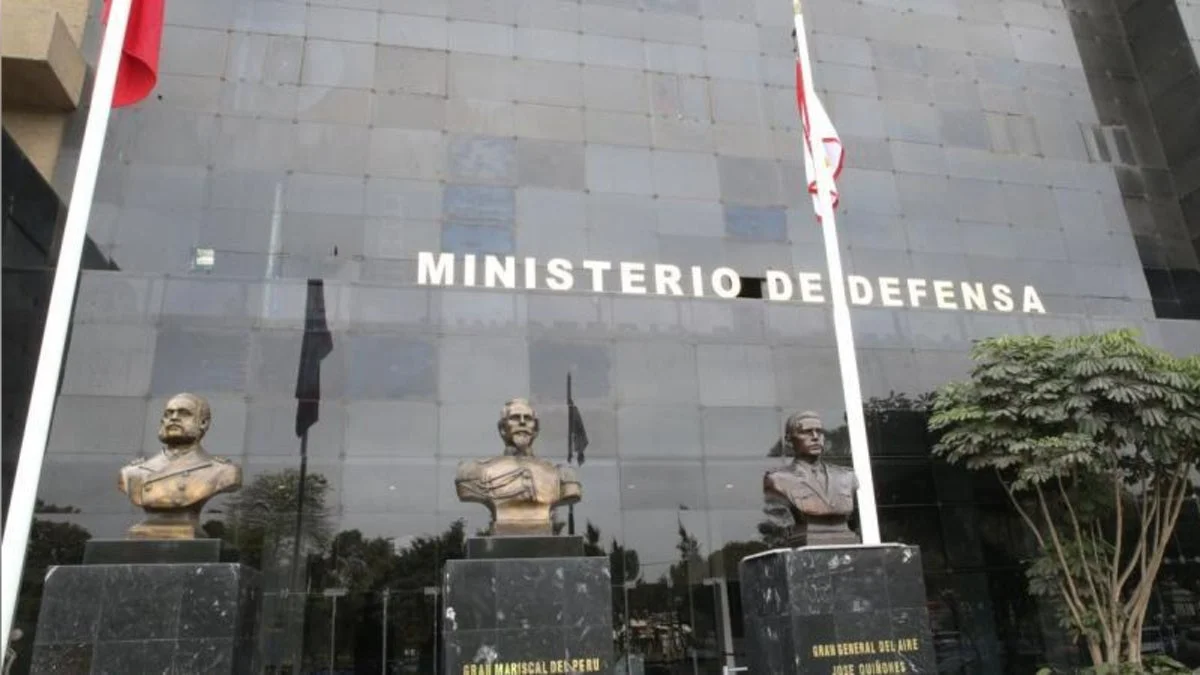
The stability of the Peruvian Ministry of Defense (Mindef) has been thrown into question following a sweeping investigative report by the news program Cuarto Poder. At the center of the controversy is Maritza Manturano Castro, the current Chief of the Cabinet of Advisors at the Ministry of Defense. According to allegations brought forth by the Public Prosecutor’s Office, Manturano is currently under investigation for her alleged role as the mastermind behind a criminal organization—dubbed "The Ghost Servers of Emilima"—that operated during her tenure as General Manager of the Municipal Real Estate Company of Lima (Emilima S.A.).
The charges, which include aggravated collusion and the formation of a criminal network, suggest a systemic abuse of public funds. As the investigation deepens, the involvement of high-ranking officials and the potential diversion of public resources have sparked a national debate regarding administrative integrity and the vetting processes for top-tier government appointments.
The Core Allegations: Deconstructing the ‘Ghost’ Network
The prosecution’s theory posits that Manturano Castro utilized her position at Emilima, an entity tasked with managing public assets in Lima, to facilitate a large-scale embezzlement scheme. Accessing the role in 2019, Manturano is accused of leading a cohort of subordinate officials in a sophisticated operation designed to siphon state funds through fraudulent procurement contracts.
The Modus Operandi
According to the Fiscalía, the organization functioned by awarding over 200 service contracts to individuals who, in reality, performed no work for the municipal entity. These "ghost" providers served as conduits for illicit funds. Once Emilima processed payments for these non-existent services, the funds—minus tax deductions—were funneled back through a complex web of intermediaries to the leadership of the organization.
The prosecution’s case relies heavily on the testimony of aspiring effective collaborators—individuals within the network who have chosen to cooperate with authorities in exchange for leniency. These collaborators have provided an arsenal of digital evidence, including chat logs and audio recordings, that paint a damning picture of a structured, intentional, and persistent criminal enterprise.
Chronology of the Scandal
- 2019: Maritza Manturano Castro assumes the position of General Manager of Emilima S.A.
- 2019–2022 (Period of alleged criminal activity): The period during which the Fiscalía alleges that over 200 fraudulent service orders were generated and approved under Manturano’s administration.
- 2023: A crucial conversation is recorded between Manturano and her co-investigados, Andrés Diez Tochiki and Fernando Rojas Barrera, in which the coordination of false testimonies is discussed.
- Present Day: Maritza Manturano serves as the Chief of the Cabinet of Advisors at the Ministry of Defense, despite the ongoing criminal investigation.
Supporting Data: The Evidence Trail
The strength of the prosecution’s case lies in the specific, granular detail of the financial irregularities. The investigation has highlighted that 22 distinct service providers were paid for work that never materialized.
The Case of Cynthia Cavero González
One specific instance cited in the prosecution’s files involves Cynthia Daphne Cavero González. Evidence suggests that Cavero was contracted through the mediation of Yazmín Sevilla Nieto, a personal friend of Manturano Castro. The flow of funds was reportedly precise: Emilima paid the invoice, the funds were sent to Sevilla Nieto, who then purportedly delivered the illicit gains directly to Manturano. This "triangular" payment structure is a hallmark of money laundering and collusion cases in the region.
The "Smoking Gun" Audios
Perhaps the most damaging piece of evidence is the set of audio recordings from 2023. In a conversation regarding how to respond to potential legal scrutiny, the suspects discuss the "TDR" (Terms of Reference) as a script for their defense.
In the transcript provided to the media, Fernando Rojas Barrera openly admits, "In my case, I didn’t do anything… I didn’t connect, I didn’t do anything." When he expresses fear about how to explain his lack of work to authorities, Manturano allegedly instructs him to stick to the fabricated version of events: "What we are going to provide you is exactly the same… [the service] was for the Operations Management, the name will be there, the activities will be there because we have the TDR." This instruction constitutes a significant piece of evidence pointing toward the obstruction of justice.
Political Ties and Institutional Implications
The scandal is further complicated by Manturano’s political affiliations and professional history. She is an active member of the Libertad Popular party. More significantly, her professional trajectory is closely linked to the current Minister of Defense, Rafael Belaunde Llosa.
Public records indicate that Manturano served as an authorized representative (apoderada) for four private corporations owned by Minister Belaunde Llosa:
- Belaunde Llosa S.A.C.
- Corporación Belaunde S.A.C.
- Inmobiliaria El Sol Tumbes II S.A.C.
- Inmobiliaria Ferymar S.A.C.
This pre-existing business relationship has led critics to question the transparency of the appointment process at the Ministry of Defense. The presence of a high-ranking official under investigation for criminal activity within the nation’s security cabinet raises profound questions about potential conflicts of interest and the criteria used to select advisors for sensitive government positions.
Official Responses and Public Reaction
As of this writing, there has been no definitive statement from the Ministry of Defense regarding the potential removal or suspension of Manturano Castro. The silence from the Ministry has been interpreted by many in the Peruvian press and political sphere as a sign of institutional weakness or complicity.
The Public Prosecutor’s Office continues to build its case, signaling that the investigation is far from over. Meanwhile, the legal defense for the accused has not yet provided a comprehensive public rebuttal, focusing instead on the procedural aspects of the case.
Implications for Public Governance in Peru
The case of Maritza Manturano is more than just a localized corruption scandal; it is a symptom of a broader malaise in public administration. Several key issues arise from this investigation:
1. The Vulnerability of State Enterprises
Emilima S.A. is just one of many municipal entities across Peru that serve as potential "black boxes" for corruption. The use of "ghost providers" is a low-tech, high-reward strategy that exploits weaknesses in bureaucratic oversight and procurement audits.
2. The Crisis of Confidence
When individuals facing serious criminal charges remain in high-level government positions, public trust in the integrity of state institutions erodes. The Ministry of Defense, responsible for the national security apparatus, requires a leadership team beyond reproach. The current situation places the Ministry in a position where its internal decisions may be viewed through the lens of personal favors rather than public duty.
3. The Role of Investigative Journalism
This scandal highlights the critical role of independent media in a healthy democracy. Without the work of Cuarto Poder and their access to whistleblowers and digital evidence, the "Ghost Servers of Emilima" scheme might have remained undetected, allowing for the continued drainage of public resources.
4. The Path Forward
For the Peruvian justice system, this case represents a litmus test. Can the prosecution successfully navigate the complex web of political and business ties to secure justice? Or will the case be stalled by legal maneuvers and administrative delays?
The eyes of the public are now firmly fixed on the Ministry of Defense. As the investigation progresses, the government will face increasing pressure to provide transparency, hold those involved accountable, and reform the appointment processes that allowed such a controversial figure to attain a position of such high influence.
The "Ghost Servers" are no longer invisible; they are now the focus of a national investigation that could have far-reaching consequences for the political future of all involved. The necessity for a thorough, impartial, and rapid resolution is paramount to ensuring that public funds are protected and that the sanctity of the Ministry of Defense is upheld against the tide of corruption.