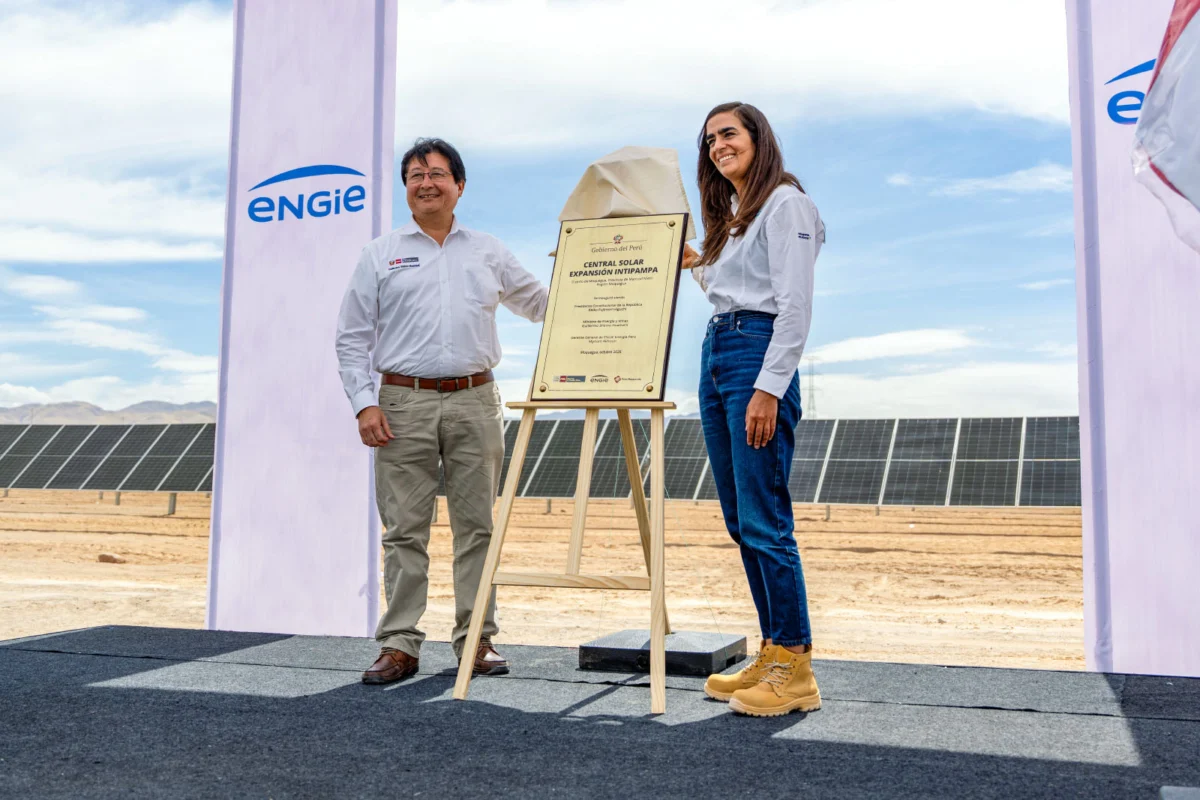
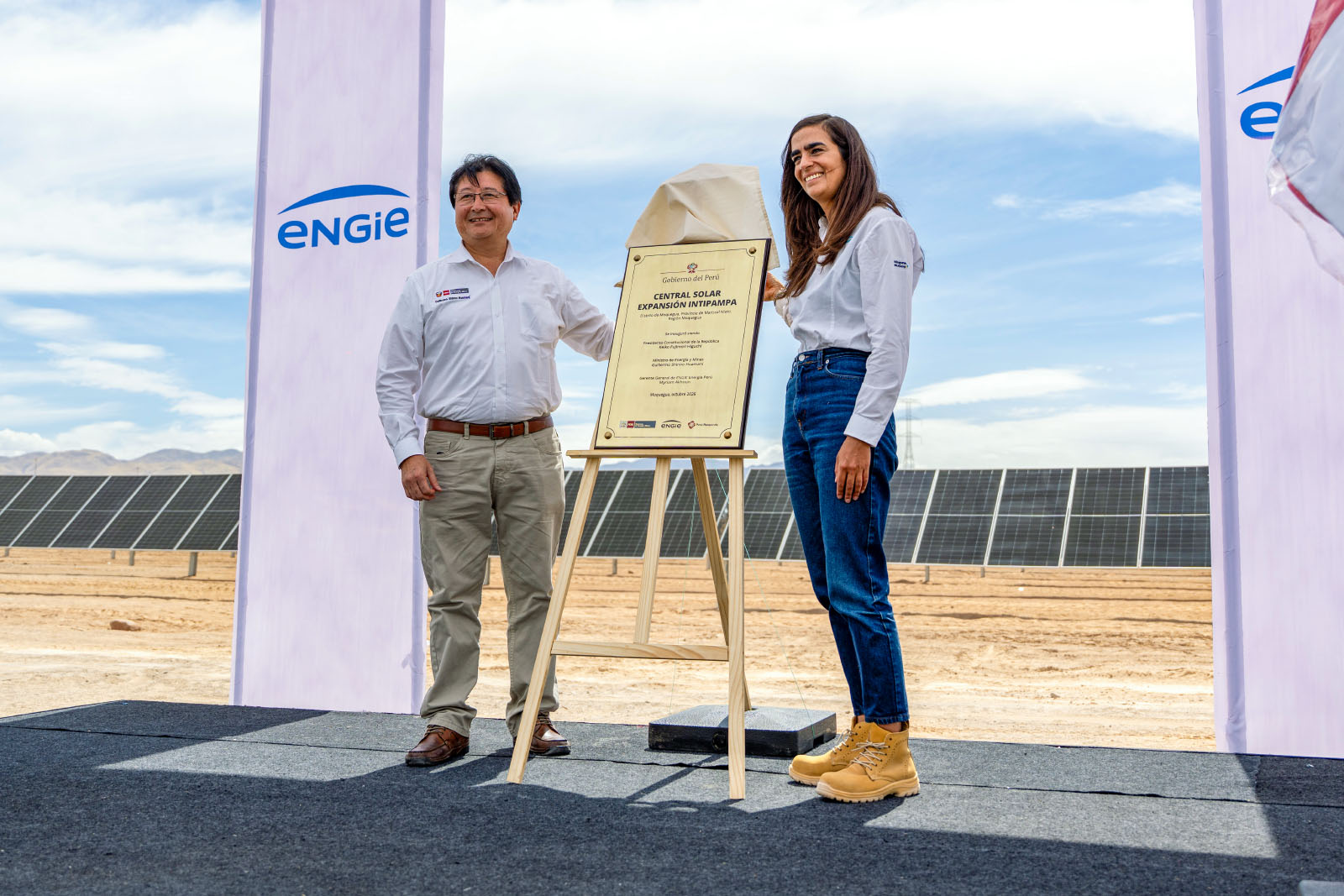
The energy landscape in Peru has reached a significant milestone. In a strategic move to bolster the nation’s electrical grid and advance the transition toward sustainable power, the Ministry of Energy and Mines (MINEM) and ENGIE Energía Perú have officially inaugurated the Central Solar Expansión Intipampa in the Moquegua region. This facility, which adds 51.7 MW of 100% renewable energy to the national system, represents more than just a technical achievement; it is a clear signal of Peru’s commitment to meeting the growing demand of its southern provinces with clean, reliable, and efficient energy sources.
The Inauguration: A New Chapter for Southern Peru
During an official visit to the site, the Minister of Energy and Mines, Guillermo Shinno Huamaní, oversaw the unveiling of the expansion project. The facility, a testament to modern engineering, comprises more than 88,000 high-efficiency photovoltaic panels. By integrating this new capacity with the existing Intipampa Solar Central, the complex has effectively doubled its footprint, reaching a total installed capacity of 91.7 MW.
This expansion is pivotal for the southern region of Peru, an area characterized by significant industrial activity and a rapidly expanding population. The injection of 51.7 MW of clean energy not only stabilizes the local power supply but also reduces the region’s reliance on fossil-fuel-based generation, aligning Peru with global decarbonization goals.
Chronology of Development: From Concept to Current Capacity
The path to the current capacity at Intipampa has been marked by meticulous planning and a phased approach to investment.
- Initial Phase: The original Intipampa Solar Central served as the foundation, proving the viability of large-scale solar power in the arid, high-irradiation climate of Moquegua.
- Expansion Phase (2026): ENGIE Energía Perú moved forward with the expansion, identifying the site’s potential for scaling. The addition of 51.7 MW confirms the efficacy of the site’s topography and solar exposure.
- Future Pipeline: The success of this expansion has paved the way for the next major project in the company’s portfolio: the Hanaqpampa Solar Central.
This iterative approach—starting with a pilot or initial phase and scaling up based on demand and operational data—is characteristic of ENGIE’s strategy in the Latin American market. It minimizes operational risk while allowing for the incorporation of the latest photovoltaic technology as it becomes available.
Hanaqpampa: The Next Frontier in Renewable Generation
The inauguration of the expansion was not merely a look back at what has been achieved; it was the stage for announcing the next ambitious project: the Hanaqpampa Solar Central. Also located in the Moquegua region, this project is set to eclipse the current facility in both scale and output.
Project Specifications for Hanaqpampa:
- Total Capacity: 140.8 MW.
- Infrastructure: Over 200,000 photovoltaic panels.
- Investment: Exceeding US$127 million.
- Timeline: Scheduled for the commencement of commercial operations in the first quarter of 2028.
Hanaqpampa is positioned to be a cornerstone of Peru’s future energy security. Its massive scale requires a significant logistical undertaking, which the company expects will stimulate the regional economy. Beyond the generation figures, the project is a driver of employment. Construction is expected to generate upwards of 400 jobs, with a clear mandate to prioritize local labor, thereby integrating the local community into the value chain of the green energy transition.
Supporting Data: Economic and Social Impact
The transition to renewables is often debated through the lens of technical feasibility and cost. However, the data surrounding ENGIE’s operations in Peru highlights a broader socioeconomic impact.
Employment and Economic Dynamization
The commitment to hiring locally is a cornerstone of ENGIE’s social license to operate. By prioritizing regional workers, the project ensures that the economic benefits of the investment are not merely exported but are felt in the households and local businesses of Moquegua. The influx of 400+ jobs provides a direct boost to local service providers, from construction material suppliers to hospitality and transport services.
Environmental and Social Governance (ESG)
In the modern energy sector, technical success is insufficient without social harmony. The developers have committed to:
- Transparent Dialogue: Maintaining a constant communication loop with regional authorities and local communities to address concerns before they become impediments.
- Equity and Inclusion: Implementing high standards for gender equality in the workforce, ensuring that the opportunities created by the energy transition are accessible to all demographics within the region.
- Safety: Adhering to international safety standards, ensuring the wellbeing of the workforce throughout the construction and operational phases of the project.
ENGIE’s Broader Strategy: Beyond Solar
While solar energy is currently taking center stage in Moquegua, ENGIE’s footprint in Peru is far more expansive. With 29 years of history in the country, the company has evolved from a traditional generator to a key partner in national infrastructure.
The Transmission Backbone
Power generation is only half of the equation; the ability to move that power across the rugged Peruvian terrain is equally critical. ENGIE has aggressively pursued projects in electrical transmission, recognizing that the "grid of the future" must be robust and interconnected.
- ProInversión Projects: In July of this year, ENGIE was awarded four significant transmission projects under the Public-Private Partnership (APP) model. These projects are designed to benefit 1.6 million citizens across Piura, Lambayeque, Junín, and Ayacucho, involving the construction of over 400 km of new transmission lines.
- Strategic Growth: Building on this momentum, in 2025, the company secured three contracts under the Group 4 of the 2023-2032 Transmission Plan. This addition of 170 km of lines in Ancash, Junín, and Ucayali serves to reinforce the reliability of the national interconnected system.
Implications for the Peruvian Energy Market
The developments in Moquegua and the broader transmission initiatives have several critical implications for the Peruvian economy.
1. Diversification of the Energy Matrix
Peru has historically relied heavily on hydroelectric power and natural gas. While both have served the country well, the vulnerability of hydroelectric plants to climate change and the finite nature of natural gas make diversification imperative. Solar energy provides a predictable, clean, and increasingly cost-effective alternative.
2. Attracting Foreign Investment
The fact that a global player like ENGIE continues to pour hundreds of millions of dollars into Peruvian infrastructure signals confidence in the nation’s regulatory framework. As the world seeks stable jurisdictions for green energy investments, Peru’s proactive stance in promoting solar and transmission projects makes it an attractive destination for global capital.
3. Industrial Competitiveness
For the mining and manufacturing sectors, which are the engines of the Peruvian economy, access to reliable and affordable power is a competitive necessity. As the cost of renewable energy continues to drop, the integration of solar power helps lower the long-term energy costs for industrial consumers, indirectly bolstering the nation’s export competitiveness.
Conclusion: A Sustainable Trajectory
The inauguration of the Central Solar Expansión Intipampa and the announcement of Hanaqpampa represent a watershed moment for Peru. By marrying large-scale infrastructure with a commitment to social responsibility and gender equity, the Ministry of Energy and Mines and ENGIE are setting a benchmark for how renewable energy projects should be executed.
As we look toward 2028 and the operationalization of Hanaqpampa, it is clear that the future of Peru’s energy sector is bright—quite literally. With a balanced portfolio of solar generation and critical transmission infrastructure, Peru is not only meeting the energy demands of today but is also laying the groundwork for a resilient, sustainable, and prosperous energy future for all its citizens.
The collaborative effort between the state and private enterprise serves as a replicable model. By focusing on regional needs, environmental stewardship, and long-term infrastructure planning, Peru is successfully navigating the transition to a low-carbon economy, proving that economic development and environmental responsibility are not mutually exclusive, but are, in fact, the twin pillars of progress.