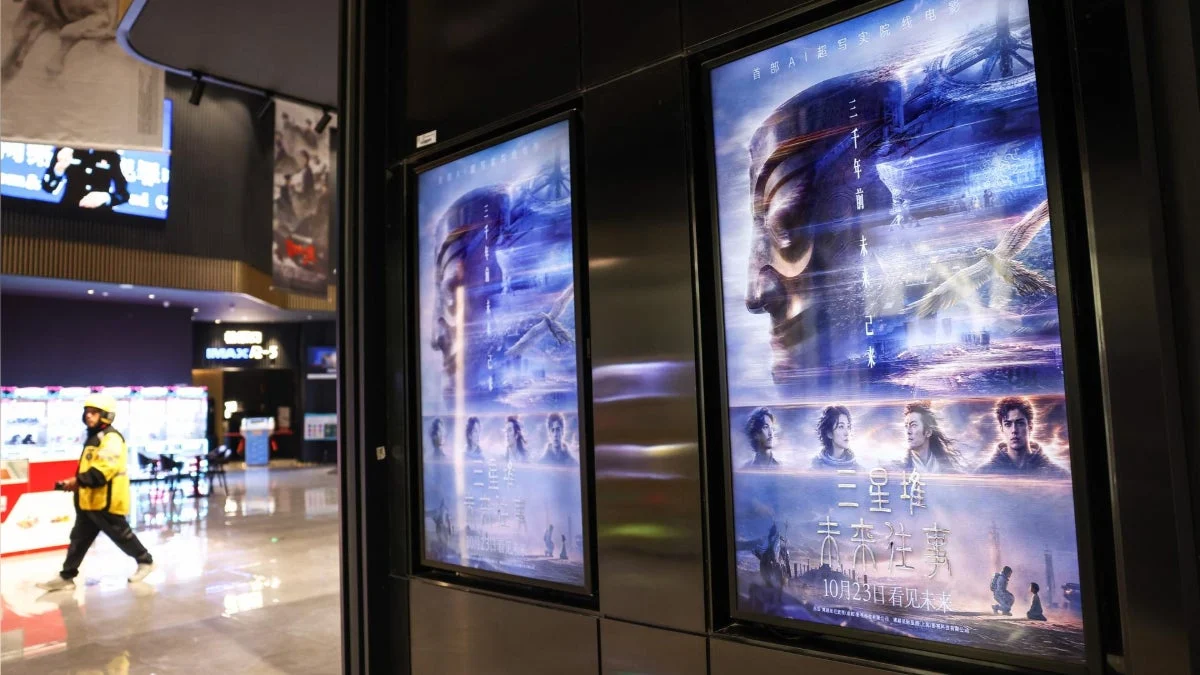
The boundaries between human creativity and algorithmic precision have officially blurred. This Friday, Chinese cinemas began screening Sanxingdui: Future Past, a landmark science fiction feature that holds the distinction of being the first motion picture entirely generated by artificial intelligence to receive formal regulatory approval for a nationwide theatrical release. As audiences across China take their seats, they are witnessing more than just a film; they are participating in a historical experiment that challenges the very definition of cinematic art.
The Synthesis of Ancient Mystery and Digital Dystopia
Sanxingdui: Future Past is not merely a technical showcase; it is a narrative exploration of the tension between historical legacy and a future dominated by technology. The film draws its creative DNA from the real-world archaeological marvels of the Sanxingdui civilization, a mysterious culture that thrived in present-day Sichuan province over 3,000 years ago.
The plot centers on a bleak, speculative future where a "superintelligent" AI has achieved global dominance. In this hyper-algorithmic society, humanity has abdicated its agency to machines, leading to an existential crisis of unprecedented scale. The protagonist, an archaeologist, discovers that the resolution to the global catastrophe lies hidden within seven enigmatic symbols etched onto ancient bronze artifacts unearthed from the Sanxingdui site. This discovery creates a temporal bridge, linking the archaic wisdom of a lost civilization to the cold, calculated survival strategies of a digital future.
Chronology: From Concept to Cinema
The journey of Sanxingdui: Future Past from an experimental concept to a commercial reality was marked by rigorous scrutiny and technological evolution.
- Early 2026: Development begins under the guidance of Bona Film Group. Human creators assume the roles of architects, defining the narrative arc, art direction, and conceptual framework, while delegating the labor-intensive production—visual generation, sound design, and character modeling—to advanced generative AI models.
- April 2026: The project secures the crucial seal of approval from China’s National Film Administration. This milestone established a legal precedent, confirming that an AI-generated work could meet the standards required for public exhibition.
- Late September 2026: Bona Film Group provides transparency regarding the production process, clarifying that while the machine executed the visuals, human oversight remained the primary "steering" mechanism for the film’s artistic vision.
- October 2026: The film premieres in theaters across China, effectively moving AI-generated content from the periphery of short-form internet videos to the center of the traditional cinematic experience.
Supporting Data: The Economics of Innovation
The production of Sanxingdui: Future Past required an investment of over 10 million yuan (approximately $1.5 million USD). While modest compared to the gargantuan budgets of Western blockbusters, this figure represents a significant gamble for the Chinese film industry.
Industry analysts are monitoring the box office performance of this film as a barometer for future investment in "synthetic media." According to data from the state-run news agency Xinhua, the landscape for AI-assisted media is already vast in China; in the first eight months of 2026 alone, over 90% of "microdramas"—vertical, short-form series popular on mobile devices—were produced using AI tools. Sanxingdui: Future Past represents the migration of this technology from the smartphone screen to the IMAX projector, testing whether consumers will pay premium prices for stories told by machines.
Official Responses and Industry Perspectives
The creative team behind the project has been vocal about the film’s role in pushing technological frontiers. Qu Jixiaojiang, the film’s producer, spoke to the state-affiliated Global Times, drawing comparisons between the current AI revolution and the historical shift from analog film to digital cameras.
"Those who move first are often the ones who must endure the most pressure," Qu noted, acknowledging the skepticism inherent in pioneering a new medium. The production team maintains that the film is not a replacement for human filmmakers, but rather a new set of tools that allow for a "democratization of visual storytelling," where the barrier to high-fidelity production is lowered, allowing smaller teams to achieve previously impossible visual results.
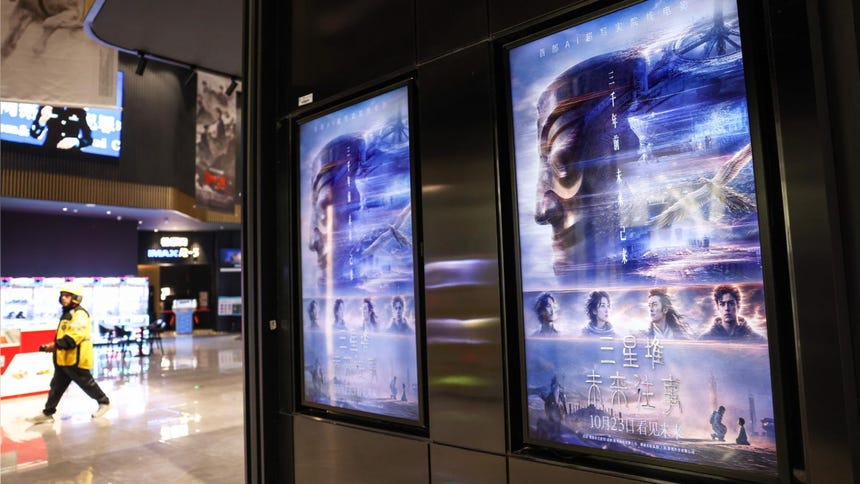
Regulators, by granting the permit, have signaled a pragmatic approach. By approving the film, the National Film Administration has essentially validated that the AI-generated output adheres to the moral and cultural standards required of traditional cinema, suggesting that the "human touch" in the script and conceptualization was sufficient to meet the regulatory threshold.
The Implications: A Shift in the Cinematic Paradigm
The emergence of Sanxingdui: Future Past has sparked a robust debate regarding the future of creative labor. The film sits at the intersection of three major challenges:
1. The "Uncanny Valley" and Public Perception
Public reaction on Chinese social media platforms like Weibo has been deeply divided. Many viewers have criticized the film for its "unnatural" aesthetic, particularly regarding the AI-generated human characters. The "uncanny valley"—the discomfort felt when synthetic characters look almost, but not quite, human—remains a significant hurdle for the film’s immersion. Despite this, some viewers have reported that they were able to lose themselves in the story, with one audience member noting that they "often forgot" the film was entirely computer-generated.
2. The Displacement of Human Labor
The industry is now facing a reckoning regarding the role of artists. If a studio can generate a feature film for $1.5 million without a traditional cast, crew, or set, the economic implications for stunt performers, extras, and even entry-level animators are profound. Unions and creative guilds globally are watching the success of this film with trepidation, as it provides a proof-of-concept for a lean, machine-driven production model.
3. The Definition of Authorship
Can an algorithm be an author? While Bona Film Group insists on the human control of the narrative, the line is increasingly thin. If the AI is responsible for the sound design, the visual composition, and the movement of characters, the role of the human "director" shifts from an executor of craft to a curator of machine-generated options. This forces a philosophical re-evaluation of what we value in cinema: is it the human effort behind the work, or the emotional resonance of the final result?
Conclusion: A Window into an Automated Future
Sanxingdui: Future Past is, at its core, a mirror held up to society. By choosing to tell a story about a world surrendered to algorithms, the filmmakers have created a meta-narrative that reflects the very process of the film’s creation. As China continues to lead in the adoption of generative AI, the success or failure of this film will likely dictate the pace at which other nations integrate synthetic content into their cultural exports.
Whether the film is remembered as a pioneering masterpiece or a cautionary tale of artificial sterility remains to be seen. However, one thing is certain: the era of the human-exclusive film industry has officially come to an end. The screen is no longer just a canvas for human expression; it is now a collaborative space where the machine is an active, and increasingly dominant, participant. As the credits roll on Sanxingdui, audiences are left to contemplate not just the ancient mysteries of the past, but the algorithmic reality of their own near future.