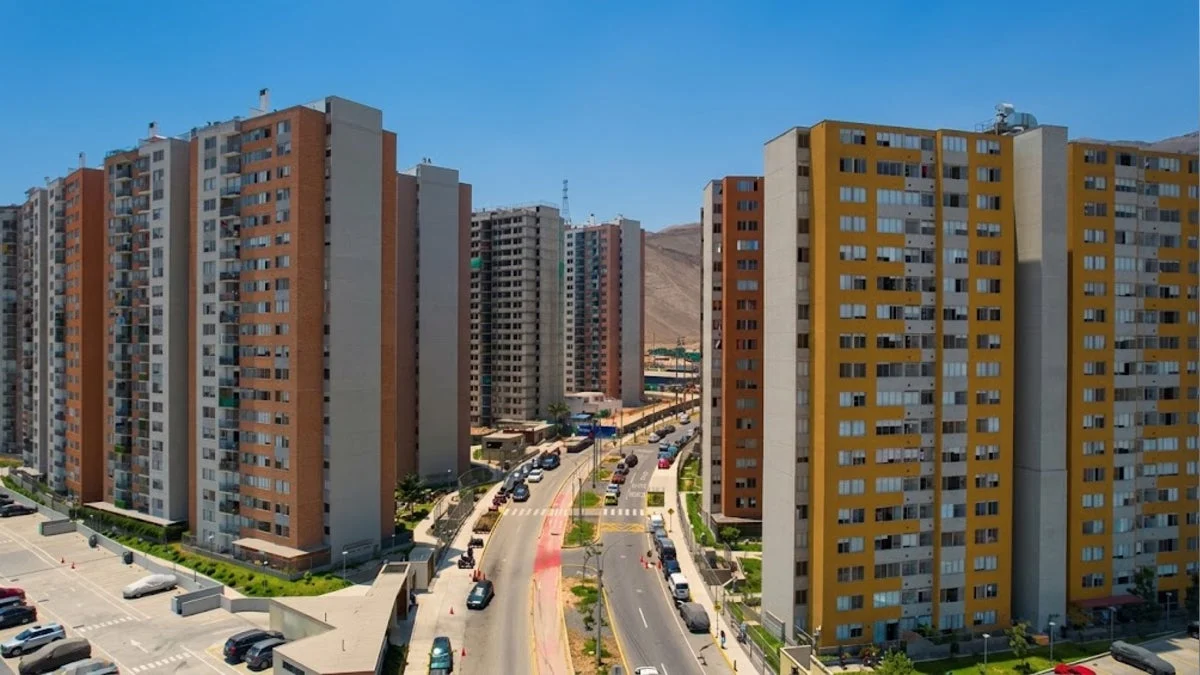
The Peruvian housing sector stands at a precarious crossroads. As the nation grapples with an ambitious, albeit contested, governmental goal of constructing 1.2 million new homes over the current five-year term, the engine powering this vision—state-funded housing subsidies—is rapidly running out of fuel. Guido Valdivia, Vice President of the Peruvian Chamber of Construction (Capeco), has issued a stark warning: the available budget for these essential subsidies is projected to be exhausted by the end of September 2026.
This impending budgetary cliff is not merely a fiscal technicality; it represents a profound threat to the aspirations of thousands of Peruvian families seeking formal housing. With only S/289 million remaining from an initial allocation of S/1.202 billion, the industry is sounding the alarm, questioning the government’s commitment to its own social and economic targets.
A Chronology of Declining Support
To understand the current crisis, one must analyze the recent trajectory of housing budget allocations. The decline in state support has been both swift and systematic.
- 2025 Fiscal Year: The sector received approximately S/1.5 billion in state funding, providing a robust, albeit insufficient, foundation for housing development.
- Early 2026: The government allocated S/1.202 billion for housing subsidies. This figure represents a 16.5% decrease compared to the previous year, signaling a tightening of the fiscal belt that the industry believes is premature and counterproductive.
- July 2026: Data from Capeco indicates that S/913 million—or 76% of the year’s total budget—has already been disbursed.
- September 2026 (Projected): Industry experts expect the remaining S/289 million to be fully exhausted, leaving the sector without state-backed support for the final quarter of the year.
- 2027 Outlook: The proposed budget for the upcoming year is estimated to fall below S/600 million, a drastic reduction that Capeco argues will render the government’s 1.2 million home target mathematically impossible to achieve.
Supporting Data: The Disconnect Between Demand and Funding
The severity of the situation is compounded by a shift in market dynamics. While mortgage credits have reached their highest annual performance in five years, the demand is heavily skewed toward "Range 5" housing—properties of higher value that do not qualify for the social housing subsidies provided by the state.
Consequently, the families who rely most heavily on government assistance—those in lower-income brackets—are being squeezed out of the formal market. Capeco notes that while the construction industry is showing signs of vitality in the luxury and high-end segments, the "social" segment is suffering from a lack of state liquidity.
"The subsidies have a 100% execution rate," Valdivia explained. "They spend everything that is allocated to them. If the government wants to optimize public investment, this is the sector where it performs best. There is an immense, unaddressed demand."
The Policy Vacuum: Where is the "Housing" Agenda?
Perhaps the most significant source of friction between the private sector and the administration of President Keiko Fujimori is the conspicuous absence of housing in the government’s official rhetoric. Despite the explicit inclusion of ambitious construction targets in the administration’s five-year plan, these objectives have failed to permeate the executive’s public discourse.
Capeco officials have expressed profound frustration that neither the President’s inaugural address nor the presentation of Prime Minister Luis Galarreta before Congress made substantive mention of housing policy. This "discursive silence" creates a sense of uncertainty among developers, banks, and prospective homeowners.
"It is in the plan, yes—we have analyzed it—but it is not in the speech, and it is not in reality," Valdivia stated. The concern is that the current administration is prioritizing fiscal austerity over the social necessity of housing, effectively stalling a sector that typically acts as a major driver of national employment and economic formalization.
Implications: The "AFP of the Poor"
The consequences of this budgetary drought extend far beyond the construction sites. Capeco frames the issue as a fundamental matter of economic justice and formalization. In a country where a significant portion of the workforce operates in the informal economy, a home serves as more than just shelter; it is a vital financial asset.
1. The Pathway to Formalization
Valdivia argues that the most effective way to integrate citizens into the formal economy is through homeownership. "It is easier to turn an informal worker into an owner of a formal home than it is to turn them into a beneficiary of a formal job," he remarked. By facilitating access to formal housing, the state creates a pathway for citizens to register property, pay taxes, and engage with the formal banking system.
2. Housing as a Pension Substitute
In the absence of robust pension systems for the informal sector, a family’s home acts as their primary store of wealth—their "AFP" (Private Pension Fund). It provides a safety net, a source of equity for small business investment, and a legacy for future generations. Reducing subsidies essentially strips lower-income families of their primary mechanism for long-term wealth accumulation.
3. Tax Revenue and Economic Impact
The transition from informal self-construction to formal, regulated housing development is a direct contributor to the national treasury. Every formal housing project generates tax revenue, stimulates local supply chains, and improves urban planning standards. By neglecting this sector, the government is not only failing to meet social goals but is also suppressing a potential source of long-term tax revenue.
A Call for Fiscal Rectification
As the debate over the 2027 national budget intensifies, Capeco is urging the government to treat the housing crisis as a national priority. While the window for adjustment is closing, the Chamber remains hopeful that the legislature will recognize the dangers of the proposed budget cuts.
The argument presented by the construction sector is clear: The 1.2 million home goal cannot be realized through private capital alone. It requires a predictable, sustained, and sufficient state subsidy policy. If the current budget trend continues, the government risks presiding over a housing deficit that will worsen year after year, leaving millions of Peruvians to rely on informal, high-risk construction.
"We cannot pretend to reach the goals of this Government plan if we do not change this," Valdivia concluded. The ball is now in the court of the executive and legislative branches to decide whether to prioritize the fundamental right to housing or to accept a contraction in the sector that will be felt by the most vulnerable segments of the population for years to come.
As September approaches, the industry watches with bated breath, waiting to see if the government will act to refill the coffers of the housing subsidy programs or if the sector will face a long, stagnant winter of reduced activity and broken promises.