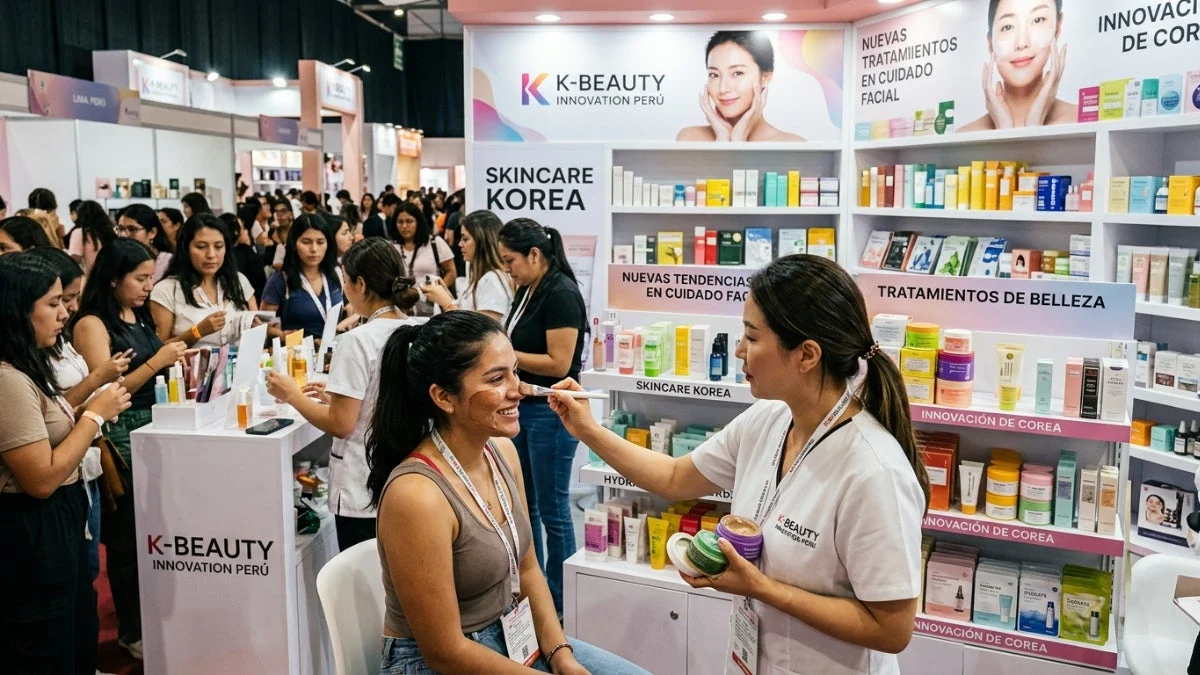
The Peruvian beauty and personal care landscape is undergoing a profound transformation. According to the latest report from the Peruvian Committee of Cosmetics and Hygiene (Copecoh), the first half of 2026 has marked a pivotal shift in the market’s composition, characterized by an aggressive influx of Asian brands, a pivot toward specialized facial treatments, and a permanent structural change in how consumers purchase their self-care products.
Main Facts: A Shift Toward the East
During the first six months of 2026, the Peruvian market welcomed 70 new companies. While this figure is slightly lower than the 80 entrants recorded during the same period in 2025, the strategic focus of these newcomers is markedly different.
The most striking development is the dominance of Asian influence. An impressive 58% of the new firms entering the Peruvian market hail from Asia, with South Korea, Japan, Malaysia, Singapore, and China leading the charge. In contrast, European brands accounted for 20% of new market entries, while North American companies represented 13%.
This influx is not indiscriminate; it is highly targeted. Nearly half (46%) of these new market participants are focusing their portfolios on facial treatment products—a significant leap from the 27% share recorded just a year prior. This data underscores a consumer base that is increasingly sophisticated, driven by the global "K-Beauty" (Korean Beauty) phenomenon that emphasizes skin health and specialized dermatological care.
A Chronology of Market Evolution
To understand the current state of the industry, one must look at the recent trajectory of the Peruvian beauty sector:
- 2011–2015: The "Direct Sales Era." Nearly 60% of all beauty transactions in Peru were conducted through catalog sales and independent representatives.
- 2020–2024: The Digital Pivot. The combination of the global pandemic and the expansion of retail infrastructure in Lima led to a diversification of sales channels.
- 2025: A year of high-volume entry. The market saw 80 new companies enter, setting a record for competitive saturation.
- 2026 (H1): The "Asian Consolidation." Asian companies solidified their presence, with facial care becoming the primary battleground for market share. The industry reached a milestone of approximately 400,000 distinct product presentations available to the Peruvian consumer.
Supporting Data: The Anatomy of a S/10 Billion Industry
The Peruvian beauty and personal care market is a juggernaut, generating approximately US$3 billion (roughly S/10 billion) in annual revenue. The first half of 2026 witnessed a healthy 8% growth, signaling resilience despite broader economic headwinds.
Performance by Category
The growth is not uniform across all segments. Hair care has emerged as the clear leader, boasting a 12% growth rate. Sun protection follows closely with a 10% increase, reflecting a growing public awareness of dermatological health. Fragrances, makeup, and body treatments have maintained a steady 8% growth, while facial treatment and personal hygiene—despite being high-volume sectors—grew by 5%.
Investment Profiles
The barriers to entry in this sector remain relatively low for new players. The data from Copecoh reveals a "lean entry" strategy among the 70 new companies:
- 85% of entrants: Invested less than US$100,000 to launch their operations in Peru.
- 15% of entrants: Invested between US$100,000 and US$1 million.
- 0% of entrants: Invested more than US$1 million, suggesting that companies are testing the Peruvian waters with smaller, agile capital deployments rather than massive, high-risk infrastructure investments.
Official Perspectives: The View from Copecoh
Ángel Acevedo, president of Copecoh, provided key insights into the concentration of these new firms. "The majority are coming from Asia. Korea, Japan, Malaysia, Singapore, and China are the countries entering Peru, particularly in Lima," Acevedo noted. "They haven’t reached the provinces with the same strength yet, but their strategy is clear: they are focusing fundamentally on facial treatments."
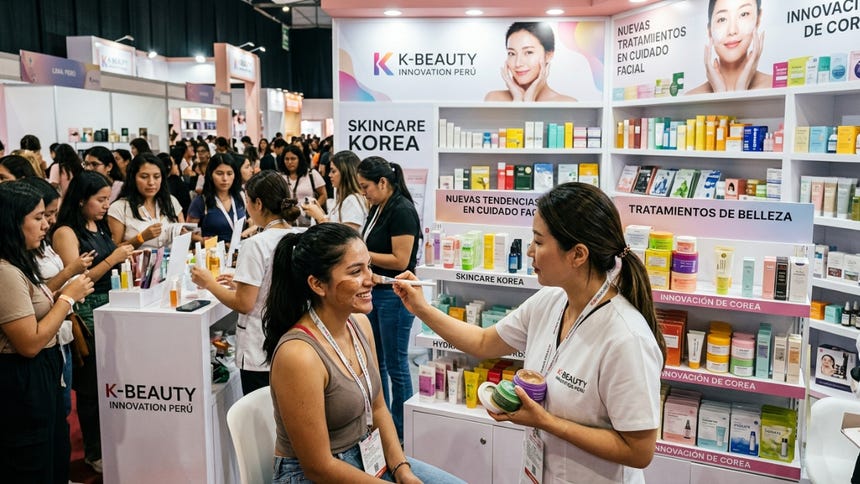
Acevedo highlights that the trend is not just about the number of companies, but the weight of their products. Korean products, in particular, now constitute roughly 10% of the facial treatment market and 6% of the sun protection market in Peru. This represents a significant displacement of traditional Western brands that have long dominated the shelves.
Furthermore, the industry is witnessing a high "churn rate" or innovation cycle. According to Copecoh, 30% of the sector’s total revenue now comes from products that were introduced to the market within the last year. With 500 new products hitting the shelves in the first half of 2026 alone, the competition for consumer attention has never been fiercer.
Implications for the Future
The shifting tides in the Peruvian beauty market suggest three major long-term implications:
1. The Decline of Direct Sales
Perhaps the most significant structural change is the erosion of the direct sales model. Once the backbone of the industry, direct sales have dropped from a 60% market share fifteen years ago to approximately 43% today. This is being replaced by physical retail in shopping malls and, increasingly, specialized e-commerce platforms. The accessibility of credit and the rise of modern retail formats are effectively modernizing the way Peruvians shop for beauty.
2. The Rise of the Male Consumer
The industry is no longer exclusively targeting women. Ten years ago, men accounted for only 5% of the market; today, that figure has tripled to 15%. This demographic shift is fueling a surge in demand for men’s grooming products, ranging from specialized hair care to skin treatments and fragrances. Brands that fail to adapt their marketing to include the male segment are effectively ignoring one of the fastest-growing demographics in the country.
3. Economic and Environmental Risks
Despite the optimistic growth projection of 8% for the remainder of 2026, the industry faces external threats. Copecoh warns that the potential impacts of the "El Niño" climate phenomenon, persistent inflation, and the intensifying "price wars" between the 70 new entrants could compress profit margins.
As the market becomes more crowded, the battle for shelf space and consumer loyalty will likely lead to aggressive promotional pricing. For the Peruvian consumer, this is a golden age of variety and affordability. For the established brands, however, the "Asian Invasion" represents a call to innovate or risk being left behind in a rapidly evolving, globally connected retail environment.
Conclusion
The data from the first half of 2026 paints a picture of a dynamic, internationalized, and increasingly specialized beauty market in Peru. With Asian firms setting the pace in facial care and the male consumer becoming a force to be reckoned with, the industry is moving away from its traditional reliance on catalog sales and toward a diverse, retail-driven future. As 2026 progresses, all eyes will be on how legacy brands respond to these agile, innovation-driven newcomers.