Executive Summary: A Nation at the Mercy of Global Volatility
The Peruvian government, through the Ministry of Energy and Mines (Minem), is moving to declare a formal state of emergency in the national fuel marketing sector. This drastic measure comes as a direct response to the crippling surge in fuel prices, which have seen hikes of up to 78% in recent months, placing an immense burden on both individual consumers and the critical transport sector.
The root of this economic instability lies in a combination of geopolitical tensions in the Middle East and a structural, historical reliance on imported crude oil. With global markets in turmoil and the cost of maritime insurance and transport soaring, the Peruvian administration is seeking to categorize essential fuels—specifically Diesel B5, various gasolines, gasoholes, and Liquefied Petroleum Gas (LPG)—as "essential goods." By doing so, the government aims to curb speculative pricing practices and ensure the continuity of the national energy supply.
Chronology of the Crisis: From Stability to Escalation
To understand the current economic pressure, one must look at the recent timeline of the global energy landscape. Before the most recent geopolitical escalations, the price of a barrel of oil hovered between US$ 60 and US$ 65, providing a relatively predictable baseline for the Peruvian economy.
However, the situation shifted dramatically following the escalation of tensions in the Strait of Hormuz, a critical maritime choke point for global oil transport. The disruption caused by this conflict, coupled with increased insurance premiums for tankers, created a perfect storm for net-importing nations like Peru.
The domestic impact was immediate and severe:
- February to May: The price of Diesel B5 surged from S/ 8.32 to S/ 14.18 per gallon, a staggering 70% increase.
- Gasoline/Gasohol: Prices rose from S/ 7.07 to S/ 12.50 per gallon, marking a peak increase of 78%.
- LPG: The fuel most commonly used by households and taxi drivers saw a 43% hike.
While the international price of a barrel recently showed a slight downward trend, fluctuating from US$ 104 to US$ 97, the government remains cautious. Officials have expressed hope that this cooling of global prices will offer relief, but they insist that structural reforms are necessary to prevent future shocks of this magnitude.
Supporting Data: The Anatomy of Peru’s Energy Dependence
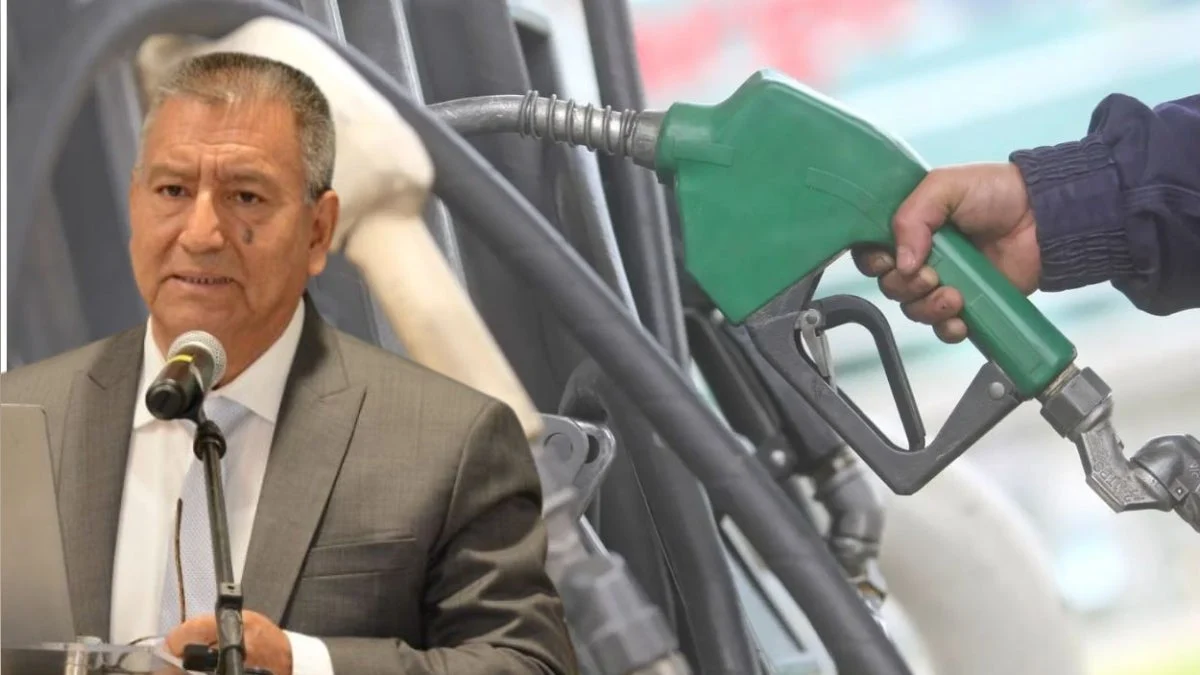
During a recent appearance before the Congressional Consumer Protection Commission, the Vice Minister of Hydrocarbons, Marco Erick Agama Rodríguez, provided a sobering look at Peru’s energy self-sufficiency.
The Production-Consumption Gap
Peru consumes approximately 240,000 barrels of oil equivalent per day. However, domestic production remains alarmingly low, oscillating between only 42,000 and 45,000 barrels per day. This leaves a deficit of nearly 200,000 barrels that must be filled through imports.
Private vs. State Operations
The current production landscape is dominated by private entities, which operate over 90% of the country’s oil lots under government concessions. Conversely, the state-run Petroperú contributes only about 5,000 barrels daily to the total output.
The Talara Refinery Factor
The modernization of the Talara Refinery was touted as a solution to reduce import reliance. While the refinery has the technical capacity to process up to 95,000 barrels per day, operational constraints currently limit its throughput to approximately 60,000 barrels. This underutilization highlights the infrastructure challenges that keep Peru tethered to the whims of the international market.
Official Responses and Regulatory Strategy
The Ministry of Energy and Mines (Minem) has clarified that under the current Organic Law of Hydrocarbons, the Peruvian market operates under a free supply and demand scheme. This means the State does not traditionally set fuel prices. However, the severity of the current crisis has necessitated a pivot in policy.
The Proposed Emergency Decree
The government is finalizing a Supreme Decree that will shift regulatory oversight to the Presidency of the Council of Ministers (PCM). This move is intended to expedite the declaration of an emergency in the fuel market.
"The decree should not come solely from the Ministry of Energy and Mines; it needs the weight of the PCM behind it," Vice Minister Agama stated during his parliamentary testimony. "We expect this to be crystallized in the coming days."
Strengthening Oversight
The decree empowers two key regulatory bodies:
- Osinergmin: Responsible for rigorous supervision of fuel stocks and price transparency across the supply chain.
- Indecopi: Tasked with identifying and penalizing anti-competitive practices, specifically focusing on hoarding and speculative price gouging by distributors.
Implications for the Peruvian Economy
The repercussions of this crisis extend far beyond the fuel pump. Because the transport of goods in Peru is heavily dependent on diesel, the high cost of fuel has acted as a multiplier for inflation, driving up the cost of basic food items and essential services.
The "Essential Goods" Designation
By classifying diesel, gasolines, and LPG as "essential goods," the government is signaling that the right to energy security outweighs the absolute freedom of the market during times of crisis. This provides a legal framework for intervention that was previously unavailable, allowing for:
- Direct monitoring: Enhanced transparency in how wholesale prices are passed on to retail consumers.
- Speculation prevention: The ability to intervene if wholesalers or retailers artificially restrict supply to drive up prices.
- National Stability: Ensuring that public transport and the movement of goods do not grind to a halt due to liquidity or supply shortages.
The Path Forward: Investment and Exploration
The Vice Minister emphasized that while emergency measures are necessary, the long-term solution lies in increasing domestic production. Peru possesses the geological potential to increase its output, but current capital flows are hampered by legal and economic uncertainties.
To attract the necessary investment for exploration and extraction, the government must foster a more competitive environment. Investors require stable regulatory frameworks and clear economic incentives to commit to long-term projects in the Amazon and coastal basins. Without a significant increase in domestic production, Peru will remain a price-taker, perpetually vulnerable to the volatility of global conflicts and shipping costs.
Conclusion: Balancing Free Markets with Social Security
The situation in Peru reflects a broader global struggle: how can developing nations protect their citizens from the volatility of a globalized energy market while respecting the rules of free trade?
The government’s decision to move toward an emergency decree is a recognition that the "invisible hand" of the market is currently failing to provide the stability required for economic survival. While the slight dip in international oil prices provides a glimmer of hope, the fundamental reality remains unchanged: Peru’s extreme reliance on imports is a national security risk.
In the coming weeks, all eyes will be on the implementation of the Supreme Decree. If successful, it will provide a much-needed buffer for the average citizen. However, the ultimate success of this administration will depend on its ability to move beyond temporary emergency measures and address the underlying structural deficiencies in the energy sector—specifically by modernizing refining operations and creating a climate where domestic oil exploration can flourish once again.
As the government prepares to finalize its emergency protocols, the message to the public is clear: the State is aware of the burden and is ready to use its regulatory power to ensure that the cost of global instability does not fall entirely on the shoulders of the Peruvian people.