Executive Summary: A Region Under Siege
In the heart of the Peruvian Amazon, a silent, toxic crisis has been unfolding for years, largely ignored by the central government until the persistent advocacy of indigenous nations forced the issue into the halls of Congress. The Federation of the Achuar Nationality of Peru (FENAP) and the Autonomous Territorial Government of the Wampis Nation (GTANW) have sounded the alarm over systemic environmental degradation linked to oil extraction activities.
At the center of the controversy is Lote 64, a concession area in Loreto that has become a flashpoint for environmental justice. Indigenous leaders allege that decades of oil spills, abandoned infrastructure, and the failure of state-owned entities and multinational corporations to fulfill remediation obligations have poisoned the water, soil, and bodies of the local populations. The recent intervention by the Environmental Assessment and Enforcement Agency (OEFA), promising oversight in 2019, represents a fragile step toward accountability in a region where corporate negligence has historically gone unpunished.
Chronology of Neglect: From Exploration to Contamination
The environmental grievances reported by the Achuar and Wampis nations are not recent developments; they are the cumulative result of decades of industrial activity conducted with minimal regard for the Amazonian ecosystem.
- 2012: The initial period identified by FENAP regarding un-remediated oil spills in the Situche Central sector of Lote 64. These spills were primarily attributed to the activities of the company Talisman Energy, which operated in the region during that timeframe.
- 2018 (August): The conflict reached a peak when Wampis and Achuar leaders formally demanded the nullification of Lote 64, citing a total lack of prior consultation—a violation of national laws and the ILO Convention 169.
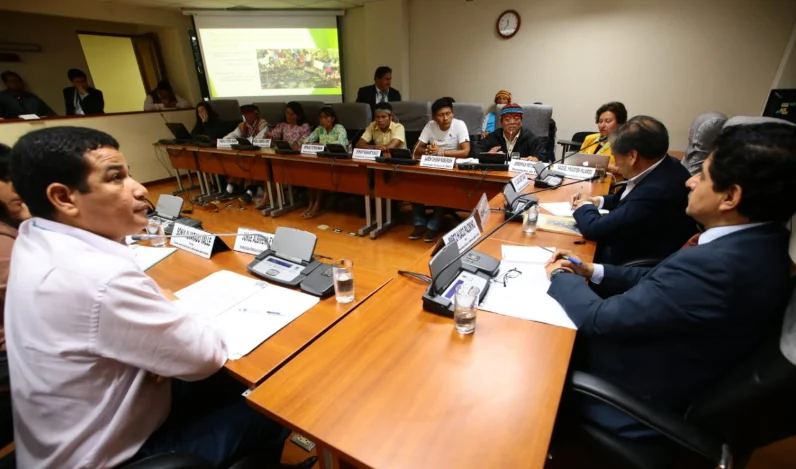
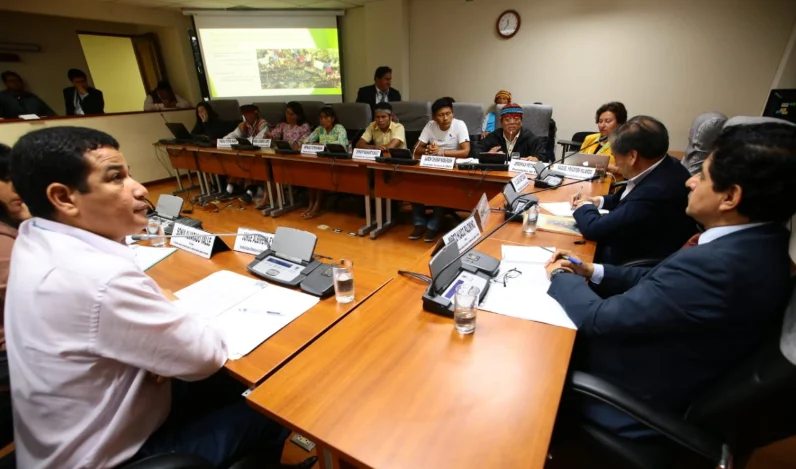
- December 2018: During a pivotal working meeting convened by the Commission of Andean, Amazonian, Afro-Peruvian Peoples, Environment and Ecology (CPAAAAE) of the Peruvian Congress, indigenous leaders presented hard evidence of ongoing contamination.
- The Future (2019): Following the Congressional meeting, the OEFA committed to conducting inspection actions in Lote 64 during the first quarter of 2019, a move viewed by activists as a belated response to years of lobbying.
The Reality of Lote 64: A Toxic Legacy
The contamination within Lote 64 is concentrated near the 2x and 3x oil wells in the community of Putuntsa. Shiwiant Mashiant, president of the AIM basin organization (part of FENAP), provided a harrowing account of the impact on daily life. According to Mashiant, the oil spills have migrated from the well sites into the water sources that the Achuar people rely on for drinking, bathing, and livestock sustenance.
This is not merely an issue of "dead land"; it is an issue of survival. The contamination of water bodies creates a bio-accumulation effect, where toxins enter the food chain, affecting fish stocks and the wildlife that the communities depend upon. The failure of the state to contain these spills since 2012 illustrates a profound institutional failure, where environmental monitoring agencies were either absent or ignored the plight of the indigenous inhabitants.
The Oleoducto Norperuano: A National Scandal
Beyond the boundaries of Lote 64, the crisis extends to the Oleoducto Norperuano (Northern Peruvian Pipeline). Jeremías Petsein Peas, president of FENAP, highlighted that the communities of Chuintar and Uwinsta are suffering from long-standing environmental liabilities that Petroperú—the state-owned oil company—has failed to remediate.
The human cost of this negligence is staggering. During the Congressional hearing, indigenous representatives reported a spike in health issues directly correlated to proximity to the pipeline and the associated spills. These include chronic gastrointestinal disorders, unexplained skin lesions, and recurring, debilitating headaches.
"The health of our people is deteriorating," Petsein Peas stated. "The most vulnerable—our children and women—are bearing the brunt of this toxic environment."
Wrays Pérez, president of the Wampis Nation, added a sharp critique of the state’s fiscal priorities. He noted that while the government often claims a lack of resources, the systemic failure to remediate is a matter of political will rather than economic capacity. "Petroperú knows it must remediate the Norperuano Pipeline, yet it does nothing. For the Amazon, there is no money, but for the expansion of these projects, the bureaucracy moves quickly."
Official Responses and Institutional Commitments
The Congressional working session forced representatives from both the OEFA and the Ministry of Health (MINSA) to confront the indigenous delegation.
- OEFA’s Stance: The Environmental Assessment and Enforcement Agency pledged to execute a rigorous inspection of the Lote 64 site. While this was welcomed, indigenous leaders remained skeptical, noting that previous promises of "oversight" have often resulted in bureaucratic reports that do not lead to actual soil or water restoration.
- MINSA’s Intervention: The Ministry of Health committed to a formal diagnostic of the population’s health. The objective is to establish a direct causal link between the oil spills and the health issues reported by the Achuar and Wampis, which would provide the necessary legal leverage to demand state-funded medical treatment and long-term health monitoring.
Legal and Social Implications: The Demand for Nullification
The alliance between FENAP, the Wampis Nation, and their legal counsel—the International Institute for Law and Society (IIDS) and Peru EQUIDAD—has moved beyond simple complaints. They are now actively seeking the total nullification of the contract for Lote 64, which is currently held by the company GeoPark.
The legal argument is twofold:
- Lack of Prior Consultation: Under both the Peruvian Constitution and international human rights frameworks, indigenous peoples must be consulted before the state grants concessions on their ancestral territories. The Achuar and Wampis assert they were never consulted, rendering the current contract legally invalid.
- Lack of Social License: The concept of "social license"—the acceptance of a project by the local community—is non-existent in this case. Without the consent of the people living on the land, the project is viewed as an imposition by a distant central government, violating the autonomy of the Wampis and Achuar nations.
The Broader Context: Amazonian Sovereignty
The struggle of the Wampis and Achuar is part of a larger, global movement by indigenous peoples to secure sovereignty over their ancestral lands. The Autonomous Territorial Government of the Wampis Nation serves as a beacon of resistance, asserting that the protection of the Amazon is not just a regional matter, but a global necessity in the face of climate change.
The persistent degradation of the rainforest through oil extraction undermines the traditional livelihoods of these nations. By polluting the rivers, companies are not just destroying the environment; they are destroying the cultural continuity of the Achuar and Wampis, as the land and water are fundamental to their spiritual and social existence.
Conclusion: A Turning Point
The situation in Lote 64 serves as a mirror reflecting the contradictions of the Peruvian state. While the government promotes economic development through resource extraction, it does so at the expense of its most vulnerable citizens and the fragile biodiversity of the Amazon basin.
The upcoming 2019 inspections by the OEFA will be a test of the state’s sincerity. Will these inspections lead to actual remediation, or will they be another performative exercise? The Achuar and Wampis have made their position clear: they are no longer willing to wait for empty promises. They are demanding the cancellation of Lote 64 and a complete overhaul of how the Peruvian state interacts with indigenous nations.
As the international community watches, the fight of the Achuar and Wampis stands as a powerful reminder that the true cost of oil is measured not in barrels, but in the health of the people and the integrity of the earth. Until the state addresses the "ancient liabilities" of the Norperuano Pipeline and respects the rights of the indigenous inhabitants, the cycle of conflict in the Peruvian Amazon will continue to deepen.