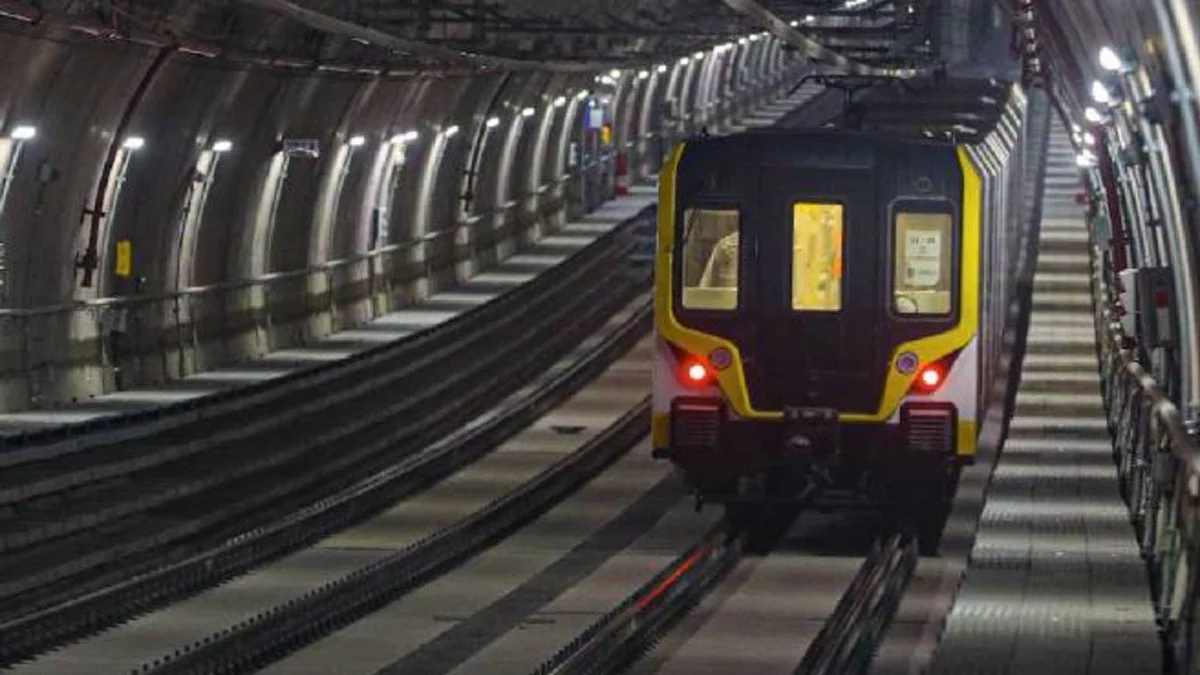
In a significant effort to overhaul the public transportation landscape of Peru’s capital, the Ministry of Transport and Communications (MTC) has officially entered into high-level negotiations with the Concessionaire of Line 2 of the Lima and Callao Metro. The primary objective is to accelerate the operational timeline for three critical new stations, a move designed to alleviate the daily commute for thousands of residents in Lima East. This initiative focuses on the project’s "Tramo 6" (Section 6), a vital component of the city’s first fully underground rail network.
The Core Objective: Advancing the Opening of Key Stations
The MTC, under the leadership of its current administration, is aggressively seeking to shorten the lead time for the activation of three specific transit hubs: Vista Alegre, Prolongación Javier Prado, and Municipalidad de Ate. These stations represent a strategic expansion of the existing service, which currently operates on a limited "marcha blanca" (trial) basis.
On October 14, a pivotal meeting took place between MTC officials and representatives from the Metro de Lima Line 2 Concessionaire. The dialogue centered on identifying logistical bottlenecks and technical requirements that currently impede the opening of these stations. By streamlining the remaining construction and testing phases, the Ministry hopes to grant the citizens of Ate and surrounding areas earlier access to the city’s most modern transit infrastructure.
While the Ministry has emphasized its commitment to this acceleration, it has maintained a cautious stance regarding a definitive launch date. The complexity of integrating safety systems, signaling, and electrical power with the existing infrastructure means that any reduction in the original timeline requires meticulous coordination between the public sector and the private contractors.
Geographic Scope: Connecting the Eastern Corridor
The three stations currently under the spotlight are strategically located along the Avenida Nicolás Ayllón, historically known as the "Carretera Central," a road notorious for its heavy traffic and critical importance as a logistical artery for the city.
- Vista Alegre (E-25): Situated at the height of Avenida Vista Alegre, this station serves as a gateway for commuters moving from the denser residential zones of Ate toward the city center.
- Prolongación Javier Prado (E-26): Located at the intersection of Nicolás Ayllón and the extension of the Javier Prado avenue, this hub is designed to facilitate intermodal connectivity, linking the Metro with major surface-level bus routes.
- Municipalidad de Ate (E-27): Positioned in the heart of the district, this station is expected to become the terminus point for the current phase, drastically reducing the travel time for residents who currently rely on informal or congested ground transportation.
By extending the underground reach to these points, the MTC aims to transition from the current, limited operational state to a more robust, high-capacity service that reflects the original vision of the Line 2 project.
Chronology and Development: A Long-Term Infrastructure Saga
The development of the Lima Metro Line 2 has been a multi-year, multi-administration undertaking. To understand the current push for acceleration, one must look at the project’s complex timeline:
- The Initiation Phase: Conceived as the backbone of Lima’s urban mobility, Line 2 was designed to connect Ate in the east to Callao in the west, crossing the entire metropolitan area.
- The "Marcha Blanca" Launch: The first phase (Etapa 1A) began operations with five stations, allowing the public to experience the system while engineers monitored performance under real-world conditions.
- The Current Impasse/Expansion: Throughout 2024, the focus shifted to the completion of the subsequent phases. While underground tunneling and structural works have progressed, the transition from construction to commercial service has faced challenges involving land expropriation, utility relocation, and the testing of automated systems.
- The October 2024 Mandate: The recent meeting between the MTC and the Concessionaire marks a change in strategy, moving from a standard completion schedule to a prioritized, expedited approach for the Ate sector.
Supporting Data: Progress and Technical Hurdles
According to recent disclosures from the Supervisory Agency for Investment in Public Transport Infrastructure (Ositrán), the broader project is approaching a state of significant structural completion. As of August 2026, the data provided an optimistic, albeit complex, picture:
- Stage 1B: Reported an average completion rate of 96%. This stage is essential as it encompasses the link between Plaza Bolognesi and San Juan de Dios, as well as the crucial connection points in Ate.
- Stage 2: Registered a 91% completion rate.
However, industry experts and regulatory bodies caution that "completion of construction" does not equate to "operational readiness." A subway system is a high-tech ecosystem; even if the concrete and steel are finished, the stations must pass stringent inspections regarding:
- Fire and Life Safety Systems: Smoke extraction, fire suppression, and emergency evacuation protocols.
- Signaling and Communication: Ensuring that the automated trains can communicate with the Control Center with 100% reliability.
- Energy Integration: Verifying that the electrical grid can handle the peak demand of an expanded fleet.
The Ministry’s current push is, therefore, not just about construction, but about compressing the "systems integration" phase, which is traditionally the most time-consuming part of a rail project.
Official Responses and Stakeholder Perspectives
The MTC has positioned this move as a direct response to the needs of the population. In official statements, the Ministry has emphasized that "efficiency in project execution is a priority for the current administration." By engaging directly with the Concessionaire, the Ministry is signaling a move toward a more collaborative, performance-based relationship.
For the Concessionaire, the challenge lies in maintaining safety standards while accelerating timelines. The private entities involved are tasked with balancing the pressure from the government to deliver results with the engineering reality that "fast-tracking" in tunnel infrastructure carries significant risk if not handled with precise oversight.
Local stakeholders, particularly the residents of Ate, have expressed cautious optimism. For years, the construction of the Line has caused localized traffic disruptions and economic uncertainty for businesses located near the project sites. The prospect of having these stations operational sooner is viewed as a necessary relief after years of construction-related inconveniences.
Implications: What This Means for Lima
The implications of successfully accelerating these three stations are profound for the urban development of Lima.
1. Economic Impact
Improved transit connectivity typically leads to increased property values, greater commercial activity near stations, and a larger pool of potential employees for businesses in the city center. By reaching the municipal district of Ate, the Metro provides a massive economic boost to the eastern part of the capital.
2. Environmental and Social Gains
Lima is globally recognized for its heavy traffic congestion, which contributes significantly to air pollution and reduces the quality of life for its citizens. Each additional kilometer of the underground Metro represents thousands of fewer cars on the road and a decrease in carbon emissions. Furthermore, the social impact of returning hours of "commute time" to the average worker cannot be overstated.
3. The Precedent of Success
If the MTC and the Concessionaire successfully bring these stations online ahead of schedule, it will set a positive precedent for the remainder of the project. It would demonstrate that the bureaucratic and technical hurdles that have historically plagued the project can be overcome through proactive management.
Conclusion
The push to accelerate the opening of the Vista Alegre, Prolongación Javier Prado, and Municipalidad de Ate stations is a defining moment for the Lima Metro Line 2. It represents a pivot toward delivery and functionality. While the MTC has yet to provide a concrete date for the ribbon-cutting, the political will is clearly aligned with the public’s demand for faster, more reliable transit.
As the city watches closely, the success of this initiative will hinge on the synergy between the Ministry’s administrative efforts and the Concessionaire’s technical capabilities. For the people of Lima East, these three stations are more than just transit hubs; they are the promise of a more connected, efficient, and modern future. The coming months will be decisive in determining whether this promise can be fulfilled, transforming the map of Lima one station at a time.