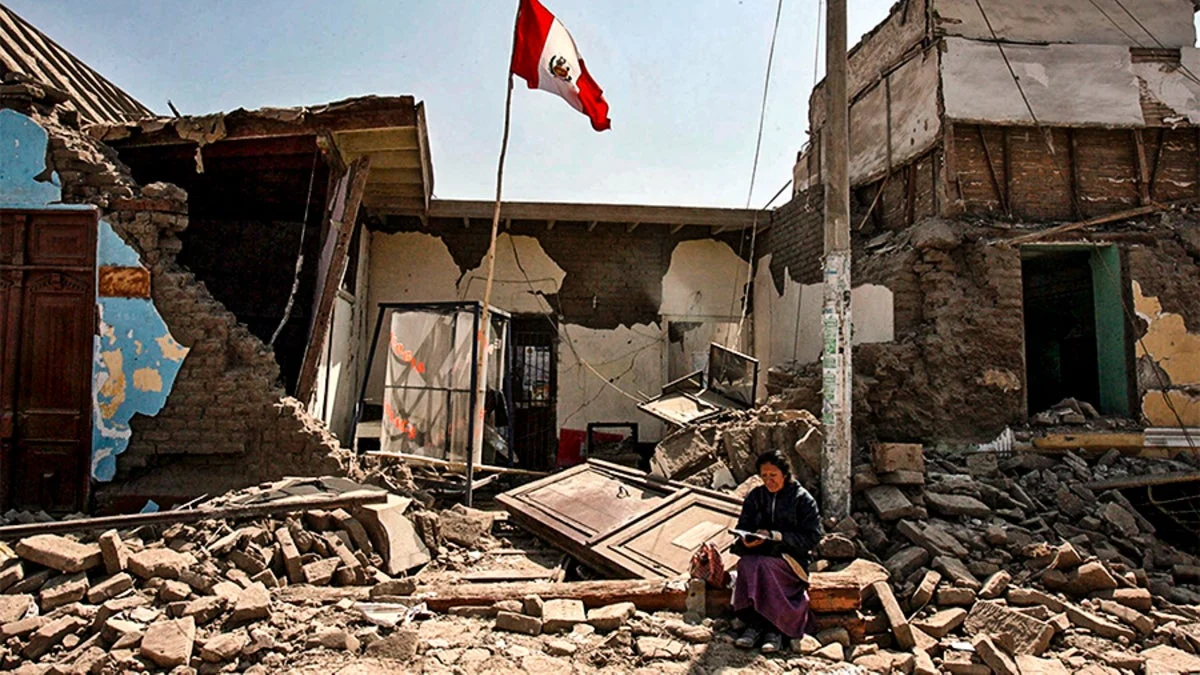
In a significant departure from previous budgetary frameworks, the Peruvian government, led by President Keiko Fujimori, has announced a major recalibration of its fiscal rules. This strategic shift involves expanding the allowable fiscal deficit to 2.4% of the Gross Domestic Product (GDP) by 2027. The move is designed to create the necessary fiscal space to inject S/ 18 billion into the economy, aimed at shielding vulnerable families from the anticipated impact of the El Niño phenomenon and revitalizing a domestic market grappling with a period of sustained deceleration.
The Core Strategy: Injecting Liquidity into a Cooling Economy
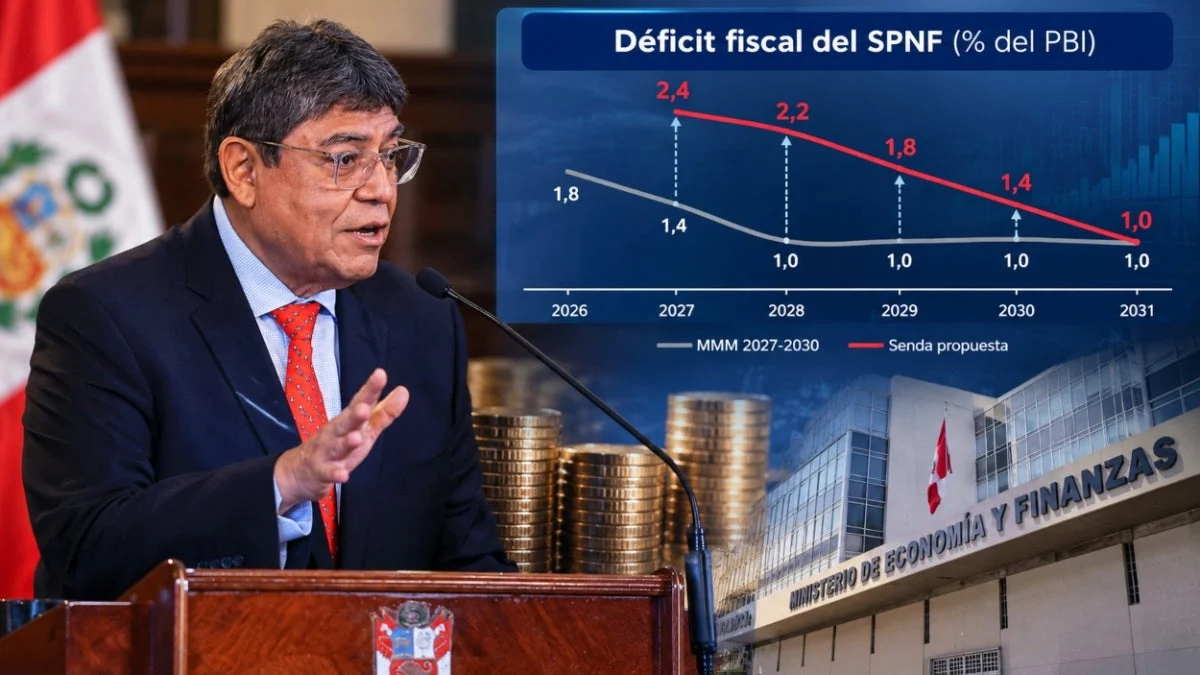
The decision to move away from the original 1.4% deficit target—as outlined in the previous Multi-Year Macroeconomic Framework (MMM)—is a direct response to what the Ministry of Economy and Finance (MEF) identifies as "three recessive forces." These forces include the looming climate threats posed by an intensified El Niño, volatile international energy prices driven by Middle Eastern geopolitical instability, and a global high-interest-rate environment that has constrained affordable borrowing.
Minister of Economy and Finance, Elmer Cuba, emphasized that this fiscal expansion is not a sign of instability, but rather a calculated use of the country’s strong "fiscal buffers." With a public debt-to-GDP ratio currently hovering around 30%, Peru remains one of the most fiscally disciplined nations in the region. According to Minister Cuba, this allows the state the flexibility to intervene without jeopardizing long-term macroeconomic solvency.
Chronology of the Fiscal Shift
The path to this policy adjustment has been characterized by an increasing sense of urgency as economic indicators began to signal a potential slowdown for the coming years.
- Initial Projections: The existing Multi-Year Macroeconomic Framework had established a strict path toward reaching a 1.0% deficit by 2028.
- The Recognition of Risk: Throughout the third quarter, climate agencies confirmed the high probability of a "mega" El Niño, while inflationary pressures from global oil and diesel price spikes began to erode household purchasing power.
- The Policy Pivot: In late October 2026, the administration announced the decision to delay the path to the 1.0% deficit target by three years, pushing the goal to 2031.
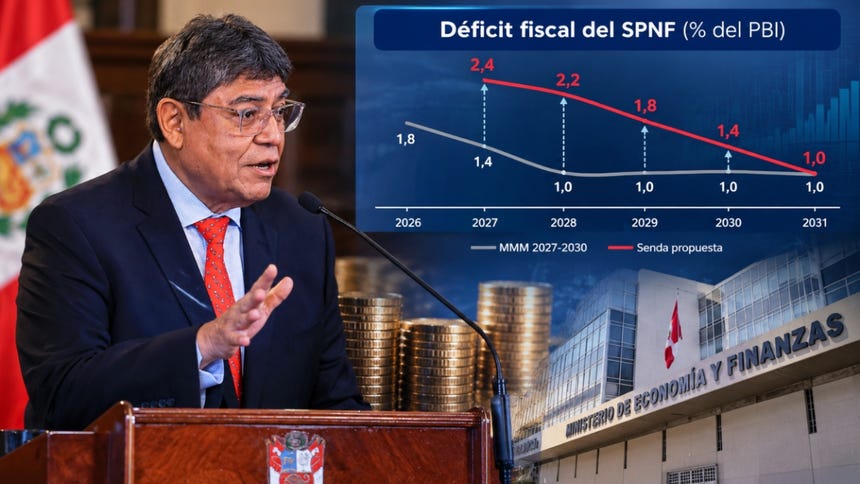
- Implementation Strategy: The government outlined a new, more progressive reduction schedule: 2.2% in 2028, 1.8% in 2029, 1.4% in 2030, and finally reaching the 1.0% threshold at the conclusion of the current presidential term.
Allocation of Funds: Where the Money Will Go
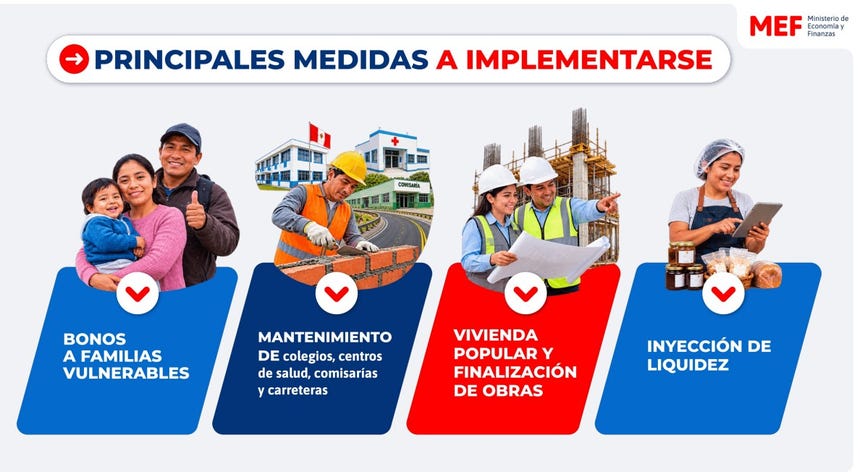
The S/ 18 billion stimulus package is structured around four primary pillars, with the government prioritizing infrastructure and direct social support as the main levers for economic reactivation.
1. Infrastructure and Public Works (S/ 13 Billion)
The largest share of the stimulus is directed toward the construction sector, a vital engine for job creation.
- Educational Infrastructure: S/ 6 billion has been earmarked for the modernization and reinforcement of schools to withstand the climate challenges posed by heavy rains and flooding.
- Unblocking Stalled Projects: S/ 7 billion will be utilized to complete high-impact public works that were previously paralyzed due to administrative or funding bottlenecks.
2. Social Protection and Emergency Bonuses (S/ 2.5 Billion)
To mitigate the impact of rising food and energy costs on the most vulnerable, the government will implement a targeted subsidy program. President Fujimori indicated that these transfers would be distributed over a period of three to five months, providing an essential safety net for households facing the direct consequences of the El Niño phenomenon.
3. Maintenance of Public Assets (S/ 2 Billion)
Recognizing that neglected infrastructure deteriorates rapidly during climate disasters, the government has allocated funds to ensure the functionality of essential public services, including healthcare centers, police stations, and key transport arteries.
4. Fuel Subsidies (S/ 500 Million)
To cushion the inflationary shock caused by the international rise in petroleum and diesel prices, the government will apply targeted subsidies. This measure aims to prevent a cascade effect on transportation and logistics costs, which would otherwise drive up the price of essential consumer goods.
Official Stance and Macroeconomic Sustainability
Minister Elmer Cuba maintains that despite the increased spending, Peru’s fiscal credibility remains intact. "With this new fiscal convergence, Peru continues to be a serious player in its macroeconomic management," Cuba stated during his press briefing. He pointedly noted that even with the expanded deficit, the public debt is expected to remain between 26.2% and 30.3% of GDP through 2031.
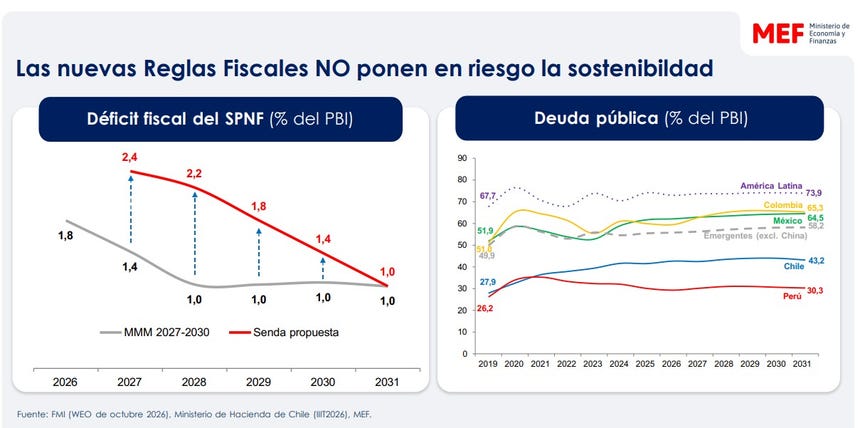
This, he argues, places Peru in a distinct category compared to other Latin American nations, where public debt-to-GDP ratios frequently range between 67% and 73%. The government’s narrative is clear: this is a temporary, front-loaded fiscal effort intended to bridge a difficult period without abandoning the fundamental principles of fiscal responsibility.
Analyzing the Implications: A Skeptical Perspective
While the administration champions this as a "historic and strong response," some economic experts are sounding alarms regarding the long-term arithmetic. Former Minister of Economy and Finance, Alfredo Thorne, has offered a more cautionary analysis of the government’s plan.
Transparency and Methodological Concerns
Thorne argues that the government’s projections may be overly optimistic. He contends that the 1.4% deficit target, which served as the baseline for this year’s calculations, conveniently excluded the impact of four legislative measures approved by the previous Congress. By ignoring these commitments, the government’s current narrative may mask the true extent of the future fiscal burden.
The "4.3% Deficit" Risk
Thorne suggests that when accounting for hidden liabilities—such as pension obligations for military and police personnel, potential additional support for municipal governments facing climate disasters, and the opaque financial state of state-owned entities like Petroperú—the deficit could reach as high as 4.3% of GDP. He emphasized the urgent need for greater transparency regarding "off-the-books" costs, such as the logistics of emergency disaster response (base naval support, aircraft deployments, and fuel assistance).
The Growth Outlook
The divergence between the government and independent analysts is most apparent in growth projections. While the government is betting that this stimulus will jumpstart the economy, Thorne projects that GDP growth for 2027 will likely hover around 2.9% under base conditions. However, he warns that if the "mega El Niño" scenario materializes, the combination of environmental destruction and fiscal strain could drag that growth down to as low as 1.5%.
Conclusion: A Balancing Act
The decision to modify the fiscal rule is a high-stakes gamble. By choosing to prioritize immediate social relief and infrastructure development over strict adherence to the previous deficit timeline, the Fujimori administration is attempting to manage the dual pressures of economic stagnation and climate-driven emergency.
The success of this policy will depend entirely on two factors: the efficiency with which the S/ 18 billion is deployed and the government’s ability to remain transparent about the true state of its public accounts. As Peru moves into the next phase of its economic cycle, the tension between the government’s desire to stimulate growth and the warnings of fiscal hawks like Thorne will remain the defining feature of the country’s macroeconomic discourse. Whether this move proves to be a masterstroke of crisis management or a precursor to long-term fiscal instability remains to be seen.