In a significant move aimed at addressing two of the most pressing challenges currently facing the nation, the Peruvian Congress has officially delegated legislative authority to the Executive branch. The move, finalized on Wednesday, grants the government a 90-day window to enact critical reforms focused on curbing rising insecurity and preparing the country for the devastating potential of the El Niño climate phenomenon.
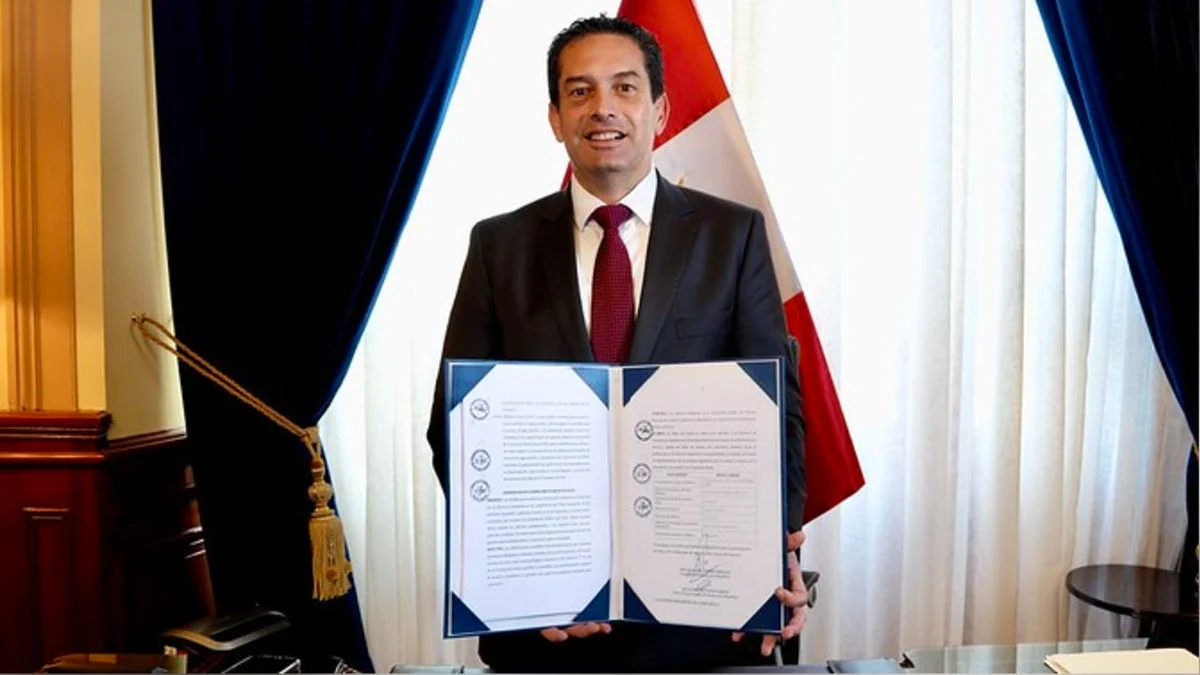
The autographed law, signed by Miguel Ángel Torres, President of the Congress of the Republic, marks the culmination of intense parliamentary debate. By bypassing the traditional, time-consuming legislative process for specific areas, the Executive branch now holds the power to issue legislative decrees aimed at immediate implementation, a necessity dictated by the urgency of the security crisis and the looming meteorological threats.
The Core Mandate: Scope and Objectives
The legislative delegation is not a blank check; it is strictly confined to two thematic pillars: public safety and disaster risk management. According to the text of the approved autographed law, the Executive is authorized to legislate for 90 calendar days, during which it will design and deploy strategies to stabilize national order and mitigate the impacts of climate-driven destruction.
Strengthening Public Safety
Under the umbrella of security, the government is tasked with revising and strengthening the current control frameworks. This includes a major overhaul of migration controls and the nationalization process. The government has emphasized that while these reforms are designed to be robust, they will be executed with "full observance of due process," prioritizing the rights of children and strictly adhering to the fundamental human rights enshrined in the Peruvian Constitution.
Confronting the El Niño Phenomenon
The second pillar of the delegation focuses on the "El Niño" phenomenon. With climate experts warning of anomalous sea surface temperatures and potential catastrophic rainfall, the government is empowered to streamline administrative hurdles that have historically slowed down the construction of drainage systems, flood barriers, and infrastructure rehabilitation. The objective is to transition from reactive disaster management to a proactive, preemptive stance.
A Chronology of the Legislative Process
The journey to this delegation of powers was characterized by rigorous negotiation and a focus on parliamentary oversight.
- Initial Proposal: The Executive branch formally requested the powers, citing the need for rapid intervention to prevent a collapse in public safety and to safeguard vulnerable regions from El Niño’s rainfall.
- Committee Review: The bill underwent scrutiny by the Committee on Constitution, Regulation, and Foreign Affairs. During this stage, lawmakers debated the constitutionality of the measures and the necessity of the 90-day timeframe.
- Plenary Approval: After days of deliberation, the Plenary of the Congress voted in favor of the delegation, recognizing that the current legislative pace could not keep up with the speed at which criminal organizations and climate patterns are evolving.
- The Signing: On Wednesday, Miguel Ángel Torres and First Vice President Alejandro Muñante signed the autographed law, signaling the end of the legislative phase and the start of the executive implementation phase.
- Next Steps: The document is now being transmitted to the President of the Republic for formal promulgation and publication in the official gazette, El Peruano.
Accountability and Transparency Mechanisms
Cognizant of the potential for executive overreach, the Congress included strict oversight mechanisms within the delegation law. The government is not operating in a vacuum; it is tethered to a system of checks and balances designed to maintain transparency throughout the 90-day period.
Integration with the National Control System
The law explicitly states that any legislative decrees issued under these powers remain subject to the National System of Control. This means that the Comptroller General of the Republic maintains full authority to audit the expenditures and the legality of the decrees, ensuring that funds allocated for El Niño prevention and security infrastructure are not diverted or mismanaged.
Reporting Requirements
The mandate requires high-level accountability. The President of the Council of Ministers, alongside the Ministers of Interior, Defense, Justice, Economy and Finance, Housing, and Agriculture, are legally bound to report back to the Congress. Within 60 days of the enactment, these officials must provide a detailed written report to the Committee on Constitution, Regulation, and Foreign Affairs, outlining the implementation status and the efficacy of the decrees issued. This ensures that the legislature remains informed and capable of intervening should the Executive deviate from the intended purpose of the delegation.
Official Responses and Political Implications
The passage of this law has sparked significant discussion within the halls of power. Miguel Ángel Torres, speaking on behalf of the legislative body, defended the decision, asserting that the process was handled with complete transparency. "There was no distortion of the law," Torres stated, addressing critics who feared the delegation might undermine the parliamentary function. He emphasized that the measure is a temporary, pragmatic response to a national emergency.
Supporters of the move argue that the Executive’s ability to act with speed is the only way to tackle organized crime syndicates that have become increasingly sophisticated. Opponents, however, have raised concerns about the centralization of power, urging the government to ensure that migration reforms do not inadvertently lead to xenophobic policies or the erosion of civil liberties.
The government has countered these concerns by reiterating its commitment to the "superior interest of the child" and constitutional protections. The challenge for the administration, therefore, is to balance the "iron fist" approach to security with the nuanced requirements of human rights and international law.
The Stakes: Why Now?
The urgency of this legislation cannot be overstated. Peru faces a dual-front battle:
- Security Crisis: Public perception of safety is at a multi-year low. Criminal activity, including extortion and human trafficking, has escalated, putting immense pressure on the Ministry of the Interior to deliver results. By delegating powers, the government hopes to provide the police and migration authorities with the legal tools to modernize their operations.
- Climate Vulnerability: The El Niño phenomenon is not merely an inconvenience; it is a recurring threat to Peru’s economy and its people. Historically, the country has struggled with the "bureaucratic trap," where essential prevention work is stalled by complex procurement laws. By bypassing these hurdles, the government intends to accelerate the construction of critical infrastructure before the peak of the rainy season arrives.
Economic Impact
The Ministry of Economy and Finance has a central role in this process. The ability to issue decrees allows for the rapid reallocation of budgetary resources to disaster-stricken areas or regions with high crime rates. This flexibility is essential for maintaining macroeconomic stability while addressing localized emergencies.
Conclusion: A Test of Executive Efficacy
The delegation of legislative powers to the Executive is a high-stakes gamble for the administration. By accepting these powers, the government has essentially claimed ownership of the outcomes. If crime rates drop and infrastructure proves resilient against the climate crisis, the administration will be lauded for its decisive leadership. Conversely, if the measures fail to yield results or if the implementation is marred by corruption, the political cost will be severe.
As the autographed law makes its way to the President’s desk, the eyes of the Peruvian public and the international community are fixed on the next 90 days. It is a period that will test the competence of the ministerial cabinet, the vigilance of the Congress, and, ultimately, the resilience of Peru’s democratic institutions in the face of compounding national challenges.
The path ahead is narrow, requiring a delicate balance between swift action and democratic restraint. As the country braces for the climate season and attempts to reclaim its streets, the legislative delegation stands as the primary vehicle for what the government hopes will be a period of stabilization and recovery.