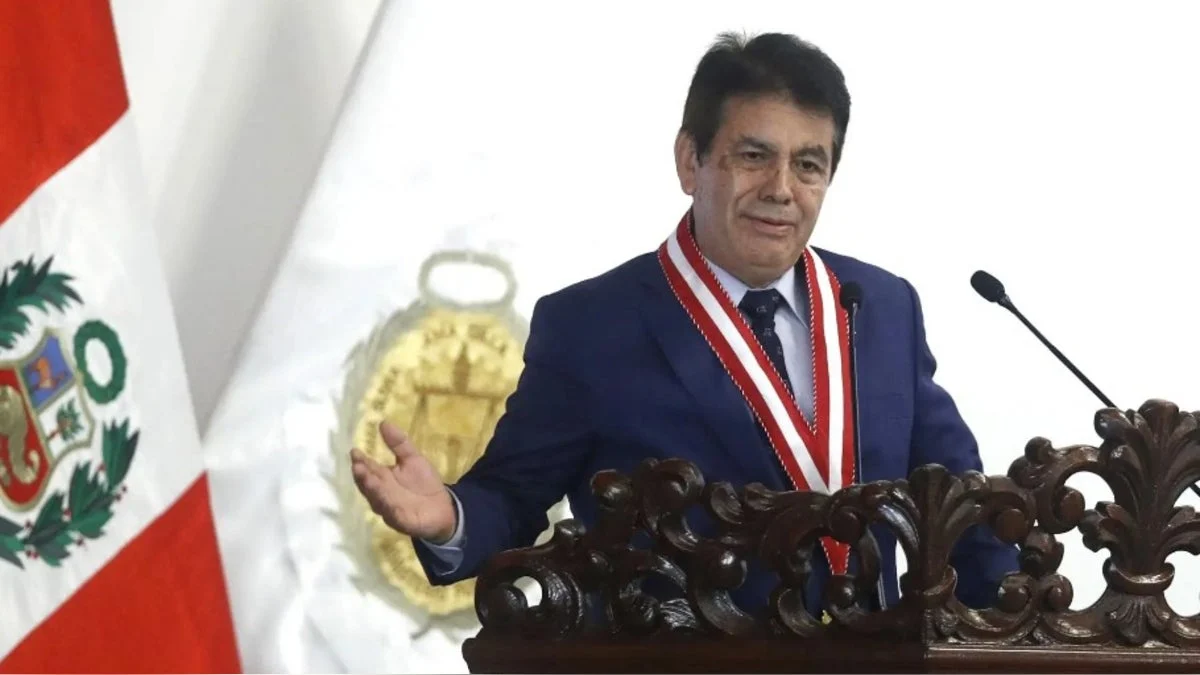
In a significant procedural development within the upper echelons of Peru’s judicial system, the Office of the Prosecutor of the Nation has formally rejected a request to initiate criminal proceedings against the Procuradora General del Estado (State Attorney General), María Carhuajulca. The decision, handed down by Prosecutor of the Nation Tomás Gálvez, underscores a deepening rift and procedural scrutiny regarding the ethical and legal standards required for high-ranking government officials.
The request for criminal action had been filed by Supreme Prosecutor Juan Carlos Villena. At the heart of the matter lies a dispute over the integrity of sworn declarations submitted by Carhuajulca upon her appointment, specifically concerning whether she concealed an ongoing criminal investigation in which she was involved—an omission that, if proven, would have rendered her ineligible for the position under existing legislation.
The Core Allegations: A Failure of Disclosure?
The investigation initiated by Supreme Prosecutor Juan Carlos Villena centers on a specific allegation: that María Carhuajulca presented a sworn statement to the Ministry of Justice and Human Rights that failed to disclose a pending criminal proceeding. According to the regulatory framework governing the Office of the State Attorney General, applicants for the post of Procuradora General must maintain a clean record regarding criminal litigation that could compromise the integrity of the institution.
The crux of the prosecution’s argument is that Carhuajulca was legally obligated to report the existence of a case in which the State itself was the aggrieved party. By allegedly omitting this information, the prosecution argues that she bypassed the strict vetting requirements established by the legislative decree that created the Procuraduría General del Estado. Consequently, Villena sought authorization to proceed with criminal charges for the alleged crimes of falsifying information in a document and making false declarations during an administrative procedure.
Chronology of the Dispute
The trajectory of this case highlights the complex interplay between executive appointments and judicial oversight.
- Initial Appointment and Vetting: Upon her initial appointment as Procuradora General, Carhuajulca underwent the standard administrative review process. The current investigation suggests that the documentation provided during this period may have been incomplete or intentionally misleading.
- The Villena Investigation: Following reports and internal audits, Supreme Prosecutor Juan Carlos Villena’s office began a formal inquiry. The investigative team focused on the discrepancy between Carhuajulca’s sworn statements and the records held by the judiciary.
- The Request for Action: On a date leading up to the October decision, Villena formally requested authorization to proceed with criminal charges, arguing that sufficient elements of conviction existed to warrant a trial.
- The October 2 Rejection: In a document dated October 2, which has since surfaced, Prosecutor of the Nation Tomás Gálvez ruled that the request was "insufficient." He declared the petition "insubsistent," essentially halting the immediate move toward criminal prosecution and sending the matter back to Villena for extensive revision.
Official Responses and Judicial Reasoning
The decision by Tomás Gálvez to reject the request is not an acquittal of Carhuajulca, but rather a procedural "stop sign." In his formal response, Gálvez outlined several critical deficiencies in the prosecution’s request that must be addressed before the Prosecutor of the Nation’s office can grant the authority to move forward.
Requirements for Refinement
Gálvez’s directive mandates that Supreme Prosecutor Villena’s office must:
- Clarify the Procedural Status: Specifically, the prosecution must definitively establish the status of the investigation against Carhuajulca at the exact moment she signed the sworn declaration.
- Examine Legal Exceptions: The prosecution must analyze the "right to act on one’s own behalf" (derecho por derecho propio) regarding the pending legal cases to determine if they fell under specific categories that might exempt them from the disclosure mandate.
- Address Re-assumption of Office: The investigation must clarify the specific circumstances and documentation surrounding her re-assumption of the role, ensuring that the legal continuity of her position is documented with precision.
- Due Process for the Accused: Gálvez explicitly noted that the prosecution must either formally take Carhuajulca’s statement or, at the very least, formally integrate and weigh the arguments of defense that she has already submitted to the fiscal folder.
By requiring these steps, the Prosecutor of the Nation is signaling that the evidentiary threshold for charging a high-ranking state official must be impeccably high to avoid future allegations of political persecution or procedural error.
Supporting Data: The Legislative Context
The office of the Procuradora General del Estado is a pillar of the Peruvian legal system, tasked with defending the State’s interests in high-stakes litigation, including cases of corruption and human rights abuses. Because the office holds such immense power, the legislative decree governing its formation includes strict "idoneity" (fitness) requirements.
The law requires that anyone appointed to this role must be beyond reproach. This includes a strict prohibition on having "active" criminal cases where the State is the victim, as this creates a conflict of interest that would make the Procuradora incapable of performing her duties. The prosecution’s case against Carhuajulca relies on the argument that by failing to disclose, she effectively defrauded the administrative process, thereby undermining the legitimacy of her own appointment.
Implications for the State and the Judiciary
The public nature of this disagreement between two senior prosecutors—Villena and Gálvez—carries significant implications for the credibility of the Peruvian Ministerio Público.
Internal Institutional Friction
The friction between the Supreme Prosecutor’s office and the Office of the Prosecutor of the Nation reflects broader tensions regarding how investigations into high-ranking officials should be handled. When one branch of the prosecution requests a charge and the leadership deems it "insufficient," it invites public scrutiny regarding whether the institution is operating with a unified legal standard or if personal and political biases are influencing case management.
The Stability of the Procuraduría General
For the Procuraduría General del Estado, the ongoing investigation into its leader creates a vacuum of authority and public trust. If the head of the institution tasked with fighting corruption is herself under investigation for failing to disclose legal proceedings, the institution’s ability to act as a moral and legal arbiter is significantly weakened. This, in turn, may embolden legal opponents of the State to challenge the validity of actions taken by Carhuajulca during her tenure.
The Path Forward
The ball is now back in the court of Supreme Prosecutor Juan Carlos Villena. He has been ordered to conduct a more rigorous, "duly motivated" analysis. If he chooses to resubmit the request, he must ensure that every procedural requirement mentioned by Gálvez is met. If he fails to do so, the case may stall indefinitely.
Conversely, if the prosecution succeeds in building a stronger, more detailed case, the pressure on Carhuajulca to step down or face a full criminal trial will intensify. The case serves as a litmus test for the independence of the Peruvian judiciary; it asks whether the system can hold its own high-ranking officials accountable with the same rigor it applies to the citizens they are sworn to protect.
Conclusion: A Delicate Balance
The rejection of the initial request for criminal action against María Carhuajulca is a reminder of the complexity of criminal law when applied to high-level administrative functions. While the public may demand swift action when allegations of misconduct arise, the legal system—specifically the Office of the Prosecutor of the Nation—is bound by a requirement to ensure that every charge is backed by undeniable evidence and procedural correctness.
As this saga continues, the focus will remain on the completeness of the documentation and the clarity of the legal interpretation. Whether this case leads to a formal trial or is dismissed for lack of sufficient evidence, the process itself remains a vital indicator of the health and transparency of Peru’s legal institutions. The eyes of the public, the legal community, and the international observers will remain fixed on the next steps taken by the Office of the Prosecutor of the Nation.